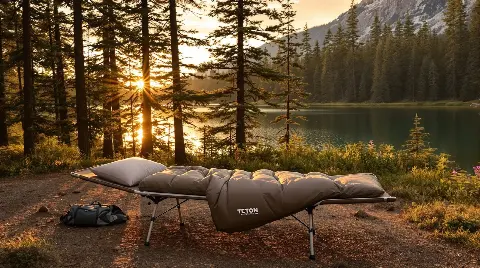
You are standing in the camping aisle, or scrolling late at night, looking at a thick air mattress that seems like the obvious upgrade from a skinny pad. That part trips people up. Shoppers see height, soft fabric, and a familiar bed shape, then assume the mattress will sleep warmer and better outside, while backpackers may call any inflatable camp bed a sleeping pad; both can be comfortable, and both can disappoint fast in the wrong setting.

Both have loyal fans, but each one belongs in a different kind of camp. Use matters more than the star count. A camping air mattress can feel roomy in a tent or save your back when guests take the spare room, yet many rely on air volume without much insulation and can pull heat from you on cold ground, especially without a foam layer or rated insulation under you. A sleeping pad is built around camp use: packed size, weight, durability against campsite grit, and, on insulated models, an R-value that tells you how much it resists heat loss, so pick by the job you need it to do, car camping, backpacking, guest bedding, or one setup that has to cover two of those jobs.
Can One Bed Handle Both Camping and House Guests?
If you want one bed for a tent and a spare room, aim at the camping side first. A bed that stays warm on cold dirt can still feel fine on a bedroom floor, but a guest air bed with no insulation can feel miserable outside once the ground pulls heat away. Cold ground wins fast. The shape of the purchase changes from “what feels tallest” to “what has enough foam or insulation to work away from the house.”
The foam inside adds warmth in a tent and gives the mattress some structure, so it does not feel like a balloon under your hips. In a spare room, you can lay it on carpet, a rug, or a simple platform and get a sleep surface that feels more like camp bedding than an emergency backup bed. It will not pack as small as a thin pad, and it will not look as tidy as a raised air bed, but it can do both jobs without feeling wrong in either place.
A basic air bed makes more sense if house guests are the real priority and camping is rare, warm-weather car camping. It gives height, width, and an easy bedside feel indoors, which many visitors like. On bare tent floors, the same bed needs help underneath it, because trapped air alone does little against cold ground. Add a closed-cell foam pad, a blanket, or another insulating layer under it if you take that route.
For backpacking, one shared bed for home and trail usually falls apart. The gear that guests like is too bulky, while the gear you carry is usually too narrow and low for a spare room.
Camping Air Mattresses and Pads
Use the comfort, warmth, and setup tradeoffs in this guide to match the sleep system below to your tent trip, backpacking kit, or guest space.
| Product | Why it fits | Price |
|---|---|---|
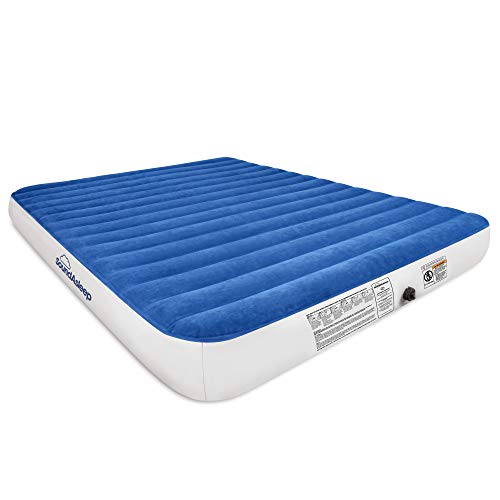 SoundAsleep Camping Series Queen Air Mattress
Tent-camping air mattress Read our review |
Choose this if you want an air mattress for off-grid tent camping, since the rechargeable battery pump works without a power source and the carry bag helps with transport. | Check price |
 Intex Dura-Beam Essential Rest Queen Air Mattress
Budget guest mattress Read our review |
This fits the guest-first or car-camping case in the guide, with a built-in pump for quick setup and a flocked surface that wipes clean. | Check price |
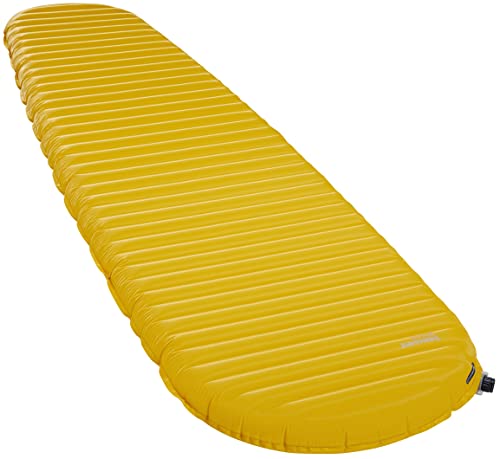 Therm-a-Rest NeoAir XLite NXT
Light backpacking pad Read our review |
Pick this when packed size and warmth matter most, since it packs close to a one-liter bottle and offers a 4.5 R-value at about 13 ounces. | Check price |
 Therm-a-Rest Z Lite Sol
Puncture-proof foam pad Read our review |
This suits trips where simple setup and durability matter more than inflation, because it opens in seconds and cannot puncture or leak. | Check price |
Before You Buy, Measure the Space You Actually Have
Measure first. An air mattress and a sleeping pad may list simple dimensions, but your real space has sloped tent walls, wheel wells, closet shelves and doors that need to swing open. Write the numbers on your phone before you shop: usable width, usable length, packed storage size and the clear space you want for gear or foot traffic. Round down when the space has fabric walls or trim.
- Tents: Measure the floor at sleeping height, then check the wall slope where your shoulders and knees land. Leave space beside the bed for boots, a headlamp and a dry bag, plus enough room near the door so you can get out without stepping on bedding.
- Car trunks: Measure the trunk length, width between wheel wells and the height under the cargo cover if you use one. Check the packed bag size too, since a wide air mattress pump or rolled foam pad may fit the floor but block other gear.
- Closets: Measure shelf depth, shelf height and the clear door opening. A rolled sleeping pad often stores tall, while an air mattress, pump and repair kit may need a bin or flat shelf.
- Guest-room floors: Measure the open rectangle after doors, dresser drawers and closet doors swing out. Leave a walking lane on at least one side and space at the foot for a small bag, shoes or a folded blanket.
Decision Points That Actually Change Your Sleep
Warmth Under Your Body
Air volume can pull heat from you, so a tall uninsulated air mattress may feel chilly on cool ground or a cold guest-room floor. For three-season camping, read the R-value before you read the height.
A higher R-value slows heat loss under your body. Get this wrong and you can feel cold even with a good sleeping bag, especially before sunrise.
Packed Size and Carry Distance
Car camping gives you room for a full or queen air mattress, especially when the tent sits beside the vehicle. Walk-in sites change the math fast, since the mattress, pump and batteries all ride in your hands.
Backpacking points you toward a compact inflatable pad or a closed-cell foam pad. If every inch in the pack matters, a big air mattress turns into dead weight before camp.
Comfort for Side Sleepers and Couples
Side sleepers usually need enough thickness to keep hips and shoulders off the floor, so pressure relief matters. Width matters too, since a narrow pad can put your knees or elbows on the tent floor.
Couples often like a large shared mattress in a tent. Two separate sleeping pads can be quieter at 2 a.m., because one person rolling over will not bounce the other awake.
Setup, Pumps and Failure Points
Built-in pumps are simple in a guest room, but camp power can be spotty. Hand pumps and battery pumps work away from outlets, yet you still need to check valve quality before trusting any inflatable overnight.
Self-inflating pads use foam cores that pull in air through a valve. Simple roll-out foam pads skip pumps and valves, so setup is fast and there is less to break.
Tent Fit and Real Floor Space
Check the actual floor dimensions of your tent, then compare them with the listed mattress length and width. Nominal tent capacity rarely tells you how much floor space remains after the bed goes in.
A queen camping air mattress can fill a small tent. Bags, boots, lanterns or a dog may end up pressed against the door or outside under the vestibule.
Home Guest Use
For occasional visitors, an air mattress stores small and feels like a real bed to many guests, but it needs inflation and may feel cold on bare floors. A folding foam mattress or futon takes more closet space and needs less explaining.
A thicker self-inflating mattress sits between camp gear and home bedding. Lend it to someone who can open a valve and wait, then top it off if needed.
A Ten-Minute Home Test Before the Return Window Closes
Before you trust an air mattress or sleeping pad on a trip, test it on the floor at home while the return window is still open. Clear a space, set up your usual pillow and blanket or bag, then treat the test like a short night. Plenty of problems show up before dirt, cold, and camp noise enter the picture.
- Inflation: Inflate it the way you plan to at camp. Check that the pump, stuff sack, or valve system works without awkward hand pressure, cross-threading, or air rushing back out between breaths.
- Valve leaks: Close every cap and leave weight on the pad for a few minutes. Listen near each valve, press around the seams, and use a little soapy water if you suspect a slow leak.
- Pump noise: Run the built-in or battery pump in the room where someone else can hear it. If it sounds annoying at home, it will feel louder in a quiet campground.
- Shoulder comfort: Lie on your side in your usual sleep position. Your shoulder should not feel like it is pushing through to the floor, especially on thinner sleeping pads.
- Hip pressure: Roll onto your side and stay there long enough for the cushion to settle. Hips find weak support fast, especially on air mattresses with soft edges or pads that need a firmer top-off.
- Deflation: Open the valve, fold or roll it, and pack it back into its stuff sack. A pad that fights you in the living room will be worse with cold hands at camp.