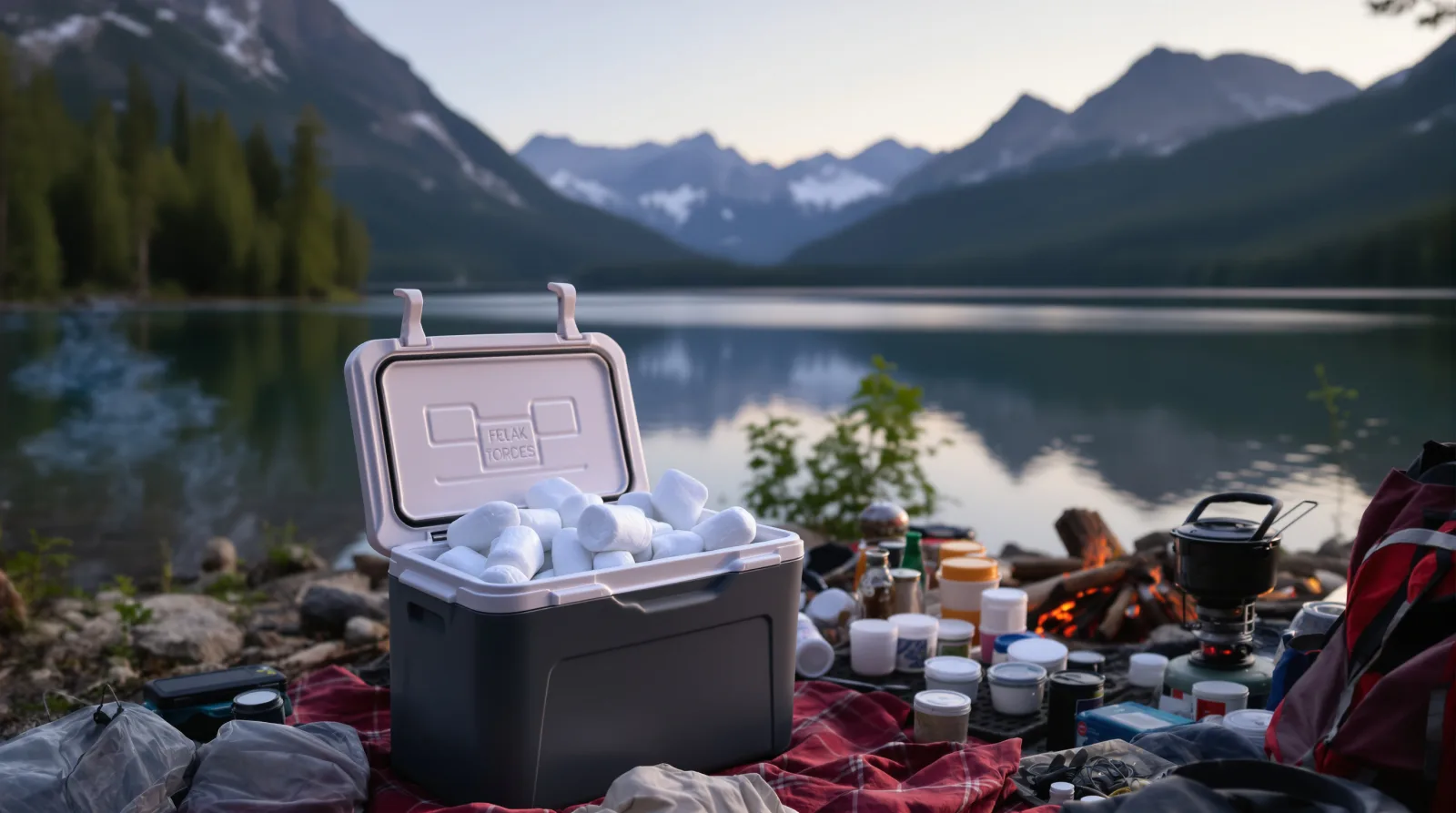
You are trying to keep dinner safe, drinks cold, and the backup food from turning into a mess before the trip or outage ends. Ice can last overnight in a basic cooler setup, or it can hold for several days in a well packed, high insulation cooler with limited opening and a shaded spot. The average customer rating across the 52 listings screened is 4.6 out of 5.
That rating helps set the shopping context, but the cooler brand alone does not decide how long your ice lasts. Size, insulation, ice type, packing method, starting food temperature, air space, outside heat, and how often you open the lid all change the result. A premium rotomolded cooler packed half full of warm groceries will usually lose faster than a modest cooler packed tight with pre-chilled food and plenty of block ice.
This guide gives realistic planning ranges for camping, road trips, beach days, tailgates, and power outages, so you can buy enough ice and avoid wishful thinking. We will cover cubed ice, block ice, frozen water bottles, ice packs, and dry ice, with dry ice safety called out where it matters. You will also see simple packing steps that help a cooler hold cold longer without turning every stop into a science project.
Frequently Asked Questions
How long can dry ice stay useful in a cooler?
Dry ice can stay useful for about 18 to 24 hours in a cooler, depending on cooler size, fill level, and opening frequency. Use ventilation, gloves, and keep it away from sealed containers because gas buildup can be dangerous.
Can you keep dry ice in a home freezer?
No, you should not keep dry ice in a home freezer. It is far colder than the freezer setting, can shut the thermostat off, and releases carbon dioxide gas as it disappears.
Does ice last overnight in a basic cooler?
Yes, ice can last overnight in a basic cooler if the lid stays closed and the cooler sits out of sun. Expect faster melting in hot weather, with warm drinks, or if the cooler has lots of empty space.
How long does food stay safe in a cooler after the ice melts?
Food stays safe only while the cooler holds 40°F or colder, even after the ice melts. Use a cooler thermometer and throw out perishable food that sits above 40°F for more than 2 hours.
Can ice cream survive in a cooler on a camping trip?
Ice cream can survive in a cooler only with very cold storage, usually dry ice or a high-performance cooler packed tight. Regular ice often keeps it cold, but soft, especially after repeated lid openings.
How long will a freezer keep ice frozen during a power outage?
A full freezer can keep ice frozen about 48 hours if the door stays closed; a half-full freezer is closer to 24 hours. Room temperature, freezer condition, and door openings change that window.
Is bagged ice still fine to use after sitting in the freezer?
Yes, bagged ice is usually fine after sitting in the freezer if the bag stayed sealed and the ice looks clean. Toss it if the bag opened, picked up odors, or shows dirt or freezer spills.
Do ice packs last as long as loose ice in a cooler?
Ice packs can last as long as loose ice, but many depend on pack size, gel type, and cooler setup. Loose ice surrounds cans and food better, while packs are cleaner and do not leave meltwater.
The Bottom Line
If you want the simplest answer, match the cooler to the trip length and how often you open the lid. That choice matters more than chasing a perfect ice-life number.
Day trips: Pick a soft cooler or small hard cooler. You get enough cold time for lunch, drinks, and the drive home without hauling more box than you need.
Weekend camping: Pick a mid-size hard cooler. It gives you better ice life than a soft bag and still fits well in most cars with tents, chairs, and food bins.
Longer car-camping trips: Pick a rotomolded hard cooler if you have the space. It is the better fit when the cooler stays at camp and you care more about holding ice than saving weight.
For most campers, the weekend hard cooler is the one we reach for first.
Jack Fletcher
Founder & Outdoor Editor at CampingKnow
Jack writes about camping gear, tents, sleep systems, campsite comfort, and the practical details
that make the difference between a great night outdoors and a miserable one. His approach is simple:
look past the marketing, understand the specs, consider how the gear will actually be used, and make
the trade-offs clear.