CampingKnow is reader-supported. When you buy through links on our site, we may earn an affiliate commission at no extra cost to you. Learn more.
You know the problem if you have ever worn the same headlamp for a late walk to the restroom and then tried to read gear labels inside a tent. A beam that feels strong and confidence-building on a trail can bounce off nylon walls, blind your tent mate, and make simple chores feel fussy, especially when all you want is a softer pool of light. The average customer rating across the 122 listings screened is 4.5 out of 5. We used that rating pool as a starting point, then put more weight on the things you notice after the first five minutes: how low the low mode goes, what battery style you have to pack, how the strap sits, and whether the buttons make sense with cold fingers.
Peak brightness still matters, especially for picking your way over roots, checking a noise at the edge of camp, or dealing with a blown breaker at home. But a camping headlamp also needs manners. We looked for lights that can run dim for tent chores, hold a steady angle while you cook or sort a duffel, and switch modes without forcing you to click through a strobe every time. Battery choice got real weight too, since some campers want cheap AAA cells from a gas station, some want USB charging, and some want both because a dead lamp in a storm is a bad time to learn your cable is missing.
The lineup reflects that spread instead of chasing the biggest number on the box. You will see low-cost two-pack options for family bins and scout tubs, simple emergency lights that live by the door, lighter backpacking models for trips where ounces matter, red-light models that keep camp calmer, and high-output choices for rough ground or blackout chores. Some picks are plain, some have more settings, and a few ask you to keep track of a charging routine. That mix gives you a headlamp for the work you actually do after dark: find the zipper, walk the dog, hang a bear bag, reset a breaker, or read one more page without lighting up the whole tent.
Rechargeable or Replaceable Batteries for a Weekend Without Outlets?
Before you compare beam shapes and strap comfort, answer one power question: can you charge the headlamp during the trip, or do you need fresh batteries in your hand? For most campers, the right answer changes by trip type. A rechargeable headlamp feels easy on regular weekends, but a replaceable-battery lamp still earns space in a bin, glove box, or winter pack.
- One-night campsite: A rechargeable model is usually the easy pick. Charge it at home, pack it with your shelter, and you have light for cooking, walking to the bathroom, sorting gear, and reading in the tent. Simple.
- Long weekend with a power bank: Rechargeable still works well if you already bring a power bank for phones or a GPS unit. A lamp with a common charging cable is easier to top off in camp than a model that needs loose batteries you may or may not have packed.
- Emergency kit that may sit unused: Replaceable batteries make more sense here. You can store the cells outside the lamp, check them once in a while, and drop in a fresh set when the power goes out or the car kit gets used.
Rechargeable headlamps fit people who use their gear often. You come home, plug the lamp in, and stop buying packs of batteries for every trip. If your headlamp lives by the door for dog walks, campsite chores, and garage work, built-in charging usually feels cleaner and cheaper over time.
Frequent use also exposes a dead lamp faster. You notice it after a weeknight walk, charge it before Friday, and pack it with confidence. A headlamp that sits untouched for months does not give you that warning.
Replaceable batteries still have a place because they separate the lamp from the power source. A backup light can sit empty, with batteries stored beside it, which helps reduce the chance of corrosion inside the headlamp. In cold weather, spare cells can ride in a pocket where body heat protects them until you need them.
Some campers solve this by owning both styles. The rechargeable lamp handles most trips, while the replaceable-battery lamp stays in the emergency kit or winter tote. If you pick only one, match it to the place it spends the most time: on your gear shelf getting used every month, or in a box waiting for a night you did not plan.
LHKNL Rechargeable Headlamp 2-Pack
Two rechargeable headlamps for $15.99, 1200-lumen white output, a 60° tilt, red light, motion sensor control, and 4 to 10 hours of battery life make this LHKNL set the easy overall pick. Campers praise it on night treks, repairs, dog walks, and sweaty outdoor work.
Check price on AmazonCamp Headlamps at a Glance
| Rank | Product | Best for | Price |
|---|---|---|---|
| #1 | LHKNL Rechargeable Headlamp 2-Pack | Overall | Check price |
| #2 | Lepro Rechargeable Headlamp | Budget | Check price |
| #3 | Nitecore NU25 MCT UL | Lightest backpacking | Check price |
| #4 | Coast FL85R | Focusing beam | Check price |
| #5 | Energizer PRO-260 | Simple emergency use | Check price |
| #6 | Foxelli LED Headlamp | Kids and adults | Check price |
| #7 | Celestron Night Vision Red LED Headlamp | Night vision | Check price |
| #8 | Nitecore HC75 UHE | Maximum brightness | Check price |
How Much Light Do You Need Inside a Tent?
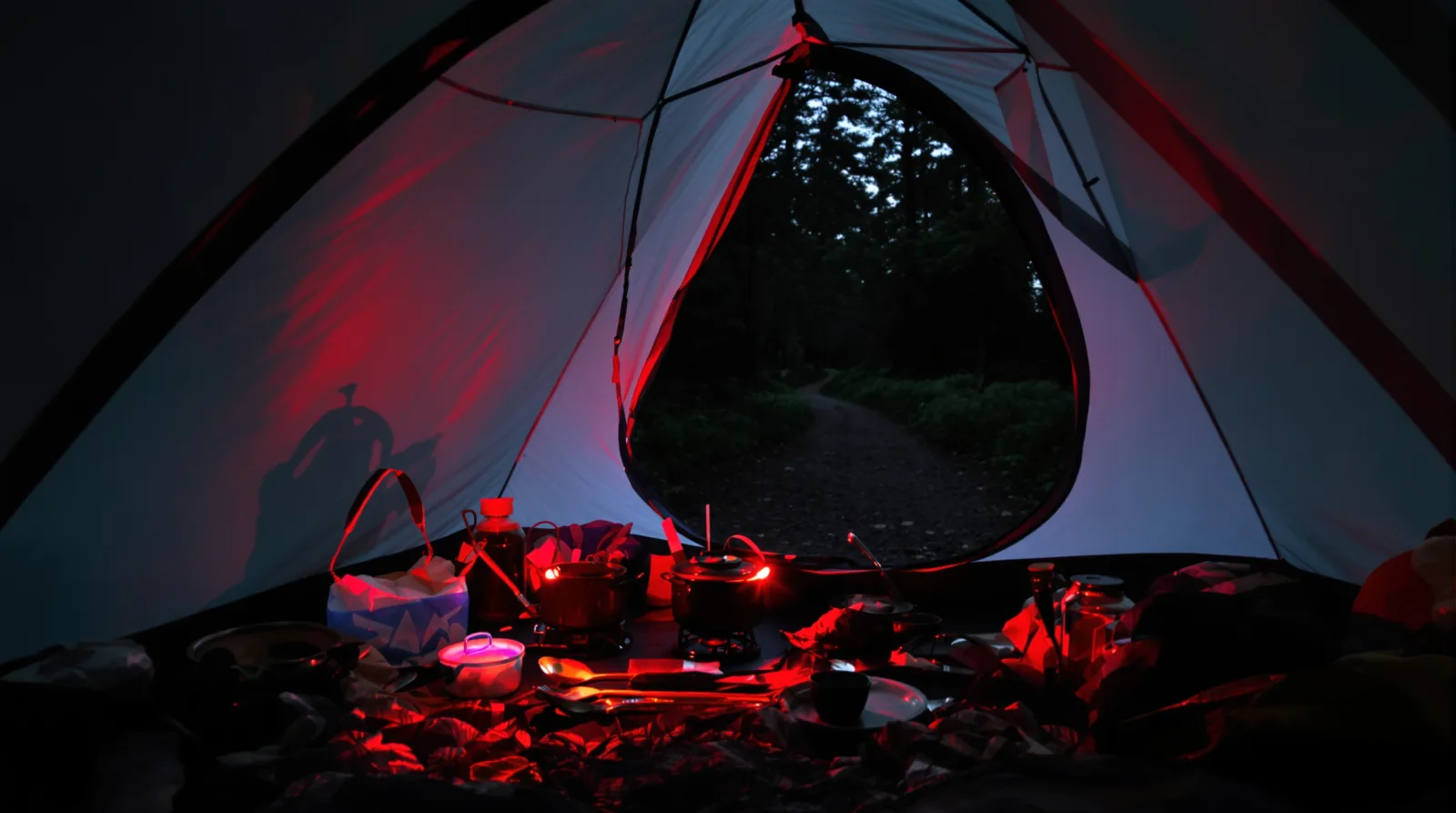
Inside a tent, you usually need less light than you think. Nylon walls bounce light back at your face, and a bright beam that feels fine on the trail can feel harsh in a two-person shelter. For reading, use the lowest white setting or a red mode if your lamp has one, aimed at the page rather than across the tent. Your eyes relax faster, and your tent mate does not get hit with a full beam every time you turn your head.
Cooking at camp calls for a middle setting, especially if you are handling a stove, checking food, or sorting small items after sunset. You want enough light to see fuel valves, pot handles, knife edges, and the color of what is in the pan. A flood beam works better than a tight spot around the kitchen because it lights the whole work area without forcing you to keep your head perfectly still. Keep the lamp angled down at your hands or hang it from a ridgeline or branch if you need shared light.
Save the higher output for jobs outside the tent. That is the setting you want when you need to find a trail junction, scan for a dog at the edge of camp, or pick your way to the restroom path without stepping on roots. More light helps at distance, but it also reflects off pale tent fabric, fog, rain, and dust. Too much brightness close to your face can flatten shadows and make guy lines, rocks, and dips harder to judge.
Be careful with head turns. A headlamp points wherever your eyes go, so one quick glance can blast someone awake or wreck their night vision. Start low, point the beam at the ground, and turn up the output only when the task needs it. Your own eyes adjust better that way, too.
The Picks, Matched to Real Camp Jobs
Two headlamps in the box decide the LHKNL purchase. You get a light for your own hat and a spare for a partner, kid, glove box or cook kit, which matters more around camp than one huge beam rating. The listed 1200-lumen white output has enough reach for a tent, a trail and late-night dog walks, while the red light keeps you from blasting tent mates awake. A 60-degree tilt lets you aim at the stove or ground instead of pointing your whole face at the job.
Living with it is easy in the way a camp headlamp should be. Hold the mode button for 3 seconds and it shuts off from any mode, so you do not click through the whole cycle half asleep. Motion sensor mode is handy when your hands are muddy, greasy or busy with a repair, and the 1500mAh rechargeable battery is rated for 4 to 10 hours with a battery indicator to show what is left. Campers who want swappable disposable batteries for long trips away from USB power should pick a different style, but for car camping, weekend tents and household backup, this pair covers a lot of use for little fuss.
Pros
- Two lights in the pack, useful for couples, kids or a backup kit
- Long-press shutoff avoids cycling through every mode
- White and red light, plus a 60-degree turn for camp chores
- Rechargeable battery can charge while the light is on
Cons
- Built-in battery is less convenient than replaceable cells on long trips without USB power
- Water resistant rating is useful for splashes, but it is not listed as submersible
The Lepro fits the night you realize the lantern is across the campsite and your hands are full of dishes. It weighs 2.86 ounces, so adults and kids can wear it without feeling like a tool battery is strapped to their forehead. The elastic headband handles sweaty chores, and the 45-degree adjustable angle points the beam toward a picnic table, tent stake or dark hallway during an outage.
Controls stay simple: three white settings, plus steady red and flashing red. The LEDs are rated up to 300 lumens, with a claimed reach up to 500 feet, so it has enough punch for walking a dog, checking a breaker or finding the privy after quiet hours. Reviewers call out the large buttons and easy settings, which is exactly what you want when you are using it before coffee or after midnight.
USB-C charging keeps it easy to top up from the same power bank you bring for a phone, and the battery is rated for up to 30 hours on one charge. IPX4 water resistance covers rain and splashing water, so a wet campsite does not send it back into the gear bin. The adapter is not included, and a built-in rechargeable pack asks for planning if your trip runs several nights with no way to charge.
Pros
- Lightweight 2.86-ounce build works well for adults and kids
- Five modes include white light, steady red and flashing red
- USB-C rechargeable battery is rated up to 30 hours
- IPX4 rating covers rain and splashing water
Cons
- Wall adapter is not included
- Built-in battery requires a USB power source once it runs down
A built-in rechargeable battery is the drawback other guides tend to bury. With the Nitecore NU25 MCT UL, you cannot pull dead cells and drop in fresh AAAs at a cold trailhead or on night four away from a charger. If that matches your trips, pack a power bank or choose a battery-swap model. For backpackers counting ounces, the rest of the spec sheet makes a strong case.
The full listed weight is 1.65 ounces, and it still reaches 400 lumens with a max beam distance of 144 yards. Multi-color temperature LEDs let you switch among warm, natural and cool white light, so you can use warmer light in fog or rain, neutral light for camp tasks, and cool light when you want more contrast on the trail. Red light, four white outputs, SOS and signal modes give it range beyond simple tent chores, while USB-C charging takes just over 1 hour and runtime is rated up to 45 hours. IP66 weather resistance and a durable PC body suit backpacking, travel, trail running and the odd late trip to the chicken coop.
Pros
- Very low listed weight at 1.65 ounces
- 400-lumen output with a 144-yard max beam distance
- Warm, natural and cool white settings, plus red light
- USB-C rechargeable with up to 45 hours of rated runtime
Cons
- No replaceable batteries for quick swaps in the field
- Best paired with a power bank on longer trips away from outlets
Coast FL85R
Compared with the backpacking pick ranked above it, the Coast FL85R asks you to carry a bigger, more serious lamp. You give up that pack-first feel, but you get a focusing beam that works well for camp chores and longer looks down a road or trail. Twist focus moves between a broad Ultra View flood and a tighter Bulls-Eye spot, so you can cook at the table, then check a noise past the fire ring without swapping lights.
Output runs from 105 lumens on low to 1000 lumens in turbo, with rated beam distance from 70 meters to 240 meters depending on mode. Low is the camp-friendly setting here, with a listed runtime up to 18 hours from the built-in rechargeable lithium-ion battery. High is brighter at 830 lumens, but the listed runtime drops to 2 hours 45 minutes. Bright light eats power. Reviewers keep calling out the strong beam, the focus adjustment, and the big buttons that are easy to press with gloves.
This suits campers who want one headlamp for setting up after dark, walking dogs around camp, working from a toolbox, or keeping in a truck. The rechargeable design also saves you from buying AAA cells all season. Campers who need a dedicated red mode for tent mates or star viewing should look elsewhere, since the listed modes focus on white output and beam control.
Pros
- Twist focus gives you both a wide flood and a tighter spot beam.
- Very bright for camp use, with 1000 lumens listed in turbo mode.
- Built-in rechargeable lithium-ion battery cuts down on disposable battery use.
- Large buttons get positive reviewer comments for glove use.
Cons
- No red light mode is listed, which hurts it for shared tents and night vision.
- High output shortens runtime, with high mode listed at 2 hours 45 minutes.
Reviewers keep coming back to the same reasons for liking the Energizer PRO-260: it comes with batteries, it has useful white and red modes, and it is easy to grab for odd jobs after dark. One buyer used it in a cave, then kept using it for finding a senior dog in the backyard. Another liked the strap comfort, even while saying the plastic feels cheap. A separate owner praised the lamp itself but said the headband stretches out and does not recover well.
The specs line up with that emergency-drawer role. You get 260 lumens, 3 AAA batteries, high and low spot, high and low wide, high, low, and red light modes. Next Push Off keeps shutdown simple, which matters when you are half asleep or dealing with a power outage. The head pivots, the lens is listed as shatterproof, and the body carries IPX4 water resistance with 1 meter impact resistance. Keep it in a kitchen drawer, car kit, cabin bin, or camping tote if you want a simple light that uses easy-to-find batteries. For long weekend trips where strap durability and battery life matter more, the complaints about the band make it less appealing as your only headlamp.
Pros
- Comes with 3 AAA batteries, so it is ready for a drawer or emergency kit.
- Includes red light plus several white light modes for different chores.
- Next Push Off helps you turn it off without clicking through every mode.
- IPX4 water resistance and 1 meter impact resistance fit basic outdoor use.
Cons
- Reviewers report that the headband can stretch out and lose its shape.
- Some feedback mentions a cheap plastic feel.
Picture a family campsite after dinner: one kid walks to the bathhouse, another reads in a sleeping bag, and an adult is trying to find the clean mugs without blasting everyone at the picnic table. The Foxelli LED Headlamp fits that kind of trip because it is light, cheap to outfit in multiples, and simple enough for kids and adults to share. Red light helps around tents, while the white modes cover normal camp chores.
The listed weight is 3.2 ounces with batteries, and the lamp runs on 3 AAA cells that are included. Output is listed at 165 lumens with a 165 foot beam, plus a 45 degree tiltable body for aiming at the ground, a stove, or a gear bin. Runtime is listed up to 45 hours, which is useful for weekend camping where nobody wants to manage charging cables. IPX5 water resistance means it is rated against splashing or spraying water from any angle.
Controls stay simple with one glove-friendly button, and the mode set includes white, red, SOS, and strobe. Reviewers mention a snug but comfortable headband, a fit that stays put, and multiple brightness settings. This is a good pick for scout bins, family car camping, and loaner lights. Campers who want a high-output search beam or a rechargeable battery should move up to a brighter model.
Pros
- Light 3.2 ounce listed weight with batteries works well for kids and adults.
- Runs on 3 AAA batteries, with batteries included.
- White and red modes cover common family camping needs.
- IPX5 rating gives better splash protection than basic IPX4 lights.
Cons
- 165 lumen listed output is modest compared with brighter headlamps.
- AAA battery power is less convenient if you prefer rechargeable gear.
Stargazers, telescope campers, and anyone sharing a dark campsite buy this because they want red light without a surprise blast of white. You may think any headlamp with a red mode covers that job, but this one is red only, so there is no white beam to click on by mistake while your eyes are adjusted to the dark. The output tops out at 5 lumens, with low and high red levels plus blinking and SOS modes. Around a telescope or inside a tent, that small number is the point.
The adjustable strap and 45 degree tilt let you aim at a star chart, focuser, picnic table, or trail at your feet without holding a flashlight in your teeth. Celestron lists up to 100 hours of battery life from AAA batteries, and reviewers say they have used it often without swapping cells, but the batteries are not included. It is battery powered instead of USB rechargeable, which helps on longer weekends if you pack spares. Keep expectations tight: it is not water resistant, and one reviewer calls it sturdy enough for astronomy, not a caving or climbing headlamp, so campers who need white light for trail finding, bad weather, or chores beyond close range should carry something stronger.
Pros
- Red-only output helps protect dark adaptation and prevents accidental white light
- Low and high red levels, plus blinking and SOS modes
- Up to 100 hours of battery life from AAA batteries
- 45 degree tilt helps with star charts and telescope focusers
Cons
- Not water resistant
- No white beam and only 5 lumens, so it is poor for longer trail walks
Nitecore builds the HC75 UHE around a built-in lithium-polymer battery, a weatherproof, waterproof, impact-resistant body, and an integrated waterproof USB-C port. Wet use is part of the spec, packing gets help from the included storage case and lockout mode, and cold fingers get a two-button layout with direct access to Ultra High, Low, or Red. The box also includes a USB-C to USB-C cable, headband, and sticker.
Power is the reason to buy it, and also the reason to be careful. The lamp reaches 3000 lumens with a 209-yard throw, far beyond what you need for oatmeal, cards, or a quiet tent. It fits late dog walks, rugged terrain, industrial maintenance, construction tasks, and any campsite where you want a spotlight option for checking the tree line. One reviewer moved to it from a lighter Petzl for 11 p.m. dog hikes in mountain lion country.
Beam control separates it from simpler camp lights. The stepless E-focus lets you move from wide floodlight to focused spotlight or a mixed beam, while five white levels and two red modes give you usable low light as well as full output. Two-button operation gives direct access to Ultra High, Low, or Red, and the lockout mode helps keep it from turning on in a pack. USB-C charging takes just over 2 hours, with a power indicator, but the built-in nonstandard battery is less swap-friendly than AAA cells during a weekend without outlets.
Pros
- 3000 lumen max output and 209-yard throw for long-range checks
- Stepless E-focus shifts between flood, spot, and mixed beam
- Waterproof, weatherproof, impact-resistant design with waterproof USB-C port
- Five white levels, two red modes, and direct access to key modes
Cons
- Built-in nonstandard battery is less swap-friendly than AAA or a removable rechargeable
- More light than most camp chores need
Why Two Cheap Headlamps Can Beat One Fancy One at a Campsite
A premium headlamp feels great on the person wearing it, but family camping often rewards quantity. At a campsite, light gets passed around, left on tables, dropped in a tent pocket, or needed by someone walking to the bathroom while dinner is still on the stove. Two low-cost lamps can solve more small problems than one brighter lamp that stays on one forehead. Kids need their own light.
That is where options like LHKNL and Lepro make sense for a family kit, especially if you want lamps you can hand out without a speech about being careful. Give one to a kid for a short walk, keep one near the cooler so nobody blinds the cook, or clip one into the car door pocket before you leave home. If a battery dies, you still have another lamp ready instead of a dark campsite and a phone flashlight doing all the work.
Foxelli and Energizer still fit the conversation, just in a different way. If one adult always handles setup, firewood, late dog walks, or the last gear check before bed, a single dependable headlamp from that side of the list can be the assigned work light. For a couple or a solo camper, that may be enough. For parents managing snacks, shoes, tent zippers, and one kid who suddenly needs the restroom, a second lamp earns its spot fast.
We like the two-light setup for car camping because it spreads light where people actually use it. One lamp can live in the camp kitchen bin, one can stay in the glove box, and the better single lamp can ride with the adult who uses it most. If your camp routine has more hands than headlamps, buy the pair before you chase the fancier beam.
How to Choose a Headlamp You Will Actually Like at Camp
Battery Style and Charging Plans
Match the battery setup to the way you camp. Rechargeable headlamps are easy for overnights, car camping, and trips where you have an outlet, solar panel, or power bank near your sleeping bag.
Replaceable AA or AAA batteries still make sense for longer trips, emergency bins, and a headlamp that may sit in a camp box for months. A drained built-in battery helps nobody when you find it in the dark.
Hybrid models give you both options, often with a rechargeable pack plus standard batteries as backup. Check the listing for the exact battery type before you buy spare cells.
Cold nights can cut runtime, especially with small rechargeable packs. If you camp below freezing, keep the lamp or spare batteries inside a jacket pocket or sleeping bag, and avoid counting on one full charge for every task after sunset.
Useful Light Beats Peak Lumens
Peak lumens sell headlamps, but camp life runs on usable light. Look for a low mode that does not blind your friends, a broad flood beam for cooking, and brightness steps that move smoothly instead of jumping from dim to harsh.
A very bright mode helps when you need to find a trail marker, scan for a bear bag, or check a noise beyond camp. For reading, dish duty, or walking past nearby tents, that same beam is often too much.
Beam shape matters as much as output. A tight spot reaches farther, while a wide flood keeps both hands lit without forcing you to aim your forehead at every fork, tent stake, and stove knob.
Check the listed low-mode lumen level and runtime if the maker provides them. If the lowest setting is still bright, you will use more battery and annoy people across the picnic table.
Red, Green, and Night-Vision Modes
Red light helps preserve night vision and keeps camp calmer after people crawl into tents. It is useful for reading a map, finding your boots, or opening a snack bag without blasting white light through nylon walls.
Mode access matters here. A red mode buried behind several white settings can still flash the whole site before you get where you wanted.
Green light has a narrower audience. Some hunters and night workers like it for contrast, especially when reading terrain or tracking sign, but most casual campers can get by with red plus a low white setting.
Check whether the headlamp starts in red, remembers red, or requires a long press. If you care about night vision, a lamp that always turns on in bright white will frustrate you before the first midnight bathroom walk.
Comfort After the First Hour
A headlamp can feel fine in the store and annoying after an hour of dishes, cards, and tent setup. Watch strap width, front weight, and whether the lamp bounces when you walk quickly.
Tiny backpacking lights save weight and usually disappear under a hood or beanie. Heavier high-output models throw more light, but the front housing can pull down on your forehead unless the strap fits well or the battery rides in back.
Try to picture your actual camp clothes. A lamp that sits well on bare skin may slide on a knit hat, and a low brim cap can block the beam unless the lamp tilts far enough.
Look at the listed weight and the strap layout. If you plan to wear it for chores, late hikes, or early coffee, comfort matters more than one more lighting mode.
Controls You Can Use in the Dark
Controls decide whether a good headlamp feels easy at 2 a.m. A large button is easier with cold fingers or gloves, while tiny flush buttons can be hard to find on your forehead.
Mode order matters more than many specs. If the lamp cycles through strobe or max brightness every time, you will hate it around tents and sleeping kids.
Memory can be helpful when it turns the lamp back on at your last setting, especially red or low white. It can also surprise you if the last setting was turbo, so read how the brand describes memory before buying.
Lockout keeps the headlamp from turning on inside a pack, food bin, or glove box. Check whether lockout is electronic, mechanical, or missing, because accidental activation can drain the battery before you reach camp.
Weather Resistance and Camp Abuse
Camp headlamps get dropped on gravel, shoved into damp tent pockets, and tossed into truck bins with cookware. Check the listed IP rating before rain-heavy trips, since splash resistance and dust protection vary by model.
Do not guess from the product photos. An IPX rating speaks to water, while an IP rating with two digits covers dust and water; the listing should explain what the lamp was built to handle.
Battery compartment design matters in wet weather. A loose door, thin latch, or exposed charging port can be a problem if the lamp lives near condensation, wet jackets, or muddy hands.
For casual summer camping, basic splash protection may be enough. For shoulder-season rain, canoe trips, and long storage in a damp bin, choose a design with a clear rating and a compartment you trust after repeated battery swaps.