CampingKnow is reader-supported. When you buy through links on our site, we may earn an affiliate commission at no extra cost to you. Learn more.
Staying clean at camp sounds simple until you try to fit towels, water containers, soap, stove fuel and the rest of the weekend kit into one trunk. A lake swim may leave you wanting one quick rinse before dry clothes, while a dusty road camp can mean dirty kids, gritty feet, greasy pans and hair full of sunscreen. The products compared here carry 20,861 customer reviews between them. That number does not prove a shower is perfect, but it does show a broad Amazon buyer base behind this lineup, so we use the reviews as context rather than pretend they are field test results.
Our picks cover the main ways campers get water moving away from a bathroom: pump showers, solar bags, propane hot water units and jug based systems. Some are simple packs of warmed water you hang from a branch or canopy pole, and some pull from a bucket or container so you can rinse gear, hands, dishes or a dog before the mess reaches the tent. Warm water matters on cold mornings, with little kids or after a long desert drive; a basic rinse fits a beach campground where space and setup time stay tight. Pack small when you can, but do not ignore the trips where a better wash keeps the whole site from turning gritty by dinner.
We sort these showers by the camp style each one fits, because a campground family, a truck camper and a backroad solo setup do not ask for the same thing. A campground family may care about steady water and a familiar spray pattern, while a truck camper can carry a larger jug, a battery pump or a propane heater without giving up much living space. For off grid sites, we pay closer attention to fuel, charging, hanging options, packed shape and how easy the system is to refill when your water source is a spigot, creek jug or spare container. The right pick is the one you will actually set up before the cooler is packed and the headlamps come out.
Ivation Portable Outdoor Shower
The Ivation wins overall because it turns any bucket, sink, or tub into a usable shower, runs up to one hour on a USB rechargeable battery, and packs small. You get simple pressure, a suction cup, and an S hook for camp setup. A 4.4 rating from 11,000 reviews backs it up.
Check price on AmazonWhich Camp Shower Fits Your Setup?
| Rank | Product | Best for | Price |
|---|---|---|---|
| #1 | Ivation Portable Outdoor Shower | Overall | Check price |
| #2 | Spopal Portable Camping Shower 8000mAh | Rechargeable | Check price |
| #3 | CAMPLUX propane water heater kit | Hot water | Check price |
| #4 | Advanced Elements Summer Shower 5 Gallon | Solar | Check price |
| #5 | SPACEREST portable shower with 5-gallon jug | Integrated system | Check price |
| #6 | IGRL Portable Shower 10L/min | High flow | Check price |
| #7 | Portable Camping Shower 10000mAh | Battery life | Check price |
| #8 | sapsisel Solar Shower Bag 5 Gallon | Budget | Check price |
How Much Water Do You Need for One Camp Shower?
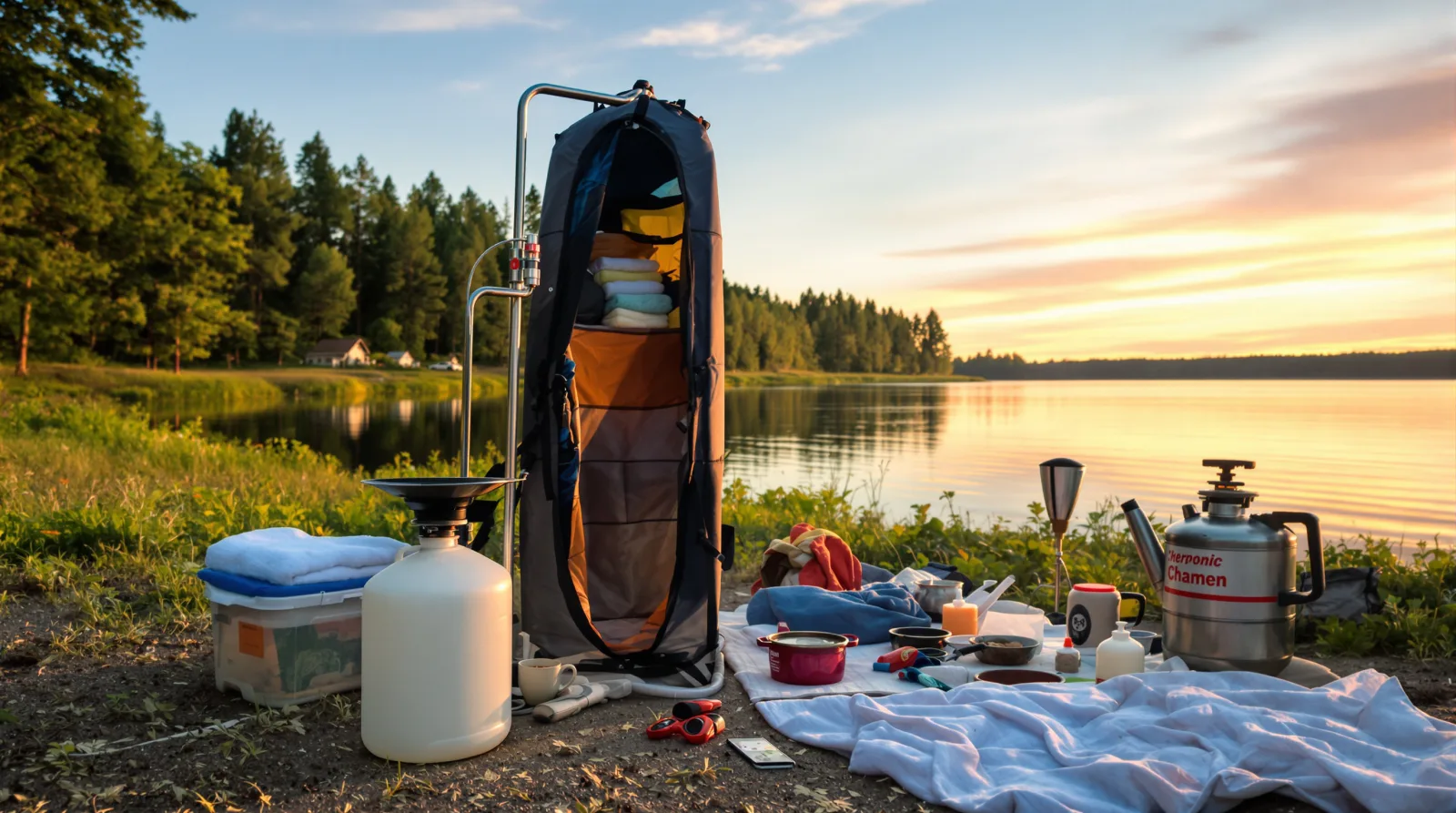
How much water do you need for one camp shower? Think in fills, not perfect math. A 5 gallon solar bag or the SPACEREST 5 gallon jug gives you one clear planning unit, and that matters more than chasing an exact shower length. If the water source sits across camp, you want fewer refills; if you are parked near a spigot, you can be looser with water.
Flow rate changes the feel fast. A stronger stream rinses soap and sand quicker, but it also empties the container sooner. A softer flow stretches water farther, though you may spend more attention aiming the spray and shutting it off between steps. Use the valve often.
- Rinse only: Plan on the least water. Wet down, shut the shower off, soap or wipe, then rinse. This works for sweat, sunscreen, salt, and trail dust.
- Full hair wash: Bring more water than you think, especially with thick or long hair. Shampoo takes extra rinsing, and conditioner takes more, so a single 5 gallon fill can feel tight if you also want a body wash.
- Kids: One container goes farther if you wash one kid at a time and keep the sprayer off while you scrub. Have towels ready before you start, since wet kids waste water while everyone hunts for gear.
- Dog cleanup: Muddy paws and bellies are easy to handle with a small share of the container. A full dog wash uses much more, especially on thick coats that trap soap and dirt.
- Dish duty: Save shower water for rinsing hands, cookware, or sandy feet only if you have a refill plan. Wipe plates and pans first so you are not burning clean water on food scraps.
For a simple camp plan, match the container to the messiest job of the day. Hair wash, dog wash, and dishes are the refill makers. A rinse-only setup is easy; mixed camp chores need a full 5 gallon container nearby and a backup fill within reach.
Eight Camp Showers, Matched to Real Campsite Use
Sixty minutes of continuous use is the number that decides the Ivation for most campers. Charge it by USB from a laptop, car adapter, or computer, drop the pump into a bucket, basin, sink, or tub, and you get a simple shower stream without building a plumbing project at camp. The one-touch switch is easy to live with when your hands are wet, and the single flow rate keeps the setup simple for body rinses, kid baths, dog washing, beach sand, muddy boots, and garden jobs.
The showerhead sticks to a flat surface with the suction cup, or you can hang it overhead with the included S-style hook. Pack size is friendly for a trunk or luggage, and the 4.4-star rating across more than 11,000 reviews lines up with the long-use stories buyers tell, including one reviewer still using the same unit 2 to 3 times per week after almost 3 years. It suits campers who want a reliable battery pump and bring their own warm water. Cold bucket in, cold shower out, so anyone expecting built-in heat should move to a propane or heated setup.
Pros
- 60-minute continuous-use battery rating after a full USB charge
- Pumps from common containers like buckets, basins, sinks, and tubs
- Suction cup and S-style hook give you two simple showerhead mounting options
- Large review base, with strong long-term use feedback from buyers
Cons
- Does not heat water, it only pumps the water you supply
- Single flow rate gives less control than multi-speed rechargeable models
You get back from the beach with sand in your shoes, salt on your arms, and fishing rods that need a rinse before they go in the vehicle. The Spopal 8000mAh shower is built for that kind of stop, where a bucket of water and a battery pump solve several chores in one place. At 0.9 kg, it is still a portable camp item, but the bigger battery and pressure control make it feel less like an emergency rinse kit.
Five power settings let you move from a gentle wash to stronger cleanup, and the showerhead also has a thumb adjustment called out by reviewers. The unit starts at level 3, which is handy if different people are using it and nobody wants to reset everything from scratch. Buyers praise the water stream, volume, and battery display, with one review calling out the time-left readout as useful rather than decorative.
Before you press the power button, the pump needs to be underwater so the dry-run protection system can work as intended. Water over 140°F can damage the machine, and the manufacturer is clear that there is no heating function. Bring warm water in a bucket if you want comfort, because this pump only moves what you give it.
Pros
- 8000mAh battery is sized for longer camp and beach use than basic pocket pumps
- Five power settings give you more control for pets, people, gear, and car cleanup
- Battery time-left display helps you manage rinses at camp
- Reviewers praise the water stream, pressure, and build quality
Cons
- No built-in water heating
- Must be submerged before startup, and water above 140°F can damage the unit
Propane hot water asks more of your campsite than a bucket pump. The CAMPLUX kit weighs 10 pounds, mounts on a wall, uses propane, and includes a 12V pump system, so you are setting up a shower station rather than tossing a little sprayer into a pail. People who only need a fast rinse after a swim will be happier with a simpler battery shower.
For off-grid hot showers, the kit earns its space because it brings the hard parts together. The AY132 heater, 12V pump, and extra-long power cables with more than 25 feet of total reach let you draw from a lake, large bucket, or RV water tank without a pressurized campsite hookup. Specs list 1.32 gpm flow, 34,000 BTU heat output, 167°F maximum temperature, 110 psi maximum pressure, and safety features for dry combustion, flame failure, and low water flow. Reviewers use it for camp showers and problem-solving at home, and one buyer called out quick help from customer service after an input valve leak.
Pros
- Heats water for a true outdoor shower, instead of only pumping bucket water
- Kit includes the AY132 heater plus a 12V pump system for non-pressurized water sources
- More than 25 feet of power-cable reach helps with vehicle or battery-bank placement
- Safety features include dry combustion protection, flame failure protection, and low water flow protection
Cons
- Heavier and more involved to set up than compact battery pump showers
- One reviewer reported an input valve leak, though customer service sent a replacement
Compared with the pick above it, the Advanced Elements Summer Shower asks more from your campsite before you get water on skin. You need direct sun, time, and a hanging spot that can handle a full 5-gallon bag. What you get back is warm water without fuel, cords, or a pump, which is why we like it as the solar pick for beach camps, trailhead rinses, and slow afternoons at a sunny site.
The 4-ply build uses a reflector panel and an insulator panel to help heat and hold warmth, and the built-in temperature gauge tells you when the water is ready. Advanced Elements says it can reach 110 degrees in under 3 hours in direct sunlight. Reviewers back up the basic idea: leave it in the sun and the water heats up, with one camper calling it an easy way to get warm water from a sprinkler at camp.
You give up the grab-and-spray feel of a powered shower. A full bag is heavy, and a 4-star reviewer liked the shower but got stuck on the real campsite question: where do you hang it? Bring a strong branch, rack, or shower stand, and treat it as a warm rinse station rather than a pressure washer.
Pros
- Solar warmth with no battery, cord, or fuel setup
- 5-gallon capacity works for rinsing legs, feet, and camp cleanup
- Temperature gauge helps you see when the water is warm
- Toiletry pouch and Velcro straps keep small wash items close
Cons
- A full 5-gallon bag needs a strong hanging point
- Heat depends on direct sun and time
Reviewers keep saying the SPACEREST works because it solves the container problem first. Overland campers like having one 5-gallon jug for showers, rinsing, dishes, and even drinking water, and several comments call out the sturdy feel and useful pump power. That lines up with the role we give it here: an integrated camp shower for people who do not want to pack a loose pump, hunt for a bucket, and keep the water jug separate.
The spec sheet backs that up with a 5-gallon food-grade PE jug, a built-in pump system, a silicone waterproof ring, and a rotary lock meant to reduce spills and keep debris out if the jug gets kicked around camp. Flow is listed at 1.1 GPM, so it is built for quick rinses and cleanup rather than blasting mud off gear at high speed. Two 2200mAh rechargeable batteries are included, with up to 100 minutes of continuous use, and the jug shape gives you a real water container when shower time is over. People chasing a hot shower still need a separate heat plan, since this set stores and pumps water but does not heat it.
Pros
- Integrated jug and pump means fewer loose camp shower parts
- 5-gallon food-grade PE jug can also carry camp water
- Two 2200mAh rechargeable batteries are included
- Silicone ring and rotary lock help reduce spills and debris entry
Cons
- Does not heat water on its own
- 1.1 GPM flow is better for rinses than high-speed cleanup
Picture the trip where everyone rolls back into camp dusty, the dog is muddy, and you have a bucket of water ready beside the tailgate. The IGRL Portable Shower is the obvious choice there because it is built around flow, not water storage or solar warming. It also makes sense for washing hair at home or camp, which shows up in reviewer comments from people who care most about pressure and control.
The listed flow is 10L per minute, with three pressure levels for changing the spray intensity. You also get four spray modes, one-touch control, an on-off switch at the wand according to reviewers, and an LED screen that shows battery level and water temperature. It does not heat water. The display tells you what you put in the container, which helps if you mix warm water before a rinse.
A 7800mAh battery is rated for up to 180 minutes of continuous operation, and Type-C charging works with phone adapters, power banks, laptops, and car USB ports. The package weighs 1.02 kg, so it fits well in a camp bin with a collapsible bucket or jug. High flow also drains your water faster than lower-output pumps, and one reviewer warns not to let the submersible pump run dry.
Pros
- 10L per minute flow gives it stronger rinse power than low-output camp pumps
- Three pressure levels and four spray modes give you more control
- LED screen shows battery level and water temperature
- 7800mAh battery is rated for up to 180 minutes of continuous operation
Cons
- Does not include a water container or heater
- High flow can drain your water supply quickly
Campers who keep burning through little rinse pumps buy the Tipkook 10000mAh shower for longer off-grid use, but they should not expect hot water from the unit itself. The screen shows water temperature and battery level; it does not mean there is a heating element inside. You need sun-warmed water, stove-warmed water, or a bucket filled from another source if you want warmth. For hunting camp, beach rinses, dog washdowns, and quick showers from a bucket, the long battery rating is the draw.
The 10,000mAh lithium battery is rated for 100 to 240 minutes per charge, so this fits trips where several people need short rinses or where you do not want to charge gear every night. Reviewers call out the small travel size, easy use, and strong spray, and one camper liked that it floated in a bucket and rinsed soap without dripping. The LED display reads 32 to 140°F and helps you avoid water that is too hot before you point the head at skin. At 950 g for the item and plastic construction, it still packs like a compact battery pump rather than a full shower system. Anyone who wants propane heat, a built-in tank, or a shower that creates warm water by itself should choose a heated model instead.
Pros
- 10,000mAh battery is rated for 100 to 240 minutes per charge
- LED display shows battery level and water temperature from 32 to 140°F
- Reviewers report strong spray, easy setup, and good bucket use at camp
- Compact size and 950 g item weight help with packing
Cons
- Does not heat water, despite the temperature display
- Plastic construction may not suit buyers who want a heavier duty camp fixture
The sapsisel bag uses PVC with plastic and metal parts, plus an upgraded silicone hose and shower head. It is a simple hanging solar shower, with a 5 gallon listed capacity, a temperature indicator, and an on/off switch at the head. In sun, the maker says it can heat water to 113°F in 3 hours. No battery. No fuel canister.
Wet hands matter here, because the on/off control lets you stop the flow while soaping up or moving the head between dishes, hands, and feet. Cold mornings still depend on sunlight and air temperature, so this is better for bright afternoons than dawn showers. Packed size is small, with a listed package of 12.36 x 7.01 x 2.87 inches and a package weight of 0.69 kg, which is why we like solar bags for backup water and budget camp washing.
Reviews split on durability. One buyer praised the material and said it survived being left outside in severe Florida weather, while another reported a leaking lid after one use and warped filler-neck threads in the sun. A primitive-camping reviewer also tested it for hand washing, dish rinsing, and occasional warm showers, which is the right job for it. People who want pump pressure, indoor-style showers, or dependable hot water during cloudy weather should move away from a basic solar bag.
Pros
- Budget solar bag design heats water with sunlight and needs no electricity
- Listed 5 gallon capacity works for rinsing, hand washing, and dishes
- On/off shower head and adjustable flow help save water
- Packs small at 12.36 x 7.01 x 2.87 inches
Cons
- Heat depends on sun, so cloudy or cold conditions limit performance
- Some reviewers report leaking and warped filler-neck threads
Hot Shower, Solar Bag or Pump: Which Setup Makes Sense?
Start with the water source, then pick the shower. A bucket based rinse works best when you already have a water jug, creek-safe rinse water, or a camp bucket sitting near the tent. Ivation and Spopal fit that lane: drop the pump in the container, hang or hold the sprayer, and rinse off sweat, sand, dishes, or a dog without building a full shower station. This style is easy to share around camp because the water container can be swapped as it empties.
Choose CAMPLUX if warm water is the point of the trip upgrade. A hot water setup makes sense for cold mornings, shoulder-season camping, muddy kids, or anyone who gets grumpy after a cold rinse. You need to think of it as camp appliance gear rather than a toss-in shower bag, so it suits car camping, base camp weekends, and longer stays where you set up once and leave the wash area in place. For quick overnights, it may be more than you want to haul.
Advanced Elements and sapsisel cover the simplest solar bag path. Fill the bag, let the sun do the work, then hang it high enough to get a gravity rinse. This is the pick for warm-weather camps, beach days, and low-tech setups where quiet matters and batteries stay at home. No pump noise. You give up instant heat control, so plan your rinse around the part of the day when the bag has had time in the sun.
- SPACEREST: Pick this if you want the shower parts kept together as a contained kit. It fits campers who dislike piecing together a pump, hose, hook, and storage bag every time they pack.
- IGRL: Pick this if flow matters more than the smallest packed size. A stronger stream helps with thick hair, heavy dust, and gear rinse-offs after muddy trails.
Your camp style should make the call. Backpack-style minimalists usually lean toward a sun warmed bag, while car campers who cook, swim, ride, or bring kids get more from a bucket pump or hot water setup. If you camp with a group, think about who will use it last, because a slow bag shower feels different after three people have already rinsed. Pick the type that matches your water source and routine, then compare models inside that lane.
What Matters Before You Buy a Camp Shower
Water Supply and Refill Plan
A camping shower is only as useful as the water you can carry, pump, or reach. Before you buy, check the listed capacity in gallons or liters, then picture the real source: a built in jug, a separate bucket, a lake, a creek, or a campground spigot.
Small hanging bags work for a quick rinse, but longer hair, kids, sand, and multiple people drain them fast. If refilling means walking back to a spigot with a full container, weight and handle shape matter as much as spray comfort.
For remote camps, a pump that can draw from a bucket gives you more options than a fixed small bag. Around campgrounds, match the shower to the faucet access you actually have, since some sites put water far from the tent pad.
Hot Water Method
Solar showers are simple: fill the bag, set it in direct sun, and wait. They cost less and pack flat, but clouds, shade, cool air, and late arrivals can leave you with cold water.
Propane shower systems heat water at camp and suit longer trips or groups that want repeat showers. They cost more, need fuel, and must run outdoors with safe airflow, clear space, and close attention to the instructions.
Simple pump showers do not heat anything. They spray whatever temperature sits in the bucket, jug, or sink, so you can bring preheated water from home or warm water on a stove and mix it safely before use.
Check the listing for heat source, fuel type, hose length, and any temperature controls. Guess wrong and you bring a shower that only moves cold water.
Pump Style and Pressure Control
Gravity bags are quiet and simple, but pressure drops as the bag empties or hangs too low. They work best from a branch, roof rack, or shower shelter frame where the hose can point down.
Rechargeable pump showers pull water from a bucket and give steadier spray with less setup. Manual pressure systems use a hand pump or foot pump, so you build pressure yourself and avoid batteries.
Higher flow electric showers feel closer to a home rinse, but they empty small containers faster. Check the listing for flow rate, spray settings, hose length, and whether the head has an on and off switch at your hand.
If you camp with limited water, choose control over force. A strong stream feels good for one person and leaves the next person staring into an empty bucket.
Battery and Power Needs
Rechargeable and 12 volt showers need a power plan before you leave the driveway. Check the listed runtime, charge time, battery type, and charging plug, then compare that with your trip length and access to a car, power bank, wall outlet, or solar panel.
Some showers put the battery inside the pump. Others use a separate battery pack that stays out of the bucket, which can be easier to keep dry and easier to replace if the design allows it.
Charge the unit at home, test the switch, and pack the cable with the shower parts. A dead pump turns a clean bucket of water into a cold pour-over bath.
For longer trips, 12 volt models can make sense near a vehicle. For walk-in camps, every cord, battery, and adapter adds bulk you have to carry.
Privacy, Drainage and Campsite Rules
A separate shower shelter helps when sites sit close together, when you camp with a group, or when changing clothes in a wet swimsuit gets old. Check the shelter height, floor design, and packed size if the shower does not include privacy on its own.
Drainage matters more than people expect. On sand or gravel, water disappears fast, but on hard dirt, rock, or a tent pad, a drain floor or raised mat keeps you out of a muddy puddle.
Campground rules can limit where shower water goes, especially water with soap, sunscreen, or food residue. Biodegradable soap is still soap, so use it where the campground allows and keep wash water away from lakes, streams, and shared paths.
If rules require a drain or gray water container, a bucket fed pump is easier to manage than a bag dripping wherever it hangs.
Packing Size and Cleanup After Use
A flat solar bag takes the least pack space once empty, though it still needs a place to ride without getting punctured. A pump kit adds a hose, shower head, cable, and storage pouch, so check packed dimensions and weight before it lands in a bin with your kitchen gear.
Rigid jug systems are easier to fill and stand upright in camp, but they take the same space full or empty. Propane heater kits bring the most parts: heater, hose, regulator, fuel, pump or water connection, and a case if one is included.
After use, drain the hose, run clean water through the pump, and hang bags open if the design allows it. Wet hoses packed in a closed tote smell stale fast, and leftover water can leak into clothes or sleeping bags on the drive home.
Where the Water Goes: Gray Water, Soap and Shower Tents
Camp showers create gray water, and gray water has to go somewhere. At developed campgrounds, the answer is often posted on a board, printed on your permit or explained by the camp host, so check before you rinse off near a tent pad. Some places want wash water in a utility sink or drain, while others let you scatter it away from camp after straining out food bits and trash.
A shower tent earns its space when privacy, splash control and mud matter. In a crowded group camp, an open-air rinse can send soap water across someone else’s site, under a picnic table or straight into the trail between tents.
Desert camps need extra care because water runs fast over hard soil and can cut little channels through fragile ground. Pick durable ground, use as little soap as you can and keep runoff away from washes, plants and any natural water source.
Sandals are worth packing even for a quick rinse. They keep your feet off gravel, wet leaves, campground bathroom floors and the slick spot that forms under most portable showers.
A small caddy keeps the whole routine cleaner. Put soap, towel, toothbrush and a headlamp in one place, then hang it from the shower tent or set it on a camp table instead of dropping everything into wet dirt.
Before anyone turns on the pump or opens the bag valve, decide where the water drains. A shallow basin, a small mat or a patch of durable gravel can keep your shower from turning the site into a swampy mess.