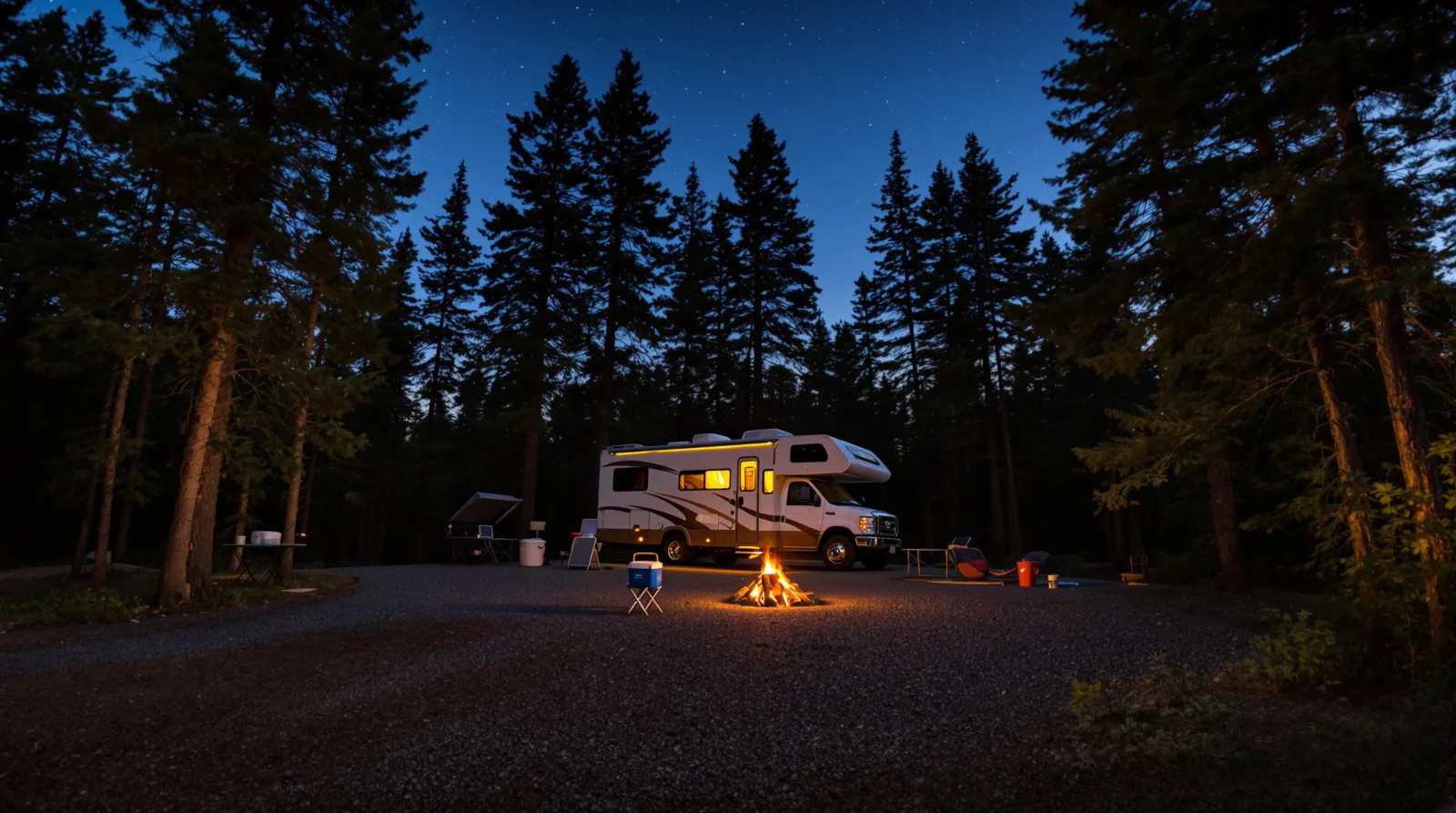
You are looking at a campsite with no pedestal, no water spigot, and no sewer hookup. That is boondocking: camping without hookups, usually outside a developed campground. People also use the word for certain overnight parking situations, like sleeping in an RV at a trailhead, a business lot that allows it, or a pullout where overnight stays are legal.
In practical terms, boondocking means you bring what the site does not provide. Your batteries handle lights and devices, your fresh tank or jugs cover water, and your gray and black tanks or toilet plan have to last until you leave. You may have no camp host nearby, no trash service, no picnic table, and no marked site number. Quiet helps.
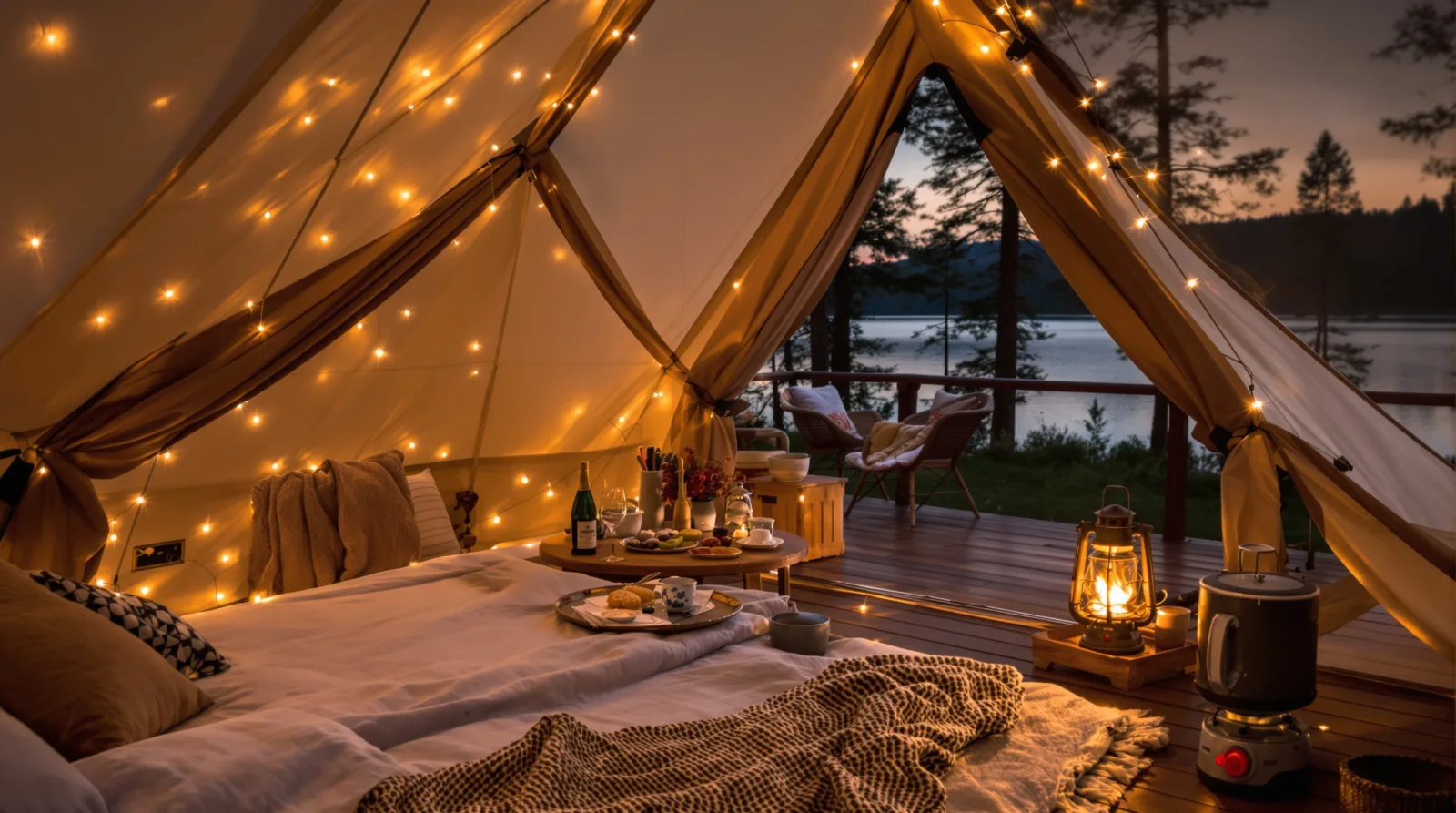
The meaning shifts with your setup. In an RV, camper, or travel trailer, boondocking usually points to dry camping away from hookups, often on public land or in a basic camping area. In a tent, people may call the same idea dispersed camping, primitive camping, or backcountry camping, depending on the land rules and how far you are from your vehicle. In snowmobile areas, it can mean parking and sleeping near a riding zone with no services beyond the access point.
Frequently Asked Questions
What does boondocking mean in RV terms?
Boondocking means camping in an RV without hookups for water, sewer, or shore power. You rely on your tanks, battery, propane, solar, or generator, so your stay length depends on power use, water supply, and waste capacity.
Is boondocking free, or do you ever pay?
Boondocking is often free, especially on some public lands, but you may pay in certain spots. Fees can apply for permits, managed camping areas, dump stations, fresh water, or overnight parking at businesses that allow RVs.
Is boondocking illegal anywhere?
Boondocking is illegal where overnight camping or parking is banned. Rules vary by city, county, agency, and property owner, so check signs, land maps, posted stay limits, fire rules, and local ordinances before you settle in.
What is the difference between boondocking and dispersed camping?
Boondocking means RV camping without hookups, while dispersed camping usually means camping outside developed campgrounds on public land. Dispersed camping can be done in a tent or RV, and boondocking can also happen in parking lots or driveways.
Can you boondock at Walmart overnight?
You can boondock at some Walmart stores overnight, but permission is never guaranteed. Store policy, local laws, security rules, and parking lot design all matter, so call the store, ask a manager, park out of the way, and keep a low profile.
What is BLM boondocking?
BLM boondocking is dry camping on land managed by the Bureau of Land Management. Many areas allow free or low cost camping with stay limits, but rules change by location, so check local BLM office guidance before you camp.
What kind of RV or travel trailer works best for boondocking?
The best RV for boondocking has enough battery capacity, water storage, ground clearance, and waste tank space for your trip style. Smaller rigs fit more sites, while larger rigs can carry more supplies but may struggle on rough roads.
Is boondocking safe for beginners?
Boondocking can be safe for beginners if you start close to town and plan your basics. Check road access, weather, cell service, water, power, and fuel, then tell someone where you are camping and when you plan to leave.
The Bottom Line
For most campers, the best boondocking choice depends on the night you need, not the word on the map. If you want the classic version, our pick is a marked dispersed site on National Forest or BLM land. You get room to spread out, no hookups, and the quiet people usually mean when they talk about boondocking.
For a travel night, our pick is a legal overnight lot that welcomes RVs, such as a truck stop, casino, or outdoor retailer lot where overnight parking is allowed. You are there to sleep and roll out cleanly in the morning. Keep it simple.
For a first try, our pick is a dry campsite in a campground. You still skip hookups, manage your water and power, and learn your rig without hunting for a remote spot after dark.
Jack Fletcher
Founder & Outdoor Editor at CampingKnow
Jack writes about camping gear, tents, sleep systems, campsite comfort, and the practical details
that make the difference between a great night outdoors and a miserable one. His approach is simple:
look past the marketing, understand the specs, consider how the gear will actually be used, and make
the trade-offs clear.