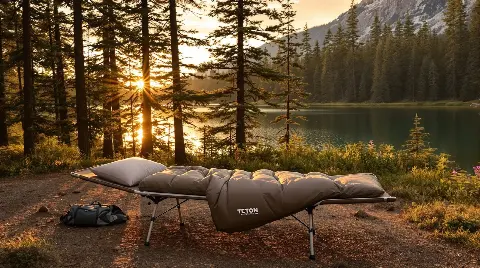
You are standing over a half-packed bag, deciding what gets strapped outside and what earns space inside. A foam sleeping pad almost always works, but it takes up room before you even add food, layers, and a stove. Both types work for plenty of campers. The real question is which failure mode you can live with after dark.

Foam is the low-drama option. It shrugs off punctures, wet tent floors, dog claws, and the kind of campsite where every flat spot seems to hide a root. Bulk is the part you carry, since many closed-cell pads ride outside the pack, catch brush, and take up awkward space in a small car. You also feel more of the ground, especially if you sleep on your side or camp on hard-packed dirt.
Inflatable pads solve the space problem fast, and they can feel better under hips, shoulders, and knees. They also ask more from you: careful site cleanup, valve checks, a repair kit, and the patience to hunt for a leak when you wanted sleep. A slow sag at 2 a.m. feels very different from a bulky foam roll in daylight. We compare foam and inflatable pads by packed size, comfort, reliability, warmth, setup, repair, and trip style.
What Happens If Your Pad Fails at 2 a.M.?
What Happens If Your Pad Fails at 2 a.m.?
A sleeping pad failure feels different at home than it does in a dark tent with cold ground under you. Foam can be dented, wet along one edge, or bent into an annoying shape, but it still puts material between your body and the dirt. You may grumble and shift around. You still have a barrier.
A pad with air has a sharper failure point. A small leak can turn a comfortable pad into a thin sheet, and once your hip and shoulder touch the ground, warmth drops fast. Sleep gets loud. You hear fabric scrape, you hear yourself breathe, and you start deciding whether to hunt for the hole or keep adding air until morning.
Patching works if you can find the leak, the pad surface is dry enough, and your hands are steady enough to do the job in the middle of the night. That is a lot to ask after a long hike or a cold evening. A slow leak may buy you time with a few reinflations; a torn valve or wide puncture can end the pad’s useful night right there.
- Clear the tent floor: run your hand across the floor before you set the pad down. Pine needles, grit, burrs, and tiny sticks are easier to remove before your body weight presses the pad into them.
- Carry a small patch kit: keep it where you can find it by headlamp, not buried at the bottom of a food bag. Check that the kit matches your pad material before the trip.
- Do not put an air pad straight on sharp ground: use a tent floor, footprint, groundsheet, or a foam pad under it if the site has rock chips, cactus spines, broken twigs, or hard stubble.
This is the question many buyers skip because every pad looks fine in a store or on a clean living room floor. Foam gives you an ugly backup when things go wrong. Inflatable comfort depends on trapped air, so your camp habits and repair kit matter after dark.
Foam and Inflatable Pad Picks
If you are matching pad choice to warmth, bulk, and comfort, these options fit the tradeoffs covered in this guide.
| Product | Why it fits | Price |
|---|---|---|
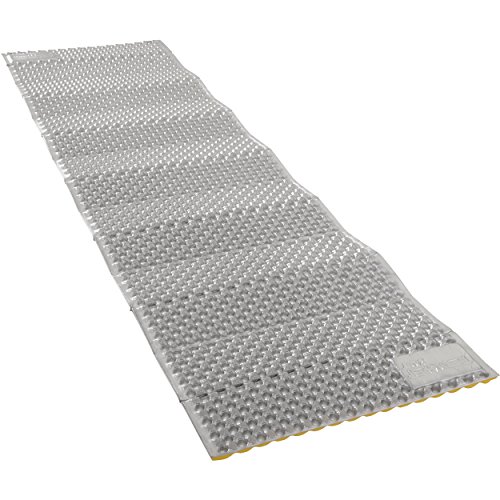 Therm-a-Rest Z Lite Sol
Puncture-proof foam pick Read our review |
Choose this when you want a closed-cell pad that cannot puncture or leak and opens in seconds without any inflating. | Check price |
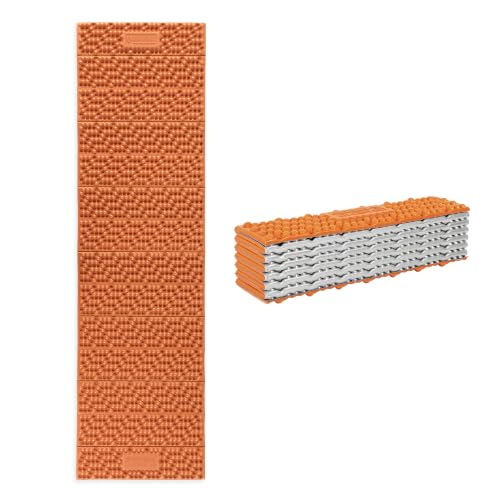 NEMO Switchback Foam Sleeping Pad
Light foam option Read our review |
This fits trips where you want foam that stays air-free overnight, with a nesting pattern and taller nodes for more cushion than basic flat foam. | Check price |
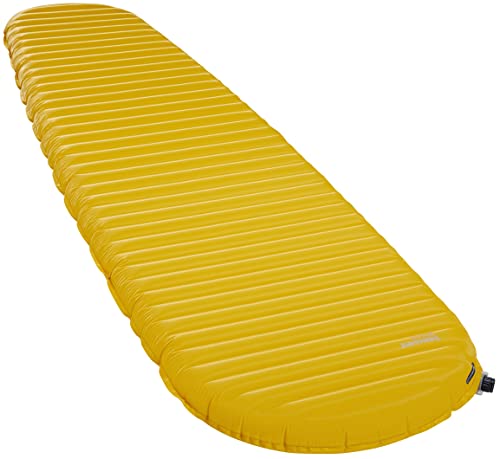 Therm-a-Rest NeoAir XLite NXT
Warm compact inflatable Read our review |
Pick this if you want an inflatable that packs close to a one-liter bottle and brings uncommon warmth for its weight. | Check price |
 Klymit Static V
Budget comfort inflatable Read our review |
Use this when you want entry-level inflatable comfort, with V-shaped chambers that help keep you centered and a small packed size. | Check price |
Backpacking, Car Camping, and Guest Beds Do Not Need the Same Pad
A foam pad and a pad that inflates can both be the right call, but the campsite decides more than the category name. A backpacking pad gets judged inside a pack before it ever touches the ground, while a car-camping pad can be bulky if your trunk has room. At home, guests care about bed feel, height, setup, and where you stash the thing after they leave. Pick by the night you are planning.
Backpacking: Weight, pack volume, and warmth sit at the front of the decision. Closed-cell foam is dependable because it cannot puncture, and you can strap it outside a pack without much worry, but it usually takes up more space. A pad that inflates for backpacking packs smaller and can be warmer for its size, which helps when your shelter, food, layers, and water already crowd the bag. You give it more care around thorns, sharp gravel, and camp chores, since a leak changes the night fast.
Inflatable pads still suit many long-mile trips because the packed shape disappears inside the pack and the sleep feel is closer to a mattress. Either way, dependable warmth matters more than plush comfort when the forecast drops overnight. Cold hips ruin sleep.
Car camping: Your pack size limit mostly goes away, so comfort can move up the list. Thick foam pads are simple, quiet, and quick to throw down in a tent, especially for kids or anyone who hates fussing with valves. Self inflating pads fit this use well because they add cushion without asking you to blow up a tall air mattress, and many feel steadier than a pure air chamber. A wider pad also makes more sense here, since you carry it from the car, not over a pass.
Guest beds at home: Height changes the answer. If your guest has trouble getting up from floor level, a proper air bed may be the kinder choice because it puts them closer to a regular bed height. A pad that inflates is easier to store in a closet, quicker to loan for a camping trip, and less bouncy when someone rolls over. It also avoids the big-bed footprint in a small apartment.
Decide by the Problems You Actually Notice at Night
Sleep position and pressure points
Side sleepers put a lot of weight through one hip and one shoulder, so they usually need more thickness and some give from an inflatable or self-inflating pad. If the pad bottoms out, those pressure points meet the ground and you wake up sore.
Back sleepers spread weight across a wider area. Many can sleep well on closed-cell foam, especially on level ground, because the spine and hips do not sink into one narrow spot.
Ground insulation and cold weather use
Pad choice is insulation as much as cushion. Check the listed R-value, then match it to the coldest ground you expect, because a warm bag still loses heat underneath you when the pad is wrong.
Closed-cell foam keeps working if it gets crushed, nicked, or folded hard. Insulated inflatables vary by baffles, fill, and construction, so the rating matters more than the product photo.
Packed shape
Foam pads usually ride rolled or folded on the outside of a pack. That shape can snag brush, soak up rain on a wet hike, and get awkward in airline luggage, bikepacking bags, or a small car trunk.
Inflatables pack inside the bag, often in a narrow stuff sack, so they stay protected and free up exterior lash points. Check packed dimensions and weight on the listing, not only the sleeping dimensions.
Failure risk and field repair
A foam pad can tear, crease, or lose some loft and still give you a usable barrier from the ground. You may hate the ripped corner, but the night usually continues.
An inflatable depends on airtight fabric, seams, and a valve. Bring the patch kit, clear the site of thorns and sharp gravel, and check the valve if the pad gets soft, because one small leak can put your hip on dirt.
Setup, packing, and midnight adjustments
Foam pads are fast: unroll or unfold, then sleep. In the morning, they pack the same way, with no deflation wait and no stuff sack fight.
Inflatables take breaths, a pump sack, or a built-in pump, and deflation can be fussy when you want coffee. They let you tune firmness, but some fabrics crinkle, some slide on tent floors, and air can contract after the pad cools at night, so you may need to add a little air after midnight.
Budget and long term value
Foam pads often win on price and lifespan. They have no valve, no internal structure to fail, and they handle dirt, dogs, scout trips, and loaner duty without much worry.
Inflatables cost more because they buy comfort, low weight, and smaller packed volume. Check listed weight, thickness, R-value, packed size, and fabric denier, then decide whether that comfort is worth the higher replacement and repair risk.
Where Self Inflating Foam Pads Fit
Self inflating foam pads sit between a basic closed cell foam mat and a full air pad. Inside the shell is open cell foam, the spongy kind that springs back after you squeeze it, and that foam sits inside an air chamber with a valve. You get more cushion than a folded or rolled closed cell pad because the foam can loft and trap air, but the pad usually feels calmer under your hips and shoulders than many air-only pads. Less bounce helps if you roll around at night.
The name can make them sound automatic, but they still need a little help. Unroll the pad, open the valve, and give the foam time to pull air into the chamber as it expands. Once it has risen as far as it wants to, lie on it or press a hand into it; if your hip feels close to the ground, add a few breaths through the valve, then close it. Do not crank it rock hard if you like a flatter camp bed, because a small drop in pressure can make the foam feel better under your shoulder.
Packing one is simple, though it takes more patience than a plain foam mat. Open the valve, fold or roll from the far end to push air out, then close the valve if you need to keep it compressed while you reset for a tighter roll. Open it again, roll it a second time, and close the valve once the pad is inside its stuff sack or straps. That second roll saves space.
The open cell foam stays in better shape when it is not crushed for weeks, and the pad inflates faster the next time you pull it out. If your closet forces you to keep it rolled, give it extra time at camp before you judge the feel. Cold weather and long storage both slow the foam down.