What Is a Vault Toilet? A Camper’s Plain-English Guide
Learn how vault toilets are built, how they handle odor, what to expect inside, and what homeowners should know about costs, kits, risers, and installation.
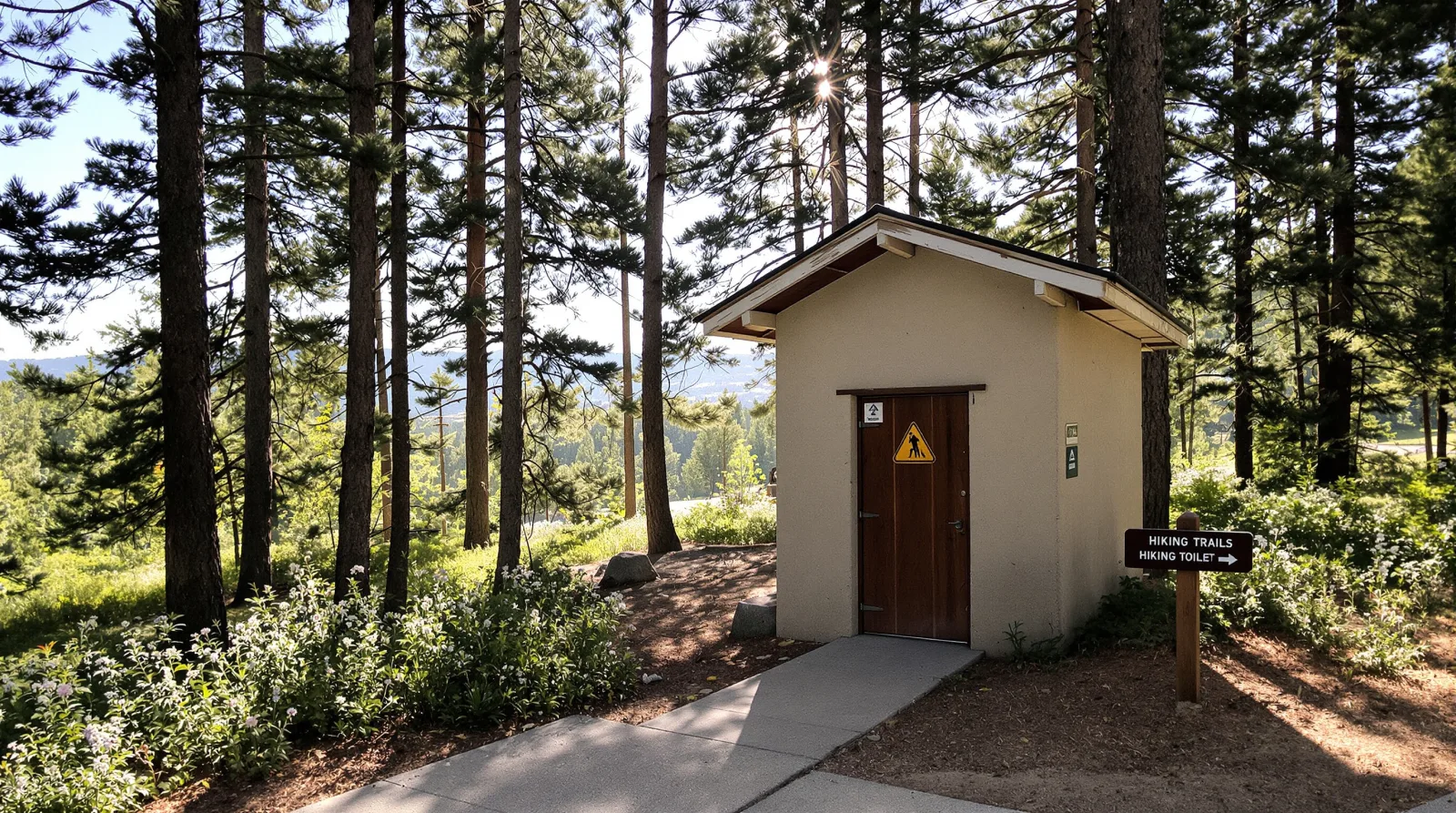
You find the little concrete restroom at the trailhead, step inside, and wonder why there is no sink, no flush, and no plumbing noise. A vault toilet is a waterless toilet over a sealed holding tank, common at trailheads, boat launches, forest campgrounds, and remote parks. You have probably used one before you ever heard the name.
The toilet seat drops waste straight into that tank, where it stays until a service truck pumps it out. No flush handle. Most vault toilets use a vent pipe to pull odors up and out of the building, though a hot, still afternoon can still smell rough. The building may look like a small restroom or an old outhouse, but the idea is the same.
For campers, the name matters because it tells you what to expect: toilet paper may be there, handwashing usually is not, and the floor can be muddy after a busy weekend. Bring your own paper, carry hand sanitizer, close the lid if there is one, and keep trash out of the hole. This bathroom setup is simple, but it works best when everyone treats it like shared camp gear instead of a garbage can.
Frequently Asked Questions
Is a vault-style toilet the same as a pit toilet?
A sealed toilet is similar to a pit toilet, but it uses a sealed underground tank instead of an open pit. Waste stays in the vault until a pump truck removes it, so it suits campgrounds, trailheads, and parks where plumbing or water is not available.
Do vault toilets smell bad at campgrounds?
Vault toilets can smell, especially in hot weather or heavy use, but good venting and regular pumping cut down the odor. A clean unit with a tall vent stack usually smells much better than an old pit toilet, though you may still notice it inside.
How deep is the tank under a pit toilet?
The tank depth varies by model, site, and capacity, so there is no single standard depth. Many campground units use a buried concrete or plastic vault sized for expected traffic, and the installer sets it deep enough for cover, access, frost conditions, and pump truck service.
What is the raised toilet riser for?
The raised toilet riser gives you a seat above the vault opening and directs waste into the tank below. It also helps with comfort, splash control, cleaning, and accessibility, depending on the design. Some risers are taller to meet public restroom access requirements.
Can you put an outhouse on private property?
You can put a toilet with a sealed vault on private property if local codes, health rules, and zoning allow it. You may need permits, approved setbacks from wells or water, an engineered tank, and a pumping plan. Check with your county health department before buying anything.
How much does this type of toilet cost to install?
Vault toilet installation cost varies a lot because the building, tank, excavation, delivery, permits, and site access all change the price. A small private setup and a prefabricated public campground unit are very different projects, so get quotes from local installers or park restroom suppliers.
What should you bring when using one at a campground?
Bring toilet paper, hand sanitizer, a headlamp or small flashlight, and a trash bag for anything that should not go in the toilet. Many vault toilets have no sink, no light, and no stocked paper. In summer, bug spray can make the stop easier.
The Bottom Line
Campground with no plumbing: pick a pit toilet. It is the standard fixed choice for a place that needs a restroom all season but does not have flush toilets or a sewer connection.
Trailhead or day use parking area: pick a pit toilet when a service truck can reach it. Hikers get a basic seat and shelter before the trail, and the waste stays in the buried tank until it is pumped out.
Short event, construction site, or extra busy weekend: pick a portable toilet. A rented unit makes more sense when the restroom need is temporary, or when the site needs extra capacity for a short stretch.
Jack Fletcher
Founder & Outdoor Editor at CampingKnow
Jack writes about camping gear, tents, sleep systems, campsite comfort, and the practical details
that make the difference between a great night outdoors and a miserable one. His approach is simple:
look past the marketing, understand the specs, consider how the gear will actually be used, and make
the trade-offs clear.