CampingKnow is reader-supported. When you buy through links on our site, we may earn an affiliate commission at no extra cost to you. Learn more.
You can buy a great sleeping bag and still spend the night shivering, sore, or half awake if the pad under you does not fit the trip. A backpacking sleeping pad has two jobs in your kit: it is your mattress on lumpy ground and part of your insulation system when dirt, snow, or a shelter floor pulls heat away from your body. The products compared here carry 44,536 customer reviews between them. That matters, but it does not settle the choice, because a big review count can come from an easy price, wide store presence, frequent sale placement, or years on the shelf, while the best pad for your pack may be the one with fewer reviews and the right job for the ground under your tent.
Review count, rating, role, and price all need to be read together before you trust the ranking or click the cheapest option. Ratings can mislead. A pad with thousands of happy owners may be perfect for warm overnights and rough on cold ground, while a strong ultralight rating may come from hikers who accept a narrower shape, louder fabric, or less cushion after a long day. Price matters too, since a budget foam pad, a light air pad, and a winter-ready insulated pad solve different problems before you ever climb into a bag, and the low-cost pick only works if you can sleep on it night after night.
We are matching pads to trips instead of lining them up as a pure spec contest, because a pad that shines on fast summer miles can be the wrong call for a frozen shelter floor or a rocky camp where you already know sleep comes hard. If you are counting ounces for long miles, packed size and weight move up the list, while shoulder-season camps, alpine starts, wet campsites, and winter shelters push insulation higher, since an underbuilt pad can make a warm bag feel weaker than its rating suggests. Cold finds gaps. Side sleepers, new backpackers, hammock users, and spare-pad buyers may land on different models for good reasons, so use the comparisons to match your own nights: warm-weather trips, cold camps, small packs, tight budgets, or a loaner pad you keep ready for friends.
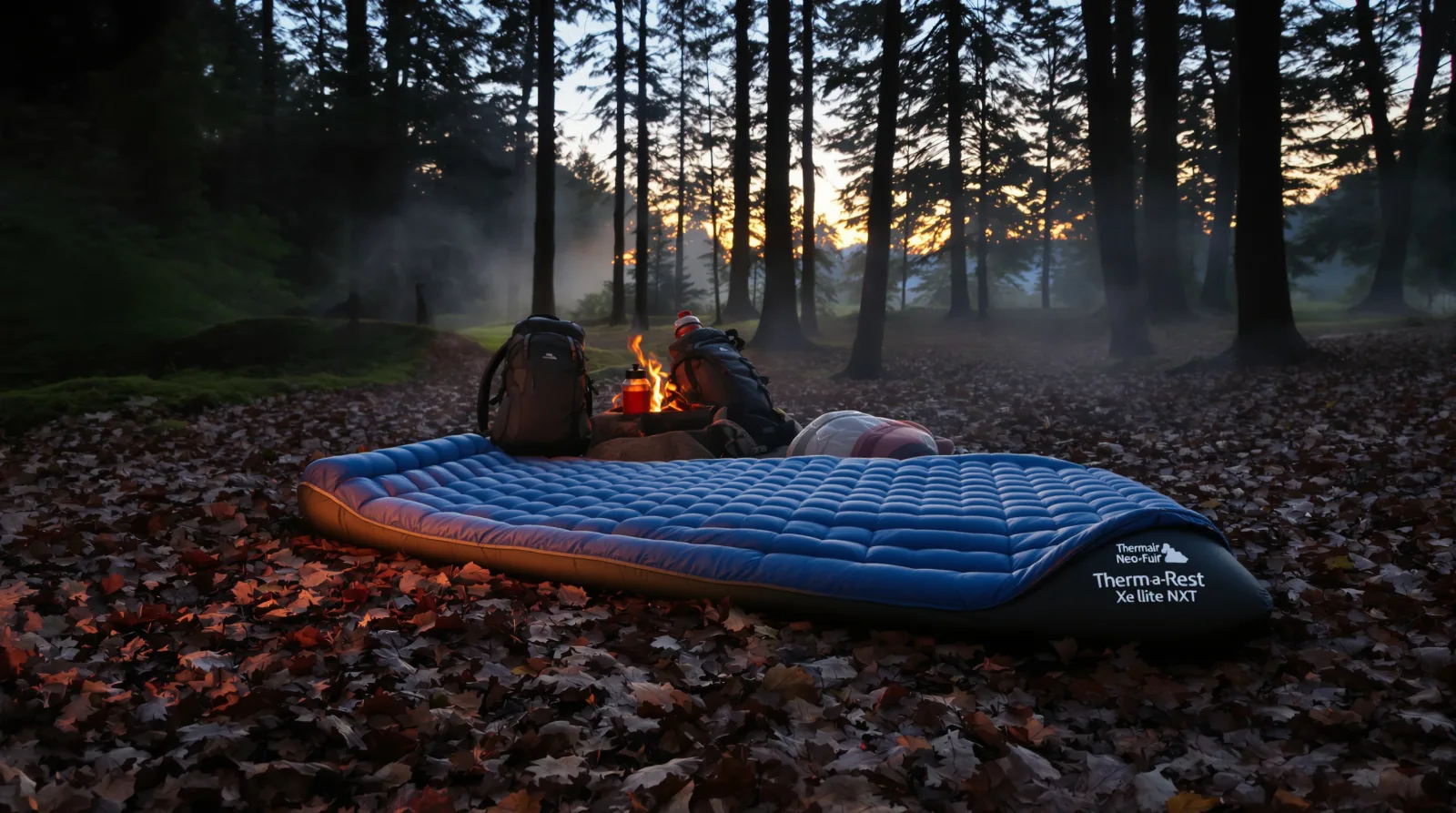
Therm-a-Rest NeoAir Xlite NXT
At 13 oz in Regular, a 3-inch profile, and a 4.5 R-value, the NeoAir Xlite NXT hits the backpacking sweet spot: light, warm, and supportive. It packs to about a 1-liter bottle, uses a fast WingLock valve, and reviewers praise the quieter feel, warmth in 30s temps, and solid air retention.
Check price on AmazonSeven Backpacking Pads at a Glance
| Rank | Product | Best for | Price |
|---|---|---|---|
| #1 | Therm-a-Rest NeoAir Xlite NXT | Overall | Check price |
| #2 | Sleepingo Ultralight Sleeping Mat | Budget | Check price |
| #3 | Naturehike 20oz Ultralight Sleeping Pad | Lightest | Check price |
| #4 | Big Agnes Divide Insulated Regular | Premium | Check price |
| #5 | Therm-a-Rest Z Lite Sol | Foam | Check price |
| #6 | Gear Doctors Oxylus 4.3 R-Value | Cold weather | Check price |
| #7 | Sea to Summit Camp Plus SI Rectangular | Comfort | Check price |
Will the Pad Crowd Your Tent or Quilt?
Pad size is about more than whether your heels hang off the end. Once you zip the tent shut, the pad shape decides where your pack lands, how much room your tentmate gets, and whether your quilt stays put when you roll over. Floor space disappears fast.
Rectangular pads give you the most usable sleep surface, especially if you sprawl or shift from side to side. They also take up more tent floor at the shoulders, hips, and feet, so two rectangular pads can turn a tight tent into a gear puzzle. In a narrow shelter, those square corners may press into the tent wall or overlap the other pad.
Mummy pads trim the corners that most people do not use much. That smaller footprint can leave room for shoes, a water bottle, or a dry bag beside you instead of under your knees. They also pair well with tapered backpacking tents, where the foot end gets narrow and every corner counts.
Wide pads help if you wake up halfway off a standard pad or sleep with one knee out. Restless sleepers usually care more about side-to-side room than extra length, especially with a quilt instead of a sleeping bag. A wider pad can feel calmer, but it needs to match the tent floor you actually have.
- Solo tent: A wide rectangular pad may leave little room for anything else inside. A mummy shape can make the same shelter feel less cramped.
- Two-person tent: Two wide pads may not sit flat together, especially if the tent tapers hard at the foot. Check the pad shapes as a pair, not one at a time.
- Quilt setup: Quilt straps work best when the pad feels stable under you. If the pad is too narrow, the strap tension can pull the quilt off-center as you move.
Quilts add one more reason to think past body height. With straps clipped around the pad, a stable platform helps the edges stay tucked and cuts down on cold gaps near your hips and shoulders. Some sleepers do better with a slightly wider pad for that reason alone.
Before you buy, picture the full layout: pad, quilt, pack, shoes, water, and a tentmate if you have one. The right size is the one that lets you sleep without turning the tent floor into a wrestling match.
Trail Use Notes on Each Pad
4.5 R-Value is the number that makes the Therm-a-Rest NeoAir XLite NXT L feel like the safest overall pick for backpacking trips where cold ground is the thing that keeps you awake. You still get a pad built around low pack weight: the Large is listed at 17 oz, while the Regular spec is 13 oz and packs about the size of a 1-liter bottle. The 3-inch profile gives your hips more room than thin bargain pads, and the baffled internal structure aims to keep the pad from feeling like a pool float under your sleeping bag. It includes a pump sack, stuff sack, and patch kit, so you are not piecing together basics before a trip.
Living with it sounds better than older NeoAir pads, at least based on the review pattern here. Reviewers who hated the crinkly sound of earlier Therm-a-Rest pads say the NXT version is much quieter, with one calling it all but silent, and another saying the old campground-waking noise is gone. Warmth also shows up in the field notes, including a trip with nighttime temperatures in the 30s, and one reviewer points to it holding air for more than 48 hours after dealing with pads that needed reinflation through the night. Hikers who want a cheap spare pad for occasional car camping can spend far less, but for backpackers trying to cut weight without giving up insulation, width in the Large size, or a limited lifetime warranty, this one earns the overall slot.
Pros
- 4.5 R-Value suits cold ground and shoulder-season backpacking.
- Large size gives you 25 x 77 inches with a listed 17 oz weight.
- Reviewers report much less crinkle noise than earlier NeoAir versions.
- Includes pump sack, stuff sack, and patch kit.
Cons
- Costs far more than basic budget pads.
- Rating comes from 151 reviews, so the pool is smaller than long-running budget models.
A first overnight hike, a school camping trip, or a festival weekend is where the Sleepingo Ultralight Sleeping Mat makes the most sense. You need something small enough to disappear in a pack, simple enough to inflate after dark, and cheap enough that buying two does not feel painful. The listed sleep surface is 73.5 x 21.5 inches, which gives an adult-length pad in a narrow backpacking shape. Reviewers repeatedly call it very small and light, and one says it took about 10 or 15 breaths to fill.
The appeal is basic comfort without a big gear bill. Sleepingo uses tear-resistant ripstop nylon, includes a carry bag, and lists it as inflatable, lightweight, portable, and heavy duty. One reviewer used it on a first overnight hiking trip and said it stayed inflated through the night, keeping them off the ground. Another bought two for a school trip and said it helped with a bad back while sleeping in a car.
Review volume matters here because this is the proven-volume budget pick in the group, with a 4.3 rating from 34,700 reviews. That does not turn it into a winter pad, and the provided specs do not list an R-Value, temperature rating, thickness, or repair kit. Back sleepers and warm-weather campers get the cleanest fit, while side sleepers with sharp hip pressure or hikers planning cold ground camps may want a thicker insulated pad with a stated warmth rating. For the low-price lane, the Sleepingo is the pad we would hand to someone testing backpacking before building a full kit.
Pros
- Very large review pool, with a 4.3 rating from 34,700 reviews.
- 73.5 x 21.5 inch sleep surface fits adult-length use in a packable shape.
- Reviewers say it inflates quickly, including one report of 10 or 15 breaths.
- Ripstop nylon construction and carry bag are included.
Cons
- No R-Value or temperature rating is provided in the specs.
- Narrow 21.5 inch width may feel tight for restless sleepers.
The part many roundups soften is the review pool: the Naturehike 20oz Ultralight Sleeping Pad has 122 reviews, so it is not as proven by buyer volume as the Sleepingo or the older big-name pads. The warranty listed is 1 year, and the detail table lists item weight at 0.81 kg, which is worth noting if every ounce in your pack gets counted before a climb. Those facts matter if you are buying for a long thru-hike where replacement risk is part of the plan. You are choosing a newer, smaller-sample pad rather than the safest crowd-tested option.
Naturehike still earns a real place for hikers who lose sleep from cold backs and hip pressure. The listed R-Value is 6.5, with a stated temperature suitability above -13°F, and the construction uses an eight-layer aluminum molded 3D insulation structure plus a heat-reflective system to reduce heat loss to the ground. Thickness is listed at 10 cm, or 3.94 inches, and the extra side walls are meant to reduce rolling off the sleep area. A reviewer over 6 feet and 350 pounds says they sleep on their side and could not make their ribs or hips hit the ground, while another says it packed down small and kept them warm and comfortable all night. Cold sleepers, bigger side sleepers, and winter-leaning backpackers get the clearest use case here, while shoppers who want the biggest body of long-term reports should treat the smaller review count with care.
Pros
- 6.5 R-Value and stated suitability above -13°F target cold-ground sleeping.
- 10 cm, 3.94 inch thickness helps with hip and rib pressure.
- Extra side walls are designed to reduce rolling off the pad.
- Includes a sleeping pad and inflatable bag.
Cons
- Only 122 reviews, so long-term buyer evidence is limited.
- Listed 0.81 kg item weight may not match what ounce-counting hikers expect from the 20oz name.
Against the pick ranked above it, the Big Agnes Divide Insulated Regular asks you to accept a smaller review pool and a pad reviewers describe as a little bigger and heavier because of its insulation. You get back a premium-feeling rectangular inflatable with an R-value of 4.0, 3.25 inches of thickness, and larger 3.5 inch outer chambers that cradle you toward the center. That matters if your usual trail problem is cold ground or rolling toward the edge of a narrow air pad.
The comfort story here comes from the construction. Big Agnes uses vertical baffles with its I-Beam design, plus THERMOLITE insulation and a heat-reflective film to reduce heat loss as temperatures drop. The listed recycled nylon ripstop fabric and aviation grade TPU lamination point toward a pad built for repeated use, and one reviewer called the construction brilliant while another praised the simple inflation. Good signs, with limits.
We would pack this for 3-season backpacking when you want more insulation than a warm-weather air pad and more cushion than foam. The included pump helps keep setup cleaner, and a reviewer notes repair patches in the kit. Campers chasing the smallest packed load may prefer the pick above it or a foam pad, since this one gives you warmth and thickness rather than the bare minimum carry. Big Agnes also says to add a closed-cell foam pad for frozen ground, so winter use needs another layer.
Pros
- R-value of 4.0 suits cool 3-season ground.
- 3.25 inch thickness and larger outer chambers add real cushion and edge support.
- Includes a pump, and a reviewer notes repair patches.
- Recycled nylon ripstop fabric with TPU lamination targets trail durability.
Cons
- Reviewers mention it runs bigger and heavier because of the insulation.
- Only 103 reviews, so it has less long-term owner data than higher-volume picks.
Reviewers keep saying the Therm-a-Rest Z Lite Sol is warm for what it is, easy to carry, and almost impossible to ruin in normal backpacking use. They also point out the obvious truth: it is foam, not an air mattress. One bigger reviewer likes the length and the leak-proof design but says his elbows fall off the sides, which lines up with the 20 inch width. No valve, no puncture panic.
The specs back up that reputation. This closed-cell foam pad weighs 14 ounces, measures 72 x 20 inches, and folds accordion-style to 20 x 5 x 5.5 inches for strapping outside a pack. Its reflective ThermaCapture coating and heat-trapping dimples are listed at R-value 2.6, with a claimed 20 percent warmth increase, so it fits summer trips, mild shoulder-season nights, and use as a backup layer under an inflatable. Side sleepers who need deep hip cushion should look elsewhere, and anyone camping on colder ground may want more insulation than this pad provides by itself.
Pros
- Closed-cell foam cannot deflate from a puncture.
- 14 ounce weight keeps it backpacking friendly.
- R-value 2.6 and reflective coating add useful warmth for mild trips.
- 4,100 reviews give it one of the strongest owner track records here.
Cons
- 20 inch width can feel narrow, especially for bigger campers.
- Foam gives less hip cushioning than an inflatable pad.
Picture a cold shoulder-season camp where the ground is wet, icy, or dusted with snow, and you want one that does not hiss and crinkle every time you turn over. The Gear Doctors Oxylus makes the most sense there. Reviewers call it warm, quiet, and sturdy, and one snow test report says the sleeper did not feel the cold coming through.
The numbers explain why it lands in the cold-weather slot. It carries an R-value of 4.3, uses self-inflating foam, and opens to 72 x 20 inches with 1.5 inches of thickness. Packed size is listed at 8 x 12 inches, with a weight of 35.2 ounces, so this is a comfort and warmth pick rather than a gram-counting pad. Open the valve early while you pitch the tent or eat dinner.
We like it for beginners, family backpacking, and hikers who sleep cold but do not want to blow up a thick air pad after a long day. The carry bag and repair patch are included, and the pressure can be adjusted after the foam expands. Long-mile ultralight hikers may find the weight hard to justify, and one reviewer reported a slow deflation after a couple nights, though that same review praised the quick replacement process. Leak risk is lower than a basic air-only pad in feel, but it is still an inflatable mattress.
Pros
- R-value of 4.3 is the warmest rating in this group of three.
- Self-inflating foam keeps setup simple and lets you fine-tune pressure.
- Reviewers describe it as warm, quiet, and sturdy.
- Includes a carry bag and repair patch.
Cons
- 35.2 ounce weight is heavy for backpacking compared with lighter pads.
- One reviewer reported slow deflation after a couple nights.
Campers who wake up sore on thin pads buy the Sea to Summit Camp Plus SI Rectangular for comfort, and they are usually wrong to assume a backpacking pad has to feel like a tall air mattress. This one uses 1.5 inches of self-inflating foam with Air Zone construction, so you get a supported surface without the bouncy feel some stomach sleepers dislike. The rectangular cut gives you 72 by 25.2 inches of sleep area, which helps if your elbows fall off narrow mummy pads or you roll onto your side at night. It stays quiet, too.
For cold ground, the 4.2 R-value puts it in 4-season territory for everything short of the coldest ground, and one reviewer used it below freezing and said it insulated as advertised. The reversible valve handles inflation, one-way deflation, and small pressure tweaks, while the included stuff sack, PillowLock patches, and field repair kit cover the basics before you leave home. At 2.4 pounds with a 13.4 by 5.9 inch packed size, it fits best for comfort-first backpacking, scouting, car camping, and shorter walks to camp rather than fast trips where every ounce gets argued over. The 4.5 rating from 660 reviews gives it a more proven review base than newer pads with only a small handful of owner reports, though heavier sleepers should note that one positive reviewer at 125 pounds wondered if it would feel the same under more weight.
Pros
- 1.5-inch self-inflating foam gives a cushioned feel without the bounce of tall air pads.
- 4.2 R-value and 4-season rating help with cold ground on most trips.
- Rectangular 72 by 25.2 inch shape gives side sleepers and restless sleepers more room.
- Includes stuff sack, PillowLock patches, and a field repair kit.
Cons
- At 2.4 pounds, it is heavy for ounce-counting backpackers.
- Packed size of 13.4 by 5.9 inches takes more room than many minimalist pads.
How Much Should You Trust Thousands of Pad Reviews?
Thousands of sleeping pad reviews can help, but the count matters only after you know what you are looking at. Sleepingo has far more reviews than the other picks, so its average rating can absorb more oddball complaints and one-off praise. Several higher-end pads have smaller review pools, which means a few rough trips, shipping problems, or glowing first impressions can move the score more than you might expect.
Read the patterns before you chase the highest star score. For backpacking pads, leaks deserve the closest look because a slow overnight leak can ruin the second half of a trip. Check whether people mention pinholes, seam failures, fabric wear, or pads losing air after a few uses rather than after years of use.
Valve complaints are worth separating from leak complaints. A valve that is hard to close, awkward to deflate, or easy to cross-thread is different from one that leaks through the body fabric. If several owners describe the same valve issue in plain language, take that more seriously than a single angry review with no trip details.
Warmth feedback also needs context. Some reviewers sleep cold, some camp on frozen ground, and some compare a lightweight pad to a thick car-camping mattress. Look for comments from people using the pad in the same season and shelter style you plan to use, especially if they mention the temperature, ground conditions, and bag or quilt they paired with it.
Comfort reviews help most after the first night. One can feel great during a living-room test and still leave your hips sore after two or three nights on hard ground. Give more weight to reviews that talk about side sleeping, back sleeping, noise, bottoming out, and comfort across a full trip.
- Trust repeated complaints: Five people describing the same leak or valve problem tells you more than one dramatic review.
- Check trip length: Overnight praise is useful, but multi-night feedback shows how the pad holds up when sleep debt starts to stack up.
- Match your use: A warm-weather thru-hiker, a shoulder-season hunter, and a casual weekend camper judge pads by different standards.
- Use star ratings as a filter: After that, read the words. The best clues sit in the boring details.
A huge review count can make a budget pad feel safer, and Sleepingo benefits from that. A smaller pool on a premium pad does not make it a bad pick, but you need to read closer because each review carries more weight.
How to Pick the Pad You Will Actually Sleep On
R-Value and Season Range
R-value tells you how much the pad slows heat loss into the ground. A warm sleeping bag can still feel cold if the pad under you is built for mild nights, because your body compresses the bag insulation below you and the ground keeps pulling heat away.
For summer backpacking, many hikers pick a lighter, lower insulation pad and accept a narrower comfort window. Three-season pads give you more margin for shoulder-season trips, damp camps, and high camps where the ground stays cold after sunset.
Cold-weather pads belong in a separate bucket. The Gear Doctors 4.3 R-value cold-weather role makes sense for buyers who need real ground insulation, while a Therm-a-Rest Z Lite Sol foam pad fits a different role as simple, puncture proof backup or warm-weather support.
Get this wrong and your bag rating will not save the night. Check the R-value on the listing, then match it to the coldest ground you expect, not the warmest afternoon forecast.
Sleep Position and Pressure Points
Your sleep position changes what comfort means. Side sleepers usually need enough thickness to keep hips and shoulders off the ground, plus firmness they can tune so the pad supports bony points without bouncing like a pool float.
Stomach sleepers often do better on a flatter, steadier surface because too much sag can bend the lower back. Back sleepers may care less about height, but they still need enough support under the hips and shoulder blades.
Heavier hikers should look closely at thickness, width, and whether the surface stays stable when weight shifts. One pad may feel fine in a store but bottom out on packed dirt if it is too thin or too soft.
People with sore backs should avoid chasing one universal comfort winner. Check pad width against your shoulder spread, read notes on firmness adjustment, and think about how much movement the surface allows when you roll over at 2 a.m.
Weight You Carry Versus Sleep You Gain
Every ounce saved on your pad shows up on your back, but every uncomfortable hour shows up the next morning. Ultralight hikers tend to accept narrower shapes, less cushion, or fewer comfort features because a lighter shelter kit makes climbs feel better.
The Naturehike 20 oz role points at that priority: keep carried weight low and pack the basics for hikers who count ounces. Check the listing carefully, because small changes in size or shape can matter as much as the headline weight.
The Therm-a-Rest NeoAir XLite NXT fits the overall role because many backpackers want a pad that balances carry weight, insulation, and sleep quality. It is the kind of pad we compare others against when a hiker wants one backpacking pad for many trips.
Sea to Summit Camp Plus SI leans toward comfort. Choose that direction if better cushioning and a calmer sleep surface matter more than shaving every ounce, especially on shorter approaches and weekend routes.
Packed Size and Outside-Pack Carry
Packed size matters most when your pack is small or already stuffed with food, layers, and a bear can. Inflatable backpacking pads usually roll down smaller than closed-cell foam because the air comes out and the fabric folds into a compact bundle.
Closed-cell foam pads like the Therm-a-Rest Z Lite Sol take up more space, but they do not need inside-pack storage. Strap one outside, use it during breaks as a sit pad, and stop worrying about sharp gravel poking a hole in your sleep system.
Outside carry has limits. Foam can catch brush on tight trails, collect rain, or make a narrow pack feel clumsy if the attachment points are poor.
For weekend backpacking, pick the storage style that matches your pack before you obsess over camp comfort. An inflatable helps when every liter inside the pack counts, while foam works well when you want simple gear you can grab during the day.
Inflation, Deflation, and Midnight Firmness Changes
Setup feels different after a long climb than it does in your living room. A pad which takes too much breath, too much fiddling, or a confusing valve can turn a simple camp chore into the thing you put off until you are already cold.
Air pads can also feel firmer or softer as temperatures change. If you inflate at sunset and the air cools overnight, you may wake up needing a small firmness change so your hip stays off the ground.
Some hikers like self-inflating designs because the foam core does part of the work and gives the pad a more settled feel. They still need packing space, and they still need care, but the setup rhythm can feel less fussy after a hard day.
Do not assume every valve works the same. Before buying, check whether the listing shows a pump sack, one-way valve, dump valve, or simple twist valve, then read user comments about deflation before a wet morning pack-up.
Durability, Leaks, and Field Confidence
Durability starts before you inflate the pad. Clear pinecones, sharp sticks, cactus spines, and loose rock from the tent spot, then keep the pad away from stove sparks, dog claws, and unprotected pack edges.
Fabric care matters more with air pads because a small puncture can end the cushion. Carry the repair kit, know where it is, and test patches at home if the pad uses a repair method you have never tried.
Foam pads avoid puncture anxiety. A Therm-a-Rest Z Lite Sol may get dented or dirty, but it still gives you a sleeping surface and a trail lunch seat after rough handling.
Budget pads can be a smart buy for occasional trips, loaner kits, and fair-weather weekends. Frequent hikers may value a pad with stronger long-term confidence, better customer support, or a track record from repeated trips, because a leak at midnight changes the whole next day.
Noise, Bounce, and the Person Sleeping Next to You
Noise, Bounce, and the Person Sleeping Next to You matters more than most spec charts admit. Some air pads crinkle every time you roll from your left side to your right, especially models with thin face fabrics or reflective insulation inside. In a quiet tent, that sound can wake you, your partner, and the friend camped six feet away.
Bounce is the other sleeper issue that shows up after dark. A slightly soft pad can let your hip drop, then spring back when you shift; a pad that is too firm can feel like a pool float and pitch you toward the edge. Let out small puffs of air while you are lying on it, not while you are kneeling beside it, because your body weight changes how the pad behaves.
Couples in a small backpacking tent need to think about movement transfer, even with single pads. If your pads touch wall to wall, one person rolling over can tug a quilt, bump an elbow, or push the other pad into the tent sidewall. It gets old fast. A slick pad on a slick tent floor can also creep during the night, so your setup may feel quiet at bedtime and messy by 2 a.m.
This does not mean you need to shop only for double pads. Most backpacking lineups center on single pads, and that is still the right format for many trips because each person can pick their own warmth, length, width, and firmness. Before a big trip, inflate both pads in the tent you plan to use, climb in with your bags or quilts, and roll around for a minute; you will hear the crinkle, feel the bounce, and see how much space you really have.