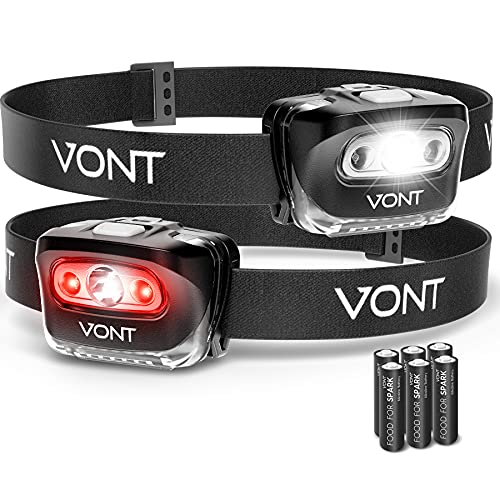
Vont Spark LED Headlamp Flashlight
It frees up both hands, runs for roughly 90 hours, and sits at a comfortable 45-degree beam angle. For most campers, a headlamp beats a handheld light for tent chores and night walks, and the Vont Spark does it cheaply and reliably.
Check price on AmazonThe Short List
It frees both hands and claims around 90 plus hours of battery life.

Up to 1,700 lumens from a pocket-size aluminum body.

Its strong base magnet sticks to any iron surface.
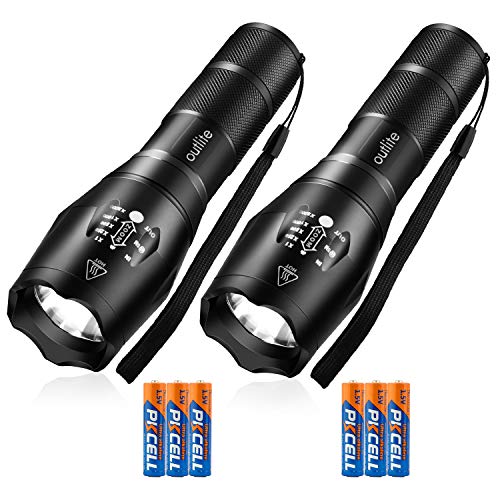
Two lights in one box, and they run on AAA or 18650 cells.

It survives being submerged to about 10 feet.
When the sun drops behind the ridge, a good flashlight is the difference between a calm night and a clumsy one. You need light to pitch a tent, find the trail to the bathroom, dig through a pack, or check what just rustled in the bushes. A phone torch will not cut it.
Camp lighting needs real lumens, a beam that reaches, and a battery that lasts the night. The trouble is that flashlight listings throw big numbers at you and hope you stop reading. We did the opposite. We looked past the marketing and lined up the specs that matter for camping: brightness in lumens, beam distance in meters, battery type, runtime in hours, and how well each light shrugs off rain and drops.
Most of these are handheld tactical lights, and one is a headlamp. If you need to light a whole picnic table or the inside of a tent, a lantern does that job better, and our camping lanterns guide covers those.
They cover different jobs, and we will tell you which job each one is best at. Below are seven camping flashlights worth your money, ranked and reviewed. Each write-up covers the brightness, the modes, the power source, the durability rating, and the honest trade-offs. After the reviews you will find a short buying guide and answers to the questions campers ask most. Here's the deal: pick the light that fits how you camp, not the one with the loudest spec sheet.
Quick Comparison
| Rank | Product | Best for | Price |
|---|---|---|---|
| #1 | Fenix PD35 V3.0 Rechargeable Tactical Flashlight | Campers who want one serious handheld light that recharges over USB-C | Check price |
| #2 | Rechargeable Magnetic Flashlight with COB Sidelight | Repairs and hands-free work near metal surfaces | Check price |
| #3 | Outlite S1000 LED Flashlight (2-Pack) | Campers who want two bright lights and battery flexibility | Check price |
| #4 | Binwo S2000 LED Tactical Flashlight | Long-range spotting and a tough everyday carry | Check price |
| #5 | GearLight S1000 LED Tactical Flashlight | Rough handling and bad weather | Check price |
| #6 | Vont Spark LED Headlamp Flashlight | Hands-free light on trails and around camp | Check price |
| #7 | LETMY LED Tactical Flashlight | An all-weather pocket light for any emergency | Check price |
The Reviews
Fenix PD35 V3.0 Rechargeable Tactical Flashlight
Fenix has been making lights for outdoor and duty use since 2001, and the PD35 is one of its longest-running models. The V3.0 version puts out up to 1,700 lumens with a beam Fenix rates at about 390 yards, which is enough to light the far side of a lake or the next switchback from camp.
Specs
- Beam
- Up to 1,700 lumens, about 390 yards
- Runtime
- About 1 hour on max, far longer on low
- Modes
- Tail switch plus side mode switch
- Water resistance
- Rated waterproof
Charging is the part campers tend to like most. The lithium-ion battery is included and has its own USB-C port, so the same cable that tops up your phone from a power bank charges the light. A small indicator on the side switch shows how much power is left, which beats guessing on the last night of a trip.
Controls are simple once you learn them: press the tail switch for instant light, then use the metal side switch to step through brightness levels. The full 1,700 lumens is a burst setting. The listing puts runtime at about an hour on maximum, and the lower modes are the ones you will use around the tent for most of the night.
It is the most expensive light on this list, and a car-camping family that only needs a light for the bathroom walk will be fine with the Outlite two-pack. If you want one light that you will still be carrying in ten years, this is the one to buy. It comes with a pocket clip, holster and lanyard.
What we like
- Up to 1,700 lumens with a beam rated to about 390 yards
- USB-C charging port built into the battery, with a power level indicator
- Tail switch for instant on plus a side switch for modes
- Clip, holster and lanyard included
Watch out for
- Maximum output only lasts in short bursts before it steps down
- Costs several times more than the budget tactical lights here
Rechargeable Magnetic Flashlight with COB Sidelight
This one earns its spot with a strong magnet built into the base. Stick it to any iron surface, like a car panel, a tent pole bracket, or a metal table, and it stays put while you keep both hands free. That magnet plus the wide COB sidelight makes it a natural for repairs and close work after dark, when you need a broad pool of light rather than a long beam.
Specs
- Beam
- Zoomable main beam
- Runtime
- 10 hours on ultra low
- Modes
- Four modes
- Water resistance
- IPX5
The front of the flashlight zooms between a tight high beam and a wider low beam, and the side panel adds the flood. Across the head and sidelight you get four modes to work with: high zoom, low zoom, a COB SOS pattern, and the steady COB sidelight. The SOS mode is the standout, since a built-in distress signal is rare at this price and worth having if a situation turns serious. It charges over USB in about three hours from any standard port, and an overcharge-protected battery is built in so you cannot cook the cell by leaving it plugged in.
On the ultra-low setting it runs for roughly 10 hours, which gets you through a long night of light, intermittent use. The pocket-clip design keeps it handy, and an IPX5 water-resistant rating means rain and splashes will not bother it. In the box you get the flashlight, the protected battery, and a USB cable.
The trade-off is runtime under real use. That 10-hour figure is for the dimmest mode, so if you lean on the brighter settings the battery drops a lot faster, and there is no swappable AAA backup. For longer trips you will want a power bank along. As a magnetic work-and-repair light with an SOS mode, though, it punches above its weight.
What we like
- Strong base magnet sticks to any iron surface for hands-free work
- Wide COB sidelight plus a zoomable main beam
- Rare SOS distress mode for emergencies
- USB rechargeable in about 3 hours with overcharge protection; IPX5 rated
Watch out for
- The 10-hour runtime is only on the dimmest setting
- No AAA backup option, so bring a power bank for long trips
Outlite S1000 LED Flashlight (2-Pack)
You get two of these in the box, which is the easy sell. One for you, one for a tent-mate, or a spare to leave in the car. Each is a powerful LED flashlight with a tightly focused spotlight that can light up a room of about a hundred square meters and throw a beam up to roughly a thousand feet down the trail.
Specs
- Beam
- Up to roughly 1,000 feet
- Runtime
- Over five hours
- Modes
- Five modes
- Water resistance
- IPX5
That is serious reach for spotting markers or checking what is past the firelight. Battery flexibility is the real strength here. Each light runs on six AAA batteries or a single rechargeable 18650 cell. Either way you get over five hours of light, so you can recharge to save money or carry cheap AAAs as a backup that works anywhere.
The maker notes the light is safest and most convenient on AAA power, so that is the setup to lean on if you want zero surprises in the field. Five modes cover the bases: high, medium, low, strobe, and SOS. The head pulls out to zoom from a tight spot beam to a wide flood, so you adjust the light to the task instead of being stuck with one pattern.
The body is durable aluminum alloy that survives accidental drops of up to 10 feet, and an IPX5 rating handles heavy rain. The compact, portable shape stores and travels easily. The honest note: while it accepts both battery types, it performs best on AAA, not equally on both. Run it on 18650 and you may notice it is happier on the disposables. That is a small quirk on a versatile, bright two-pack that gives you a backup light for the price many brands charge for one.
What we like
- Two flashlights in the box for backup or sharing
- Beam reaches up to about 1,000 feet with zoomable spot-to-flood head
- Runs on six AAA batteries or a rechargeable 18650 cell, 5-plus hours either way
- Aluminum body survives 10-foot drops; IPX5 water resistance
Watch out for
- Performs best on AAA rather than equally on both battery types
- Six AAA cells per light adds up if you do not switch to rechargeables

Binwo S2000 LED Tactical Flashlight
The Binwo S2000 is built around reach and longevity. It throws a well-focused spotlight or a wide floodlight over a beam distance of about 656 feet (200 meters), which is enough to pick out a trail, a tent, or movement at the edge of camp. The intense center beam is made for long-range observation, so this is the light to grab when you want to see far rather than just see close.
Specs
- Beam
- About 656 feet
- Runtime
- Not listed
- Modes
- Five settings
- Water resistance
- IPX5
It uses a durable CREE LED, and Binwo rates it for up to 50,000 hours of working life. That is the kind of number you will likely never burn through, which means the LED itself is not what will wear out. Focus is adjusted by hand with a controlled head-pulling zoom, sliding from a tight spot to a broad flood, and modes switch easily through five settings: high, medium, low, strobe, and SOS. The body is high-quality aluminum alloy, which makes it sturdy and ready for regular use.
It is skid-proof and abrasion-resistant, so it will not slip out of a cold hand or scuff up in a pack, and an IPX5 rating gives it solid everyday water resistance for rain and splashes. The whole thing is a portable mini size that tucks into a hand or pocket, so the reach does not come with bulk. The trade-off is honesty about that headline spec: the roughly 50,000-hour figure is the LED's rated lifespan, not how long it runs per charge, so judge runtime by your batteries and usage, not that number. With its long throw, tough alloy shell, and IPX5 sealing, it is a strong pick for campers who value reach and durability in a pocket-sized light.
What we like
- Beam reaches about 200 meters (656 feet) for long-range spotting
- CREE LED rated up to 50,000 hours of life
- Skid-proof, abrasion-resistant aluminum alloy body
- Manual zoom from spot to flood; IPX5 water resistance
Watch out for
- The 50,000-hour figure is LED lifespan, not runtime per charge
- Single light, so no built-in backup
GearLight S1000 LED Tactical Flashlight
If you are hard on gear, the GearLight S1000 is built for you. It is an ultra-bright LED that lights up a whole room and focuses on objects almost a thousand feet away, and the maker pegs it at roughly 10 times brighter than older incandescent lights. Five settings plus a wide-to-narrow zoom make it as happy on a dog walk or around the house as it is at camp, so it earns its keep year-round, not just on trips.
Specs
- Beam
- Almost a thousand feet
- Runtime
- More than 10 hours
- Modes
- Five settings
- Water resistance
- Submerged to about 10 feet
Power is flexible. Run it on three AAA batteries for grab-and-go convenience or drop in a single rechargeable cell to save money over time. On a low setting it keeps going for more than 10 hours, which comfortably covers an evening and then some. The compact metal body slides into a pocket or backpack without weighing you down.
Toughness is the headline. GearLight built this for rough use, and it shows. It survives being submerged to about 10 feet and sitting underwater for hours, so rain, snow, and a dropped-in-a-puddle moment are no threat.
The brand says you can freeze it or run a car over it and it will still work, which tells you how the patent-pending S1000 housing is meant to handle abuse. For storms and emergencies, that resilience is reassuring. The honest catch is the metal construction. It makes the light tough, but metal can rust over time if it stays wet, so dry it off after a soggy trip. That aside, this is a brilliant low-setting camp light and a dependable choice when you expect your gear to take a beating.
What we like
- Ultra-bright beam focuses on objects nearly 1,000 feet away
- Runs on three AAA batteries or a rechargeable cell, 10-plus hours on low
- Survives submersion to about 10 feet and very rough handling
- Compact metal body with wide-to-narrow zoom
Watch out for
- Metal body can rust if left wet
- Highest brightness drains the battery quickly
Vont Spark LED Headlamp Flashlight
This is our top pick, and the reason is simple: it goes on your head and frees both hands. The Vont Spark lights up everything in front of you, even in full darkness, whether that is a trail, a tent zipper, or a pot on the stove. For most camp chores, a headlamp beats a handheld light, and this one does it cheaply and reliably.
Specs
- Beam
- 45 degree beam angle
- Runtime
- Around 90 plus hours
- Modes
- Seven modes
- Water resistance
- IPX5
Battery life is the standout. Vont claims around 90-plus hours, which is roughly double what many competitors manage, so a set of batteries can last several trips of normal use. A single button cycles through seven modes without fuss. The main light offers low, medium, high, and strobe, while the sidelights add low, SOS, and strobe.
That is a lot of control from one click, and it covers everything from reading in the tent to signaling for help. Comfort is where it pulls ahead. The light sits at a 45-degree angle, so the beam falls naturally in front of your feet without you craning your neck.
Many headlamps aim at 30 degrees, which leaves you tilting your head down and aching by the end of a night hike. The Vont is light enough to forget you are wearing it, and it is IPX5 rated and drop-resistant, tested hard enough that the maker calls it tough in extreme conditions. It even has a self-defense angle: a strong beam to the eyes can briefly blind an aggressive animal or person, and the body can serve as a blunt tool in a pinch. It is trusted by police and firefighter units across America.
The one caution is that despite the tough rating, you should not treat it carelessly, since the strap and housing can wear if you abuse them. For hands-free camp lighting, nothing here is more practical.
What we like
- Around 90-plus hours of battery life, roughly double many rivals
- Seven modes from one button, including SOS
- Comfortable 45-degree beam angle that prevents neck strain
- Lightweight, IPX5 rated, and drop-resistant
Watch out for
- The strap and housing can wear if handled carelessly
- Headlamp form is less suited to long-throw spotting than a tactical light

LETMY LED Tactical Flashlight
The LETMY uses an upgraded XML T6 LED chip rather than a cheaper basic one, so it runs noticeably brighter than a standard LED flashlight. It is rated for up to 50,000 hours of life and puts out a strong, high-performance beam. Its powerful LED covers a wide area floodlight or a tightly focused spotlight, and you switch between them by stretching the head to adjust the focus, so you get spot or flood as the moment demands.
Specs
- Beam
- Spot or flood
- Runtime
- Hours of use
- Modes
- Five modes
- Water resistance
- Rain from any angle
Power is flexible, the way good camp lights should be. Run it on three AAA batteries or a single 18650 rechargeable cell, and it stays convenient for hours of use either way. The compact, anti-slip body fits a pocket, a handbag, a drawer, or the car door, and a hand rope keeps it secure while you work. Five modes cover high, medium, low, strobe, and SOS, so you have a setting for reading, scanning, and signaling.
It is built for bad conditions. The XML T6 is waterproof against rain from any angle and heatproof too, which makes it suitable for any weather and the general roughness of the outdoors. The body is high-quality military-grade aluminum alloy, sturdy and durable enough for long-term daily use.
On a dark forest floor full of roots, stones, and holes, a beam this strong genuinely cuts the risk of a trip or fall, which is the whole reason you carry a light. Two honest limits: it is water-resistant, not submersible, so keep it out of the lake, and the metal body can develop rust over time if it stays wet, so dry it after a soaking. Within those bounds, it is a bright, versatile, all-weather pocket light that handles camping, hiking, power outages, and emergencies without complaint.
What we like
- Upgraded XML T6 LED is brighter than a standard LED flashlight
- Runs on three AAA batteries or a single 18650 rechargeable cell
- Five modes with stretch-to-zoom spot and flood beams
- Military-grade aluminum body, waterproof against rain from any angle
Watch out for
- Water-resistant but cannot be used underwater
- Metal body can rust if left wet

What to Look For
Brightness (Lumens)
Lumens measure how much light a flashlight pumps out.
More lumens means a brighter, wider pool of light. For camping you do not need a searchlight.
A flashlight in the 300 to 1,000 lumen range covers almost everything you do at a campsite, from lighting the inside of a tent to throwing a beam across a clearing.
Lights at the top of that range, like the 1,700-lumen Fenix PD35 and the other tactical models here, will flood a large area on high.
Just remember that running on full brightness drains the battery fast, so save it for when you actually need the reach.
Light Modes
Most camping flashlights offer several modes, and they are more useful than they sound.
High gives you maximum reach for scanning the trail. Medium and low stretch the battery for reading or pottering around camp.
Strobe is a fast flash that helps you signal or disorient an animal. SOS blinks the international distress pattern, which matters if a night ever goes wrong.
Five modes is the common setup, and the headlamp here pushes to seven.
Look for a light that cycles modes with a single button so you are not fumbling in the dark.
Beam Distance
Beam distance is how far the usable light reaches before it fades.
It is listed in meters or feet, and it tells you whether a light is a close-up flood or a long-throw spotlight. The tactical flashlights below reach 200 meters (about 656 feet) or more, which is plenty for spotting a trail marker or checking a tree line.
A lantern or headlamp throws a shorter, softer beam meant for the space right around you. Many of these lights zoom between a tight spot beam and a wide flood, so you can have both in one tool.
Battery Type and Runtime
This is where flashlights split into two camps.
Some run on AAA batteries, which you can replace anywhere and stash as spares. Others use a rechargeable cell, usually an 18650 or a built-in pack you top up over USB.
Rechargeable lights cost less to run over time, but a dead battery in the backcountry leaves you stuck. AAA lights are heavier on disposables but never strand you.
Several picks here, like the Outlite, the GearLight, and the LETMY, accept both.
Whatever you choose, check the runtime in hours and match it to your trip. Ten hours on low covers a long night.
Weight and Size
You carry this thing all weekend, so size counts.
A pocket-sized tactical light slips into a jacket or pack and disappears until you need it. A lantern is bulkier but lights a whole tent without you holding it.
The headlamp weighs the least and frees both hands. Lighter is friendlier on the trail, but do not go so small that the light feels flimsy.
The best pick balances a packable body with enough build to survive being dropped, sat on, and rained on.
Think about how far you walk, too. For short trips from the car you can carry a heavier lantern without noticing.
For a long hike in, every gram on your head or in your pack matters, so a pocket tactical light or a featherweight headlamp is the smarter choice.
Durability and Water Resistance
Camp gear gets wet and gets dropped.
Two specs tell you how a flashlight will hold up. Impact resistance is how far it can fall and keep working, and aluminum-alloy bodies here survive drops of up to 10 feet.
Water resistance is rated with an IPX number. IPX4 handles splashes and rain from any angle.
IPX5 stands up to low-pressure water jets, so it shrugs off a downpour.
Neither rating means you can submerge the light, so do not drop it in the lake. For camping, treat IPX4 as the floor and IPX5 as the safer bet.