CampingKnow is reader-supported. When you buy through links on our site, we may earn an affiliate commission at no extra cost to you. Learn more.
The first time you nap in a good hammock between two trees, the ground starts to feel like a downgrade. No rocks under your hip, no hunting for a flat spot, just a gentle sway and a view of the canopy. It is the rare piece of camp gear that is as much about the afternoon as the night, and that double life is exactly why so many people get hooked.
There is a catch worth saying up front: a hammock alone is half a system. To lounge, you need the hammock and a pair of tree straps. To sleep out comfortably, you also need a way to stay warm underneath and, in most places, a bug net and a rain tarp. We'll cover all of that below, but it shapes the picks, because the best hammock for a shady backyard afternoon is not the same as the one you'd trust on a buggy, rainy backpacking trip.
We hung, swayed, and slept in each of these across backyards, drive-up sites, and a few nights out in the trees. The brands you'll see, ENO, Kammok, and Wise Owl, keep showing up because they nail the balance of comfort, weight, and price that hammock campers actually care about. Below they're sorted by how you plan to use them, from a first lounger to a full ultralight sleep setup.
ENO DoubleNest
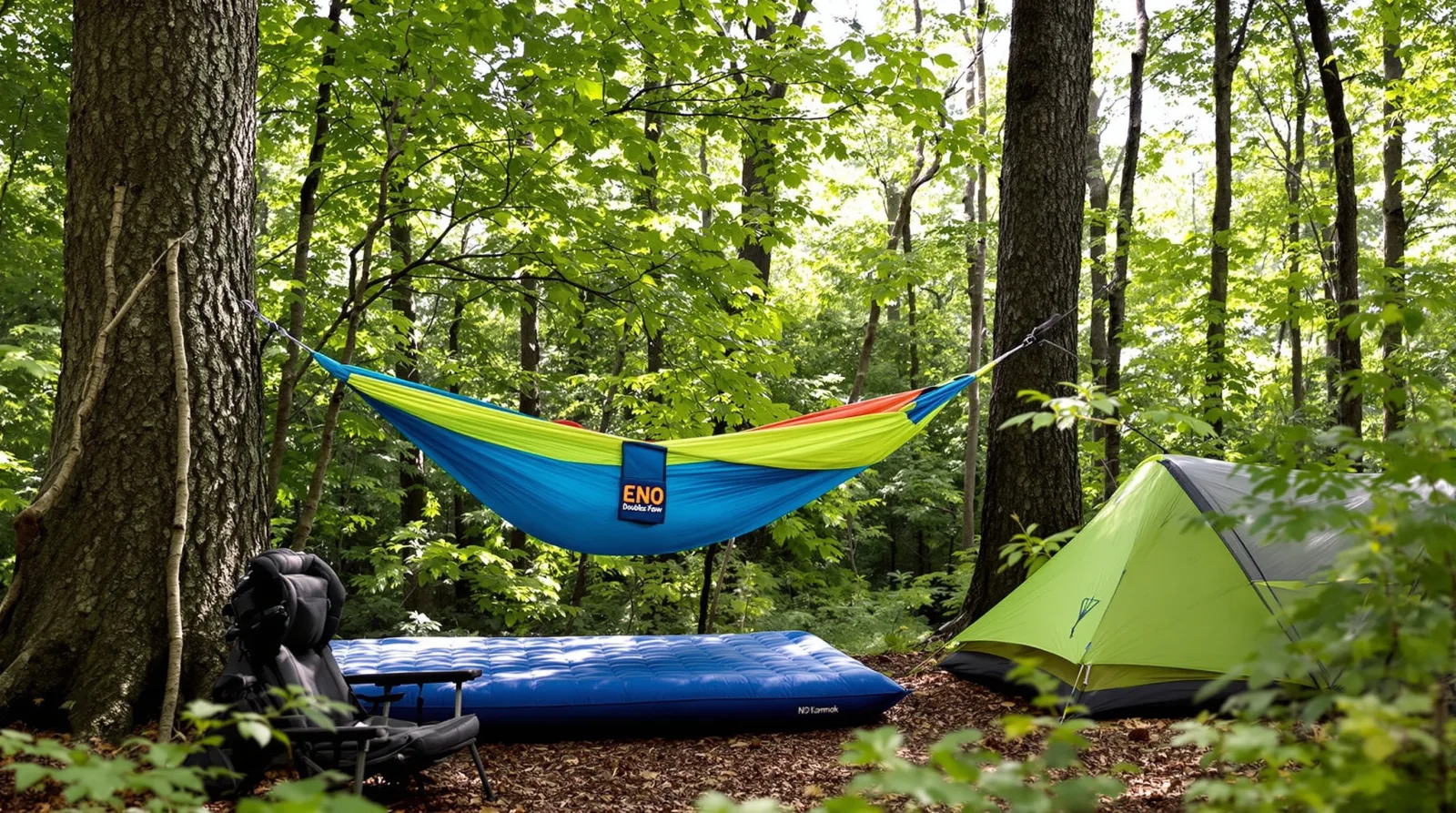
The hammock that made hanging mainstream, and still the easiest one to recommend. Roomy enough for two to lounge or one to sleep, tough 70D nylon rated to 400 pounds, and it stuffs into its own attached pocket the size of a grapefruit. Add straps and you're set.
Check price on AmazonQuick Comparison
| Rank | Product | Best for | Price |
|---|---|---|---|
| #1 | ENO DoubleNest | Overall | Check price |
| #2 | Wise Owl Outfitters DoubleOwl | Value | Check price |
| #3 | Kammok Roo Double with Python Straps | Premium kit | Check price |
| #4 | Wise Owl Outfitters Hammock with Rain Fly and Bug Net | Bugs and rain | Check price |
| #5 | Kammok Roo Single | Ultralight for backpacking | Check price |
| #6 | ENO DoubleNest with Atlas Straps Combo | Beginner starter kit | Check price |
The Reviews
The DoubleNest is the hammock most people think of when camp hammocks come up, and it has held that spot for good reason. The soft 70D nylon is roomy enough for two friends to pile in for an afternoon or for one person to sleep diagonally in real comfort, and it carries a 400-pound rating that shrugs off horseplay. It packs into an attached stuff pocket about the size of a grapefruit, so it lives in a daypack without notice.
The one thing to know: like most quality hammocks, it ships without straps, so budget for a pair of tree-friendly webbing straps or grab the combo version. Once it's hung, the FreeWave fabric and generous cut make it a hammock you'll keep reaching for years after the novelty wears off.
Pros
- Roomy 70D nylon, comfortable for one to sleep or two to lounge
- Rated to 400 pounds
- Packs into its own attached pocket
- Aluminum wiregate carabiners included
Cons
- Straps sold separately
- No bug net or rain cover on its own
Wise Owl built its name on giving you most of the premium experience for a fraction of the price, and the DoubleOwl is the proof. The double size holds up to 500 pounds, the parachute nylon is held together with triple-interlock stitching, and unlike the ENO, it comes with a pair of nine-foot tree straps and carabiners in the box. For a first hammock, that all-in-one value is hard to argue with.
The fabric is a touch less plush than the pricier names and the carry bag is basic, but nothing about it feels cheap where it counts. If you want to try hammock camping without spending much, this is the one to start with, and plenty of people never feel the need to upgrade.
Pros
- Tree straps and carabiners included
- Holds up to 500 pounds
- Triple-interlock stitching for durability
- Hard to beat at the price
Cons
- Fabric slightly less plush than premium models
- Basic stuff sack
This bundle is the closest thing to a buy-it-for-life hammock setup. The Roo Double uses Kammok's recycled ripstop fabric, which is genuinely soft and water resistant, unfurls to roughly the footprint of a queen bed, and holds 500 pounds. Pairing it with the included Python tree straps means you can hang it in under a minute with no knots, and eight gear loops along the edge let you clip on a pillow or sleep insulation.
It costs more than the others here, and the lifetime warranty leans on registering the product, but the materials and the knotless setup feel a cut above. For someone who knows they'll hammock often and wants the nicest version, the bundle saves you piecing it together later.
Pros
- Soft recycled ripstop fabric, water resistant
- Knotless Python straps included
- Queen-bed footprint, holds 500 pounds
- Eight gear loops for accessories
Cons
- The priciest option here
- Lifetime warranty needs registration
Sleeping out in the trees usually means buying a hammock, then a net, then a tarp, and hoping they all play together. This kit skips that by bundling a single hammock with a full bug net and a waterproof rain fly built to match. Zip into the net on a mosquito-heavy night, string the tarp overhead when clouds roll in, and you have a complete one-person shelter for the cost of a good standalone hammock.
It is a single rather than a double, so it is sized for sleeping one person rather than lounging two, and the integrated net adds a little fuss to setup. As a first real sleep system for buggy or damp country, though, it removes the guesswork of matching parts.
Pros
- Hammock, bug net, and rain fly in one matched kit
- A complete one-person shelter out of the box
- Waterproof tarp with stakes included
- Saves piecing parts together
Cons
- Single size, not for lounging two
- Integrated net adds setup steps
When the hammock has to ride on your back for miles, the Roo Single trims the weight without giving up the comfortable feel. It uses the same soft recycled ripstop as its bigger sibling in a one-person cut, packs down small, and still holds a sturdy rating that suits real trail use. For a backpacker who wants to ditch the tent and sleep in the trees, it hits the sweet spot of light, packable, and pleasant.
Because it's a single, two people won't share it, and a true ounce-counter could shave a little more with a bare ultralight specialty hammock. For most backpackers who want comfort and a fair weight in one buy, it's the easy trail pick.
Pros
- Light, packable single for trail use
- Soft recycled ripstop fabric
- Comfortable diagonal lay for one
- Tougher and comfier than bare ultralight hammocks
Cons
- Single only
- A few grams heavier than stripped ultralight models
If the separate-straps problem with the standard DoubleNest puts you off, this combo solves it in one purchase. You get the same well-loved DoubleNest hammock paired with ENO's Atlas suspension straps, which offer multiple loops so you can dial in the perfect hang on trees of any spacing without tools or knots. It is the simplest way to go from box to swaying in minutes.
You pay a little more than the bare hammock, but less than buying the two separately, and you skip the rookie mistake of getting a great hammock home with no way to hang it. For a first-timer who wants everything to lounge and sleep in one order, this is the cleanest start.
Pros
- Hammock and proper tree straps in one box
- Atlas straps adjust to any tree spacing
- No knots or tools to set up
- Cheaper than buying the pieces apart
Cons
- Still no bug net or tarp
- Costs more than the hammock alone

What to Look For
A Hammock Is Only Half the Setup
This trips up almost every first buyer.
A hammock by itself is a piece of fabric with carabiners; to use it you also need tree straps, the wide webbing that wraps the trunk without damaging bark.
Most quality hammocks, the ENO DoubleNest included, sell the straps separately, which is why the combo and bundle picks here exist. To actually sleep out, you'll usually add two more things: insulation underneath and protection overhead.
Plan for the whole system, not the hammock alone, and you avoid getting to camp with no way to hang it.
Single or Double?
The names mislead people.
A single hammock comfortably fits one person and packs lighter, which is what backpackers want. A double is wider, so two can lounge together or, more importantly, one person can lie diagonally for a flatter, more comfortable sleep.
Most solo campers are happiest in a double for exactly that reason, using the extra width to stretch out rather than to share. Reach for a single only when weight and pack size rule the decision, as on a long hike.
Staying Warm: The Cold Underside Problem
The surprise that ruins many first hammock nights is the cold, not the comfort.
With your body weight compressing the fabric, a sleeping bag does little underneath you, and open air pulls heat from your back all night. The fix is an underquilt that hangs below the hammock, or at minimum a sleeping pad slid inside it.
Even on mild evenings, plan for insulation under you, because a hammock that felt cozy at sunset can turn chilly by 2 a.m. once the air cools.
Bugs and Rain
Hanging in the open is glorious until the mosquitoes find you or the sky opens up.
For buggy country you want a bug net that drapes or zips around the hammock, and for any chance of weather you want a rain tarp strung above it. You can add these as separate parts, or buy a kit like the Wise Owl bundle that ships the hammock, net, and fly already matched.
If you only ever lounge on clear afternoons you can skip both, but for sleeping out they move from nice-to-have to necessary fast.
Weight and Packed Size
If the hammock rides in a car, weight is a non-issue and you can pick on comfort alone.
If it goes in a backpack, every part adds up: hammock, straps, net, and tarp together can rival a light tent, so choose a trimmer hammock like the Kammok Roo Single and lightweight suspension.
Check the packed size too, since a hammock that stuffs to grapefruit size leaves room for the rest of the kit. Be honest about how far you'll carry it before you chase the roomiest, heaviest option.
Capacity and Fabric
Weight ratings give you a safety margin, not a target, so a 400 to 500 pound rating is plenty for one sleeper plus gear.
Fabric denier tells you about durability and feel: a 70D nylon like the ENO's is a sturdy all-rounder, while lighter deniers save weight at some cost to ruggedness.
Triple-stitched seams, as on the Wise Owl, matter more than the headline number for how long a hammock lasts. Pick a rating well above your real load and a fabric suited to how rough your trips get.