Coleman Instant Screen House
Fast pre-attached pole setup, a roomy 12 by 10 footprint, and UV-blocking shade make it the easiest all-rounder for family camp trips.
Check price on AmazonThe Short List

Designed to stand up to wind and weather.
Here's the deal with a screen house. It gives you a bug-free room with a roof, so you can eat, play cards, and breathe without swatting at mosquitoes all evening. The mesh keeps the no-see-ums and biting flies outside where they belong.
The roof throws shade on a hot afternoon and sheds a light drizzle. For car campers, tailgaters, and backyard cooks, it's one of the few pieces of gear that earns its space in the trunk every single trip. The catch is that not all screen houses are built the same. Some pop up in three minutes flat.
Others need two people and a fair bit of patience. Some shrug off a gust, while cheap ones fold like a lawn chair the moment the wind picks up. Gravel pads, sandy beaches, and soggy lakeside grass all ask different things of a screen house, and the differences show up fast once you're living under one for a weekend.
Below are ten screen houses worth a look, from quick-pitch Coleman shelters to magnetic-door designs and pop-up pods. We've called out the real specs, who each one suits, and where it falls short. Read the buying factors after the list if you want to know what actually matters before you spend the money.
Quick Comparison
| Rank | Product | Best for | Price |
|---|---|---|---|
| #1 | Coleman Instant Screen House | Families who want fast setup and lots of room | Check price |
| #2 | EVER ADVANCED Pop Up Screen House | Campers covering a picnic table | Check price |
| #3 | LEEDOR Pop Up Screen House (10 x 10) | Beach days and quick shade stops | Check price |
| #4 | Coleman Screened Canopy Tent | Big groups needing tall, open shade | Check price |
| #5 | Tailgaterz Magnetic Screen House | Tailgaters who want hands-free magnetic doors | Check price |
| #6 | Wenzel Magnetic Screen House | Campers who want easy doors with more coverage | Check price |
| #7 | Superrella Screen House | Quick pop-up shade with minimal effort | Check price |
| #8 | Eureka! Northern Breeze Camping Screen House | Serious campers wanting a durable, weatherworthy shelter | Check price |
| #9 | Leedor Gazebos Screen House | Backyard and patio bug-free lounging | Check price |
| #10 | Alvantor Screen House For Outdoor Camping | Pop-up convenience for small groups and naps | Check price |
The Reviews
Coleman Instant Screen House
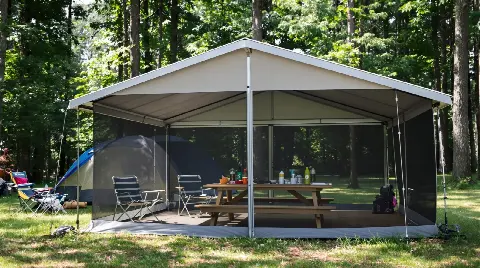
This is the one we reach for when we want shade and bug protection up before the cooler is unpacked. The frame poles stay attached to the canopy, so setup is mostly unfolding and extending the legs. We've had it standing in around three minutes with two people and only a little longer solo.
Specs
- Setup
- around three minutes
- Footprint
- 12 by 10 feet
- Door type
- Two zippered doors
- Weather coverage
- UVGuard coated roof
At roughly 12 by 10 feet it covers about 120 square feet of ground, which is plenty for a six-person picnic table and a couple of chairs alongside. The roof is coated polyester with Coleman's UVGuard treatment, rated to block UV and keep the space noticeably cooler at midday than a bare mesh top. The walls are full mesh on all sides, so air moves through nicely on a still, muggy evening. Two zippered doors on opposite ends mean you're not always squeezing past the table to get out, and the bug seal is solid as long as you keep the zippers run all the way down.
It is not a featherweight. The whole package lands near 30 pounds and packs into a long carry bag, so this is gear for sites you can drive close to. The steel legs hold up better in wind than the flimsy fiberglass shelters, but you'll still want to stake it down and add guy lines if a breeze kicks up.
The included stakes are thin, so we swapped in steel ones after the first trip. For most family campers this hits the sweet spot of space, speed, and shade. If you camp light or solo, it's more shelter than you need.
What we like
- Pre-attached poles make setup genuinely fast
- Roomy 12 by 10 footprint fits a full picnic table
- UVGuard coated roof gives real shade and cooling
- Two doors for easy in and out
Watch out for
- Near 30 pounds and a long packed length
- Stock stakes are too thin for windy sites

EVER ADVANCED Pop Up Screen House
The EVER ADVANCED pops up in about a minute with no initial assembly, even with one person. Its 11.5 by 9.8 foot footprint fits a picnic table and chairs, with bug-proof mesh letting the breeze through.
Specs
- Setup
- about a minute
- Footprint
- 11.5 by 9.8 foot
- Door type
- Not listed
- Weather coverage
- UV and water resistance
It packs to 54 by 7.8 inches, short enough for most car trunks. The polyester top is coated for UV and water resistance, though the fiberglass poles aren't meant to ride out a storm, so take it down if serious weather is coming.
What we like
- Pops up in about a minute, even solo
- Fits a picnic table and chairs
- Packs short enough for most trunks
- UV-resistant polyester top
Watch out for
- Fiberglass poles are not meant for storms
- Top is water-resistant, not waterproof

LEEDOR Pop Up Screen House (10 x 10)
LEEDOR's 10 by 10 foot screen house opens in minutes without tools and folds into a compact carry bag, which suits a day at the beach or a quick stop.
Specs
- Setup
- in minutes without tools
- Footprint
- 10 by 10 feet
- Door type
- Not listed
- Weather coverage
- Not listed
Mesh walls give 360-degree visibility and keep bugs out, and it ships with ground stakes, ropes, and sand bags. That last part matters on sand, where ordinary stakes don't hold well. At seven feet tall it has plenty of headroom.
What we like
- Sets up in minutes without tools
- Mesh walls with 360-degree visibility
- Includes stakes, ropes, and sand bags
- Seven feet of height
Watch out for
- Light frame, so take it down in strong wind
- 10 by 10 feet is tight for a large table

Coleman Screened Canopy Tent
This Coleman is the big, tall one. It's a screened canopy in the 12 by 12 foot range, built to cover a serious chunk of ground for cookouts, reunions, and group campsites. The center height is generous, so even tall folks can stand and move around without ducking, which is a real comfort difference over the lower pod-style shelters.
Specs
- Setup
- two people working together
- Footprint
- 12 by 12 foot range
- Door type
- Not listed
- Weather coverage
- blocks UV and sheds light rain
The roof is a coated polyester canopy that blocks UV and sheds light rain, while the four screen walls zip on to seal out bugs. That combo is handy because you can run it as an open-air shade canopy on a dry afternoon, then zip the mesh walls closed when the mosquitoes show up at dusk. It's a flexible setup that adapts to the weather instead of forcing one mode. The size brings the usual costs.
It's heavier and bulkier to haul, and a 12 by 12 roof catches a lot of wind, so proper staking and guy lines are not optional here. Setup is more involved than the instant Coleman and really wants two people working together. Rushed or solo, you'll find it a handful, especially raising the center on uneven ground.
If you host the group meals and want a tall, roomy shelter you can open up or seal off, this earns its keep. Solo campers and minimalists should look at something smaller and quicker.
What we like
- Tall center height for easy standing room
- Zip-on screen walls convert it to a shade canopy
- Coated roof blocks UV and light rain
- Big footprint for group gatherings
Watch out for
- Bulky and heavier to transport
- Two-person setup that takes real time
Tailgaterz Magnetic Screen House
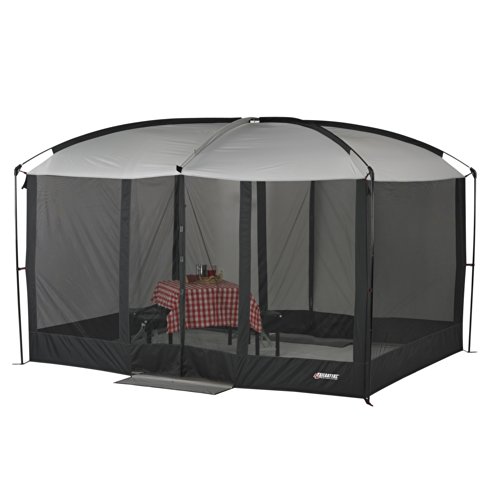
The Tailgaterz earns its name. It's built for the parking-lot party as much as the campsite, with a focus on quick deployment and easy in-and-out access. The headline feature is the magnetic door system, which snaps shut behind you automatically.
Specs
- Setup
- within minutes of parking
- Footprint
- decent footprint
- Door type
- magnetic door system
- Weather coverage
- sun and the odd shower
When your hands are full of food and drinks, that self-closing door keeps bugs out without you fumbling for a zipper pull. The shelter gives you a decent footprint for a small crowd, with full mesh walls for airflow and a roof to handle sun and the odd shower. Setup is meant to be fast and friendly, which suits the tailgate use case where you want to be settled and grilling within minutes of parking. It rolls into a carry bag that fits the trunk alongside the cooler and the chairs.
Magnetic doors are a genuine convenience, but they are not as airtight as a good zipper. In a strong gust the seam can gap slightly, and a clever mosquito will find it. The frame is built more for convenience than for storm-grade stability, so keep it staked and pick a sheltered spot when the wind is up.
It's a fair-weather, good-times shelter rather than a rugged backcountry base. For tailgates, backyard barbecues, and easygoing campsites, the hands-free doors are a small daily pleasure. If you need a bombproof shelter for exposed sites, this is not it.
What we like
- Self-closing magnetic doors are hands-free
- Fast setup for tailgates and quick stops
- Good airflow through full mesh
- Packs into a trunk-friendly bag
Watch out for
- Magnetic seal can gap in strong wind
- Frame built for convenience over storm stability

Wenzel Magnetic Screen House
Wenzel's take on the magnetic screen house feels a notch more camp-oriented than the tailgate models. You get the same convenient self-closing magnetic doors, paired with a roomier footprint and a build aimed at weekend campers rather than just parking lots. The doors snap closed on their own, which is genuinely handy when you're ferrying plates and drinks back and forth all evening.
Specs
- Setup
- manageable alone
- Footprint
- roomier footprint
- Door type
- self closing magnetic doors
- Weather coverage
- sun and light rain
The full mesh walls give you 360 degrees of bug protection and steady airflow, so it stays breathable on warm nights. The roof handles sun and light rain, and the larger floor area means a small family can fit a table and chairs without bumping elbows. Wenzel has been making outdoor gear for a long time, and the fabric and stitching feel a step above the bargain-bin shelters. It still carries the usual magnetic-door caveat.
The magnets are convenient but not as sealed as a zipper, so in gusty conditions you may notice a door fluttering open or the odd bug slipping the seam. The frame is reasonable but not heavy-duty, so stake it well and add guy lines if the forecast looks rough. Setup is moderate, easier with two but manageable alone.
This is a solid middle-ground pick. More room and a bit more durability than the tailgate shelters, with the same easy-door convenience. Good for family campers who value getting in and out without wrestling zippers.
What we like
- Convenient self-closing magnetic doors
- Roomier footprint than tailgate models
- Solid Wenzel fabric and stitching
- Breathable full mesh walls
Watch out for
- Magnetic doors less sealed than zippers in wind
- Frame is decent, not heavy-duty
Superrella Screen House
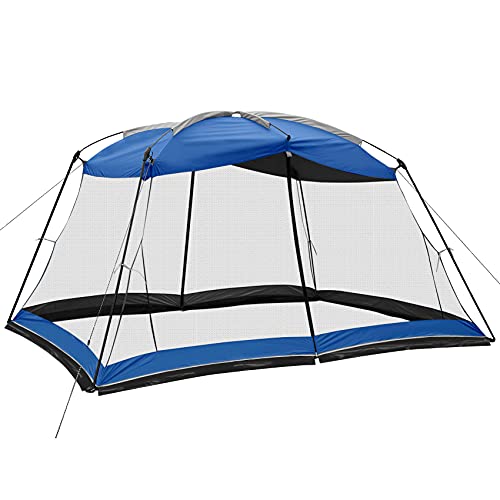
The Superrella is the grab-it-and-go option. It's a pop-up style screen house that springs open from its folded shape with very little work, so you can have a bug-free shaded room standing in well under a minute. For campers who hate fiddling with poles and hubs, that instant deployment is the main draw, and on a tired evening it's a real relief.
Specs
- Setup
- under a minute
- Footprint
- Not listed
- Door type
- Not listed
- Weather coverage
- roof panel for shade
Once up, it gives you mesh walls for ventilation and bug defense and a roof panel for shade. The pop-up frame keeps the whole thing light and quick to move around the site, so repositioning for shade as the sun shifts is easy. It packs flat into a round carry disc that slips into the car without taking much room, which is a nice bonus over the long duffel bags of pole-style shelters. Pop-up convenience comes with two familiar trade-offs.
First, folding it back into that flat disc takes a knack, and the first few attempts can be a comedy of twisting and wrestling. Practice in the yard before your trip so you're not learning at the campsite. Second, the springy frame is light, so it needs careful staking and is happiest in calm weather.
A strong gust can flip an unanchored pop-up across the field. If you want the fastest possible setup and don't mind learning the fold, the Superrella is a low-effort way to get shade and bug cover. Windy, exposed sites are not its strength.
What we like
- Pops open in under a minute
- Light and easy to reposition for shade
- Packs flat into a compact disc
- No poles to assemble
Watch out for
- Folding it back down takes practice
- Springy frame needs careful anchoring in wind
Eureka! Northern Breeze Camping Screen House
The Eureka! Northern Breeze is the quality pick for people who camp often and want a screen house that lasts. Eureka has a long reputation for building sturdy, well-engineered tents, and that care shows here.
Specs
- Setup
- proper pole routine
- Footprint
- Not listed
- Door type
- Not listed
- Weather coverage
- handles wind and rain
The frame and fabric feel a clear cut above the budget shelters, and it's designed to stand up to the kind of wind and weather that flattens flimsier models. It uses a hub-and-pole system with a roof that sheds rain well and steep, high walls that give you generous interior space and standing room. The fine mesh keeps out the small biters that standard netting misses, which is a meaningful upgrade if you camp near water at dusk. Thoughtful touches like guy-out points and a roof vent help it handle real conditions rather than just calm backyard afternoons.
This is a shelter you can leave standing through a windy night without lying awake worrying about it. The cost of that quality is, well, cost. It sits at the higher end of the price range, and it's not the lightest or fastest to pitch.
Setup follows a proper pole routine that rewards two people and a little experience. This is not the shelter you buy for a single beach day. If you camp regularly and want something that holds up season after season in varied weather, the Northern Breeze is worth the spend. Occasional or casual users can save money with a simpler shelter and never miss the difference.
What we like
- Durable, weatherworthy Eureka build
- Fine mesh stops the smallest biters
- Steep walls give real standing room
- Handles wind and rain better than budget models
Watch out for
- Higher price than most rivals
- Heavier with a slower pole setup

Leedor Gazebos Screen House
The Leedor gazebo blurs the line between camping shelter and backyard furniture, and that's its strength. It's a roomy, gazebo-style screen house meant to give you a bug-free outdoor living room. Set it over a patio table or a hammock, zip it shut, and you've got a screened porch wherever you put it.
Specs
- Setup
- standard gazebo affair
- Footprint
- sizable footprint
- Door type
- zippered doors
- Weather coverage
- sun and light rain
It's equally at home at a campsite or parked in the yard all summer. You get a sizable footprint with tall, near-vertical mesh walls, so the interior feels open and easy to stand in rather than cramped under a sloping roof. The full netting wraps all four sides for steady airflow and all-around bug defense, and zippered doors seal it up at night. The peaked roof handles sun and passes light rain off the top.
For relaxed lounging where you want space and a breeze, it's a comfortable spot to spend an evening. Because it's built more for stationary backyard use, the frame is not the most rugged for rough camping. It does best pitched on a calm, level site and staked down properly, and it's not the shelter you want in an exposed, windy spot.
Setup is a standard gazebo affair that goes easier with a second pair of hands, and the larger size means more poles to work through. For patios, decks, and laid-back campsites, the Leedor delivers a lot of bug-free living space. Just keep it out of heavy weather and it'll serve you well all season.
What we like
- Spacious, open interior with tall walls
- Great for backyards and patios
- Full mesh for airflow and bug cover
- Peaked roof sheds sun and light rain
Watch out for
- Frame better suited to calm, stationary use
- Larger setup wants a second person
Alvantor Screen House For Outdoor Camping
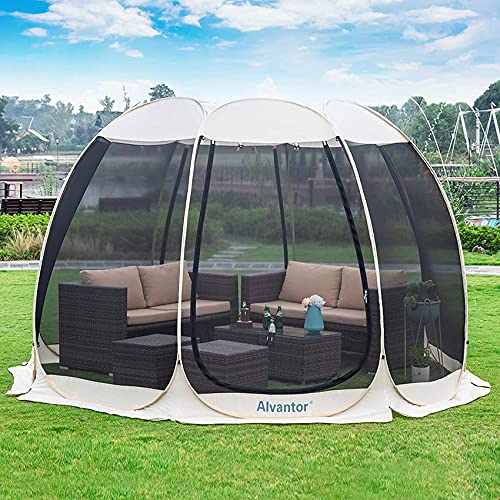
The Alvantor rounds out the list with another pop-up design, this one a popular favorite for its blend of instant setup and surprising comfort. It springs open into a roomy pod with mesh on all sides and a floor, so it works as a screened room for lounging, a shaded nap spot, or a bug-free play space for kids. The included floor is a nice touch that several pole-style shelters skip.
Specs
- Setup
- about a minute
- Footprint
- modest size
- Door type
- Not listed
- Weather coverage
- Not listed
Setup is the easy part. You pull it from the bag, let it pop into shape, stake the corners, and you're done in about a minute. The mesh walls give you a clear, airy view out and steady ventilation, which keeps it cool and pleasant on a hot afternoon. It's light enough to move around the campsite to chase or escape the sun, and the floor keeps the damp grass and crawling bugs off your blanket.
As with every pop-up, folding it back down is the learning curve. The flat-pack twist takes a few tries to master, so run through it at home before you rely on it. The springy frame is light, which means it needs good staking and is happiest out of strong wind.
Coverage suits a small group or a couple of loungers rather than a big family dinner. For quick shade, a screened nap, or a kid-friendly bug-free zone, the Alvantor is an easy, comfortable choice. Big groups and stormy sites are better served elsewhere.
What we like
- Pops up in about a minute
- Built-in floor keeps bugs and damp out
- Light and easy to reposition
- Airy mesh with a clear view out
Watch out for
- Takes practice to fold back down
- Light frame and modest size limit big-group, windy use
What to Look For
Size and Floor Space
Start with how much ground you actually need to cover.
A small screen house runs around 9 by 9 feet, enough for a card table and four chairs. A big one stretches to 12 by 12 or more and swallows a full picnic table with room to walk around it.
Think about what goes underneath. A dining setup for six needs real square footage, while a two-person coffee spot does not.
Measure your campsite pads too, since some state and national park sites cap out around 12 feet of usable flat ground.
Bigger is not always better. A large shelter catches more wind, weighs more, and takes longer to pitch, so size it to the crowd you usually camp with rather than the biggest party you might ever throw.
Weight and Packed Size
Screen houses are car-camping gear, so weight is less about your back and more about your trunk.
Most of these run between 15 and 35 pounds and pack into a duffel-style carry bag. That's fine if you drive to the site and park a few steps from where it goes up.
It's a problem if you have to haul gear a quarter mile from an overflow lot. Heavier steel-pole models stand up to wind better but punish you on the carry.
Lighter fiberglass and pop-up designs are easier to move but flex more in a blow.
Check the packed length too. A 4-foot bag slides into most cars, while a stiff 5-foot bundle can be a wrestling match in a packed sedan.
Bug and Sun Protection
The whole point is keeping bugs out, so look hard at the mesh.
Fine no-see-um netting stops the tiny biters that standard mesh lets through, and it matters a lot near lakes and marshes at dusk. Check the door design too.
Zippers seal tight but wear out, while magnetic closures snap shut behind you when your hands are full of plates. For sun, look for a fabric roof with a UV rating or UPF number.
A coated polyester top blocks far more than bare mesh and keeps the space cooler at midday.
Mesh-only shelters breathe better but offer almost no shade, so match the build to whether you're fighting bugs, sun, or both.
Ease of Setup
Nobody wants to fight a shelter after a long drive.
Instant or pre-attached pole systems are the fastest. You unfold the frame, extend the legs, and you're done in a few minutes, often solo.
Pop-up pod designs are even quicker but can be a knack to fold back down, so practice in the yard first. Classic hub-and-pole gazebos take longer and usually want two sets of hands, though they tend to stand firmer once up.
Be honest about your patience and who you camp with.
If you're often setting up alone at the end of the day, pay for the quick-pitch design. The time and frustration you save is worth real money.
Capacity and Headroom
Capacity is more than floor area.
Center height decides whether tall folks can stand up straight or spend the weekend hunched. Most screen houses peak between 6 and 7.5 feet at the center and slope down toward the edges, so the usable standing space is smaller than the footprint suggests.
Think about the furniture going in. Chairs, a cooler, and a table eat space fast, and you still want a clear path to the door.
As a rough guide, plan on one person comfortably per 12 to 15 square feet if you want room to move.
Crowd it tighter and it works for shade, but it stops feeling like a relaxed hangout.
Type and Frame Build
Screen houses fall into a few camps.
Hub-style gazebos use a pre-linked frame for quick, sturdy setups. Pop-up pods spring open in seconds and pack flat but trade some stability.
Canopy-with-screen-walls models give you a tall, open shelter you can zip in or leave airy. The frame material tells you a lot.
Steel poles are heavy but hold their shape in wind and last for years.
Fiberglass and aluminum cut weight but flex more and can crack in a hard gust. Look at the stakes and guy lines that come in the box too, since the cheap ones rarely anchor a shelter properly.
Plan to upgrade to real steel stakes if you camp anywhere breezy.