CampingKnow is reader-supported. When you buy through links on our site, we may earn an affiliate commission at no extra cost to you. Learn more.
You notice a backpacking pillow most after it fails you. A slick air pillow squirts out from under your head, a flat foam pad leaves your neck hanging, or a crinkly cover wakes you every time you roll over in a quiet tent. Small gear can wreck sleep fast. The average customer rating across the 98 listings screened is 4.5 out of 5.
Air pillows pack tiny and let you tune firmness with a few breaths, though shape and fabric matter a lot once your head is on them for hours. Foam pillows feel more like the one on your bed, but they take up more space in a pack. Hybrid pillows split the difference, usually pairing an inflatable core with foam, padding, or a softer outer layer so you get some loft without carrying a full foam block. None of that helps if the pillow slides around on your pad or feels like a balloon under your ear.
The lineup below balances trail packability with actual sleep comfort, and we stick to the given prices and customer ratings only. We look for pillows that make sense in a backpack, dry bag, or side pocket, then weigh that against shape, surface feel, support, and how simple they are to use after a long day. Price matters here because a pillow is comfort gear, not shelter or insulation, so a higher cost needs a clear reason in the listing data. Ratings help flag the models that keep sleepers happy across the candidate pool, but we still read them against the design type so an ultralight air pillow does not get judged like a plush foam camp pillow.
NEMO Fillo
The NEMO Fillo packs small, has an attached stuff sack, inflates fast, and lets you fine-tune firmness with a micro-adjustable valve. Its 3-inch baffled air cell gives support without the balloon feel, while thick foam and a soft recycled microfiber cover make it comfortable enough to justify its overall pick spot.
Check price on AmazonAt a Glance: Which Pillow Fits Your Pack and Sleep Style
| Rank | Product | Best for | Price |
|---|---|---|---|
| #1 | NEMO Fillo | Overall | Check price |
| #2 | Sea to Summit Aeros Premium Regular | Premium | Check price |
| #3 | Crisonky Ultralight Inflatable Pillow | Budget | Check price |
| #4 | Gear Doctors 3.5oz Compact Ultralight Inflatable Pillow | Lightest | Check price |
| #5 | Therm-a-Rest Compressible Cinch Small | Foam comfort | Check price |
| #6 | Klymit Luxe Travel Pillow | Most supportive | Check price |
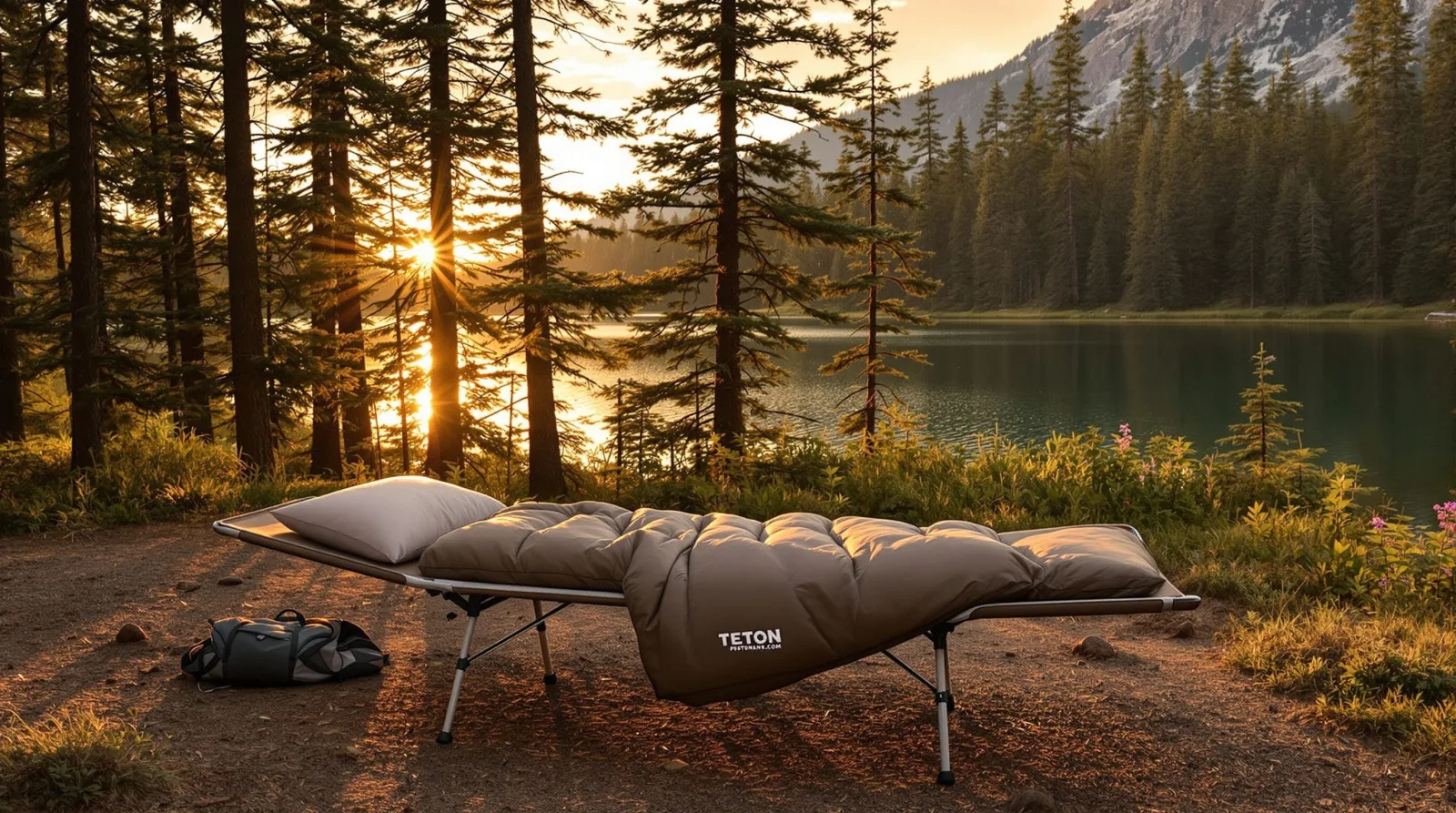
| #7 | TETON Sports Camp Pillow | Value foam | Check price |
| #8 | Sea to Summit Aeros Ultralight Regular | Ultralight inflatable | Check price |
How Do You Keep a Backpacking Pillow From Sliding Off the Pad?
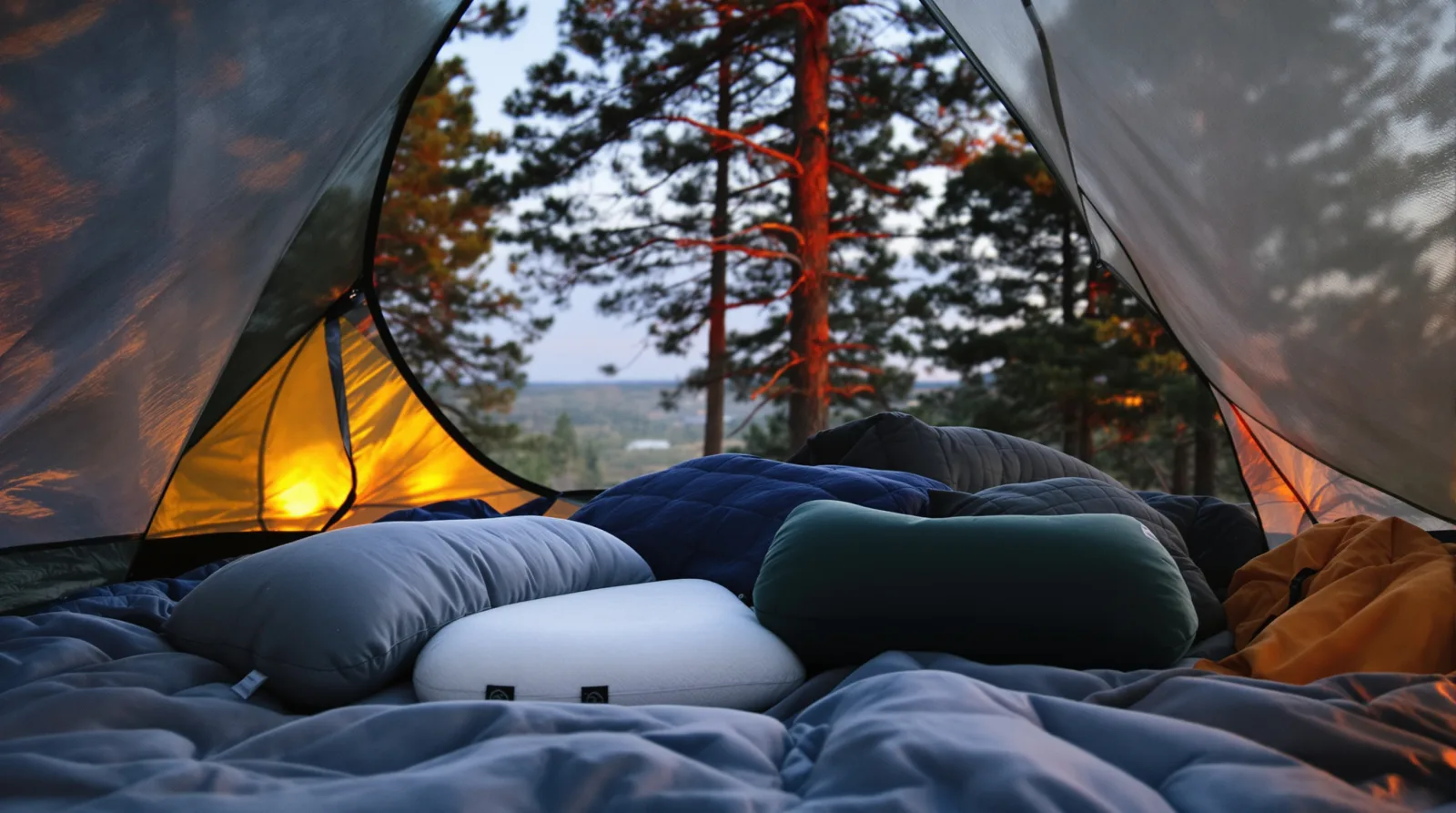
A pillow that migrates off your pad can ruin a good setup faster than almost anything in your sleep system. The fix usually has less to do with loft and more to do with contact, pressure, and where the pillow sits under your head. Start with the simplest moves before you replace gear. Small changes work.
- Use a strap system if your pillow has one. Some backpacking pillows include a rear strap or paired loops that wrap around your sleeping pad. Run the strap around the pad at head height, then cinch it only tight enough to stop side movement. If your pillow has loops but no strap, a light cord or flat elastic can do the same job without adding much fuss.
- Put the pillow inside your sleeping bag hood. Mummy bags give you a built-in pocket for pillow control. Slide the pillow into the hood, then lie down and pull the hood lightly around it. This works best when you sleep mostly on your back or side and do not want anything strapped around the pad.
- Wrap a shirt around the pillow and pad. A spare base layer or T-shirt can lock the pillow in place on slick pads. Lay the shirt across the head end of the pad, set the pillow on top, then wrap the shirt around both and tuck the sleeves or hem underneath. Cotton is not a smart trail layer, but any dry sleep shirt or synthetic layer can add grip.
- Let a little air out. An overinflated pillow acts like a beach ball under your head. Bleed off air until the pillow flattens slightly under weight and cradles your head instead of bouncing away. This also helps your neck sit closer to a natural angle, especially on thicker pads.
- Watch the fabric match. Silnylon-style pillow shells can skate across smooth sleeping pad fabric. A brushed polyester face, soft jersey cover, or pillow with a textured underside tends to stay put better. If you already own a slick pillow, add a buff, shirt, or light pillowcase between the pillow and pad.
Test the setup at home with your actual pad, bag, and pillow before a trip. A fix that works on carpet may still slide on tent fabric, so try it on the pad itself. If you toss and turn, combine two fixes, such as a slightly deflated pillow inside a hood or a shirt wrap with a strap.
Trail Notes on the 8 Pillows Worth Shortlisting
NEMO Fillo
0.26 kg is the number that decides the NEMO Fillo for a lot of backpackers. You carry more than an air-only pillow, and in return you get foam over a baffled air cell instead of the beach-ball feel people complain about after night one. The 3-inch I-beam air cell gives the head structure, while the thick foam and recycled microfiber cover soften ear pressure for side sleepers and restless back sleepers. Good sleep has weight.
Camp life is simple with it: inflate in seconds, tap the micro-adjustable valve until your neck lines up with your sleeping pad, then stash it in the attached stuff sack in the morning. The bag stays connected, so you are less likely to lose it in a dark tent or a windy lunch stop. Cleaning is also cleaner than most camp pillows, since the cover comes off and goes in the washing machine, useful after sunscreen, sweat, and dusty trail hands. Backpackers counting every ounce may prefer an inflatable-only pillow, and broad-shouldered side sleepers who like a large sleeping surface may want to compare the bigger version before buying.
Pros
- Foam over an I-beam air cell cuts down the balloon feel of basic inflatables
- Micro-adjustable valve lets you fine-tune firmness after you lie down
- Removable recycled microfiber cover is machine washable
- Integrated stuff sack stays attached so it is harder to lose
Cons
- Heavier than inflatable-only options here at 0.26 kg
- One Size may feel small if you like a wider pillow
Cold rain has you in the tent early, your pad is slick, and your old pillow keeps squirting toward the door every time you roll over. Sea to Summit built the Aeros Premium Regular for that kind of camping and travel: a 2.8-ounce inflatable pillow with a soft brushed knit exterior and a curved 13.4 x 9.4 x 4.3-inch shape. It packs to 3.3 x 2.8 inches, so it fits where a fleece-stuffed sack starts to feel silly.
The mini valve keeps the setup quick. A few breaths fill it, fast deflation helps during a rushed pack-up, and fine pressure control lets you drop the loft when your sleeping pad already rides high. Reviewers who disliked other inflatables mention the fabric and shape as reasons this one stayed more comfortable, including a side sleeper who had fought pillow slide with another popular model.
Sea to Summit also gives you a real anti-slide option if you use one of its sleeping mats with PillowLock patches. The 50D polyester fabric is listed as lightweight, durable, silent, and able to handle moisture exposure, but care stays old-school: hand wash only and air dry. On pads without PillowLock, you may still need a jacket, buff, or pillow strap to keep it parked all night, and hikers who want foam under the ear should choose a hybrid pillow instead.
Pros
- Very light at 2.8 ounces
- Soft brushed knit exterior feels better on the face than slick plastic
- Mini valve supports quick inflation, fast deflation, and pressure tuning
- Works with Sea to Summit PillowLock patches to reduce sliding
Cons
- PillowLock hold works only with compatible Sea to Summit mats
- Hand wash only, then air dry
A leak can end the trip for the Crisonky Ultralight Inflatable Pillow, and one reviewer said theirs was no longer usable after almost everyday use for about three weeks. That is the buried downside with budget inflatables: you save money, but you still sleep on a small air bladder that has to hold pressure every night. This one still earns a spot because the trail basics are strong: 3 to 5 breaths to inflate, a 3-second deflation claim, a 5 x 2-inch packed size, and a 4.6-ounce listed weight.
The design aims at the problems that show up the first night out. Silicone dots on the back add grip against different surfaces, which helps with pillow slide on a pad or tent floor, and the ergonomic shape is made for neck support or lumbar support in camp. Water-resistant material lets you wipe dirt off with a damp cloth, while the care instructions call for hand washing. It suits hikers who want a cheap, tiny pillow for short trips, car kits, loaner gear, or a backup, but long trips with no spare should point you toward a model with stronger owner feedback on long-term air retention.
Pros
- Inflates in 3 to 5 breaths and deflates fast
- Packs to 5 x 2 inches
- Silicone dots on the back help reduce pillow slide
- Can work as a pillow or lumbar support
Cons
- Owner feedback includes a leak after about three weeks of frequent use
- Hand wash only, with no removable machine-washable cover listed
Against the pick ranked above it, Gear Doctors asks you to carry less and fuss a little more with an inflatable feel. You give up the cushier comfort margin of a higher ranked pillow, but you get a 3.5 oz packed weight, a 2.4 by 4.7 inch pouch size, and a 12 by 17 inch sleeping surface once it is full. That matters if your pack is tight.
The 4.3 inch thickness gives you real loft, and the included needle lets you adjust pressure instead of sleeping on a fully rigid air bladder. Setup stays simple, since the spec calls for about 3 breaths to inflate, and the anti leak valve is there to hold air overnight. Reviewers like the shape because their head does not feel like it wants to roll off, and one owner says the strap holds securely around a camp pad.
For the first night complaints, the detachable elastic strap is the big trail fix: use it around your sleeping pad before you blame your pillow for sliding. The back grips may not solve that problem by themselves, based on one 4 star review, so the strap matters more than the texture. Hand wash only care suits campers who rinse gear at home, but it is a poor match if you want a pillow you can throw straight into a machine after a dusty trip.
Pros
- Very light at 3.5 oz, with a pocket size packed shape
- Inflates to 12 by 17 inches and 4.3 inches thick
- Detachable elastic strap helps hold it on a sleeping pad
- Pressure adjustment needle helps tune loft and firmness
Cons
- Hand wash only care takes more effort after dirty trips
- Back grips may not stop sliding without the strap
Review volume tells the story here: with a 4.5 star average from 2,300 reviews, the Therm-a-Rest Compressible Cinch Small sits in the comfort lane. People pick this style when they want foam under their head instead of a bare air chamber, and the specs back that up with upcycled urethane foam and a soft stretch knit cover. It feels closer to a home pillow than the tiny inflatables in this guide, which is exactly why it belongs here.
The cinch cord lets you fine tune loft and firmness, so you can match the pillow to your sleeping pad and sleeping position rather than accepting one fixed height. Its integrated compression system reduces packed size for backpacks, duffels, road trips, van life, and flights, but foam still asks for more storage care than an inflatable. Therm-a-Rest says to open it for 24 hours after you receive it and store it open and uncinched, so skip this one if your gear bin only has room for everything packed tight all season.
Pros
- Upcycled urethane foam gives a plusher feel than air only pillows
- Integrated cinch cord adjusts loft and firmness
- Soft stretch knit cover suits campers who dislike slick pillow fabric
- Compression system helps it pack for camping, travel, and duffels
Cons
- Needs 24 hours open after arrival to restore loft
- Best stored open and uncinched, which takes more home storage space
Picture a trip where you sleep on a plane, hike into camp, then want one pillow for your tent instead of a bundled jacket. The Klymit Luxe Travel Pillow fits that mixed travel use because it combines an inflatable core with polyester fill and a soft outer layer. Side, back, and stomach sleepers all show up in the review snippets, with one side and stomach sleeper calling out the padded cover over the bladder.
Support is the point. The hybrid fill cradles your head and neck better than a plain air pillow, and the rectangular X-Large shape gives you more surface to move around on at night. Klymit says it takes 10 to 15 breaths to inflate, then deflates by opening the valve, so camp setup stays simple even if it takes more breath than the smallest inflatable option above.
Its fabric finish helps with a common first night problem: one reviewer says it feels more like cotton and does not shoot out from under your head. Care is easier than most backpacking pillows in this set, since the instructions allow machine washing and tumble drying on low heat, with no ironing. If you count every breath and every bit of packed space, a smaller air only pillow may fit your style better, but this is the supportive pick for people who hate waking up with their ear pressed into a hard bladder.
Pros
- Hybrid air and polyester fill adds support around the head and neck
- Soft-touch polyester cover feels less slick than bare inflatable fabric
- Machine wash and tumble dry low care is practical after long trips
- Works for travel, camping, backpacking, and airplane use
Cons
- Inflation takes 10 to 15 breaths, more than some smaller inflatables
- X-Large size may be more pillow than strict minimalists want
Car campers, summer camp families, and backpackers watching gear costs buy the TETON Sports Camp Pillow because they want real cushioning without stuffing a jacket into a hood. What they often get wrong is scale: at 18 by 12 inches, it is a small camp pillow, and reviewers call that out even while saying it feels comfortable and takes little space. You get cotton fill, a soft polyester cover, and a rectangular shape that feels closer to a travel pillow than an inflatable bladder.
No valve sits under your cheek, and there is no firmness guessing at midnight. The pillow lofts on its own, then packs down tight for a bag or road trip kit; that suits anyone who hates blowing up a pillow after a long drive or hike. Cleaning is simple for a camp item, since the pillow and pillowcase can be machine washed together or separately, so sunscreen, tent grit, and kid camp funk are less of a project. On slick sleeping pads, plan to tuck it into a mummy hood or brace it with spare clothing, since the specs do not list a strap or grippy backing. People who need a published weight for a spreadsheet, adjustable height for side sleeping on a thick pad, or a full bed pillow feel may want a different style, because the small size and fixed loft are part of the package.
Pros
- Machine washable pillow and pillowcase
- No inflation, no valve, and fixed soft loft
- 18 by 12 inch size saves space compared with a home pillow
- Comfort gets frequent praise in reviews
Cons
- Very small, so it may not satisfy side sleepers who want more surface area
- No listed weight, packed size, strap, or firmness adjustment
Stretch knit 20D polyester sits over a TPU air bladder on the Sea to Summit Aeros Ultralight Regular, so your ear lands on fabric rather than bare plastic. The Regular size inflates to 14.2 by 10.2 by 4.7 inches, with a scalloped lower edge that cradles your shoulders when you sleep on your back, side, or sitting up in a shelter. A multi-function mini valve handles inflation, quick deflation, and small firmness changes, which matters if your neck needs less air after the first hour.
Wet gear is part of backpacking, and this one keeps care simple but specific: the listing calls for hand washing only. Polyester cover material and a stretchable face fabric dry differently than a cotton pillowcase, but you still need to wipe grime off and let the valve area dry before it goes back in the stuff sack. In cold weather, the adjustable air chamber gives you a way to soften the pillow if it feels too firm under your ear.
Packed size is the reason to buy it. It weighs 2.1 ounces and packs to 2 by 2.8 inches in the included stuff sack, small enough for fast miles and tiny pack pockets. The PillowLock compatibility can help keep it from sliding when paired with Sea to Summit sleeping mats that have the patches, and one reviewer likes the curve inside a mummy bag. Hikers who want a bigger pillow may feel shorted, since reviews mention it being smaller than expected; an inflatable also brings leak risk, and one long-term reviewer replaced an older one after a small leak.
Pros
- 2.1 ounces and packs to 2 by 2.8 inches
- Mini valve lets you fine tune firmness and dump air fast
- Scalloped edge and curved shape suit mummy bags and shoulder contact
- PillowLock compatibility helps with sliding on matching Sea to Summit mats
Cons
- Hand wash only
- Some buyers find the Regular size smaller than expected, and an air bladder can leak
Air Pillow Too Hard? Try This Before You Return It
Air Pillow Too Hard? Try This Before You Return It
A fully inflated backpacking pillow can feel worse than a half-full one because air has nowhere to move. The pillow turns into a tight dome, so your ear, jaw, or neck sits on pressure instead of support. That is why some reviews call inflatables “balloons.” Try tuning the air before you give up on the pillow.
Make the adjustment while you are lying on your actual sleep setup, not while the pillow sits on the floor. Your pad, bag, and shoulder height all change how the pillow feels. Fill it, lie down, then press the valve in quick little taps until your head settles instead of perching on top.
- Side sleepers: Start close to full because your shoulder creates more space between your head and the pad. Let air out in small taps until your neck feels level, with your head neither tipped toward the pad nor pushed upward. Stop before the pillow gets so soft that your ear bottoms out.
- Back sleepers: Use less air than you think. Let your skull sink into the pillow until your chin feels relaxed, not forced toward your chest. A lower pillow usually keeps your neck calmer through the night.
- Stomach sleepers: Go very low. Let out most of the air, then add back only enough to take the hard edge off the pad. Many stomach sleepers do better with a barely inflated pillow plus a soft layer on top.
A fleece, buff, or spare baselayer can fix the slick, beach-ball feel fast. Wrap it around the pillow or lay it between your face and the fabric. The soft layer spreads pressure, cuts that rubbery feel, and keeps your cheek off cold plastic.
Small changes matter here. One quick press on the valve can change the feel from stiff to usable, so creep up on it instead of dumping half the air at once. If the pillow still feels bouncy after that, try pairing less air with a thicker fleece layer before you decide it is the wrong pillow for you.
How to Choose a Pillow You Will Keep Using
Inflatable, Foam, or Hybrid Feel
Begin with the fill type. Air pillows pack down smallest because the support comes from your breath, but they can feel springy under your head and may push back when you roll over.
Sea to Summit Aeros models fit this camp well, so they make sense when every corner of your pack already has a job. Try them slightly underfilled if a fully inflated pillow feels like a beach ball.
- Foam: The Therm a Rest Compressible Cinch Small feels closer to a small bed pillow, with a softer collapse under your ear, but it takes more pack space.
- Hybrid: The NEMO Fillo mixes an air bladder with foam on top, so you get packability with a more cushioned surface. This style costs you more room than a pure air pillow, but less bulk than most compressible foam pillows.
Loft for Side, Back, and Stomach Sleepers
Match pillow height to your sleep position. Side sleepers usually need more loft because the pillow has to fill the gap between shoulder and head, especially on a firm sleeping pad.
Back sleepers can often use moderate loft, since too much height can bend your neck forward. Stomach sleepers tend to do better with a softer, lower pillow or an air pillow left partly deflated.
- If you get too much loft: Your neck can feel cranked upward, and you may wake up pushing the pillow away.
- If you get too little loft: Your head drops toward the pad, which can bother side sleepers first.
- Before you buy: Check product photos beside a packed stuff sack, then read user notes from sleepers who use the same position you do.
Pack Size Versus Sleep Quality
Decide how much pack space sleep is worth. Ultralight choices like the Gear Doctors pillow and Sea to Summit Aeros Ultralight suit hikers who count ounces and want a pillow that disappears into a crowded pack.
Those small air pillows ask you to accept a firmer, more adjustable feel. Foam options make more sense as car camping add ons, base camp comfort, or short backpacking trip gear where a little extra bulk does not crowd out food or layers.
- For long miles: Check the listed weight and packed size before you fall for a cushy photo.
- For short trips: A bigger pillow can be worth the space if poor sleep ruins your second day.
- If you get it wrong: The pillow either stays in the gear bin because it is bulky, or it rides in your pack and still leaves you hunting for a fleece at midnight.
Surface Fabric and Ear Comfort
Your ear notices the cover first. A slick plastic feel, crinkly fabric, or raised valve can bother you more than a small difference in listed weight after several nights out.
Soft covers, brushed fabrics, and thin foam layers help air pillows feel less like pool gear. The NEMO Fillo and Therm a Rest Compressible Cinch Small lean into that softer contact, while many Sea to Summit Aeros pillows keep weight and packed size low with thinner face fabric.
- Side sleepers: Pay close attention to pressure points because one ear carries most of the load.
- Noise sensitive sleepers: Read reviews for rustle and squeak, especially if you move a lot.
- Simple fix: Pull a clean shirt over the pillow if the fabric feels clammy. That can matter more than shaving a tiny amount of weight from your kit.
Stability on a Sleeping Pad
A great pillow is annoying if it slides away. Smooth air pillows can skate across slick sleeping pads, especially when your campsite has a slight slope or you sleep in a hoodless quilt.
Some pillows use straps, tacky fabric, or shaped backs to grip the pad. A mummy bag hood can also trap the pillow in place, while textured pad fabric gives the pillow more bite than a glossy pad surface.
- Before buying: Look for pad attachment details in the listing photos, then check if the strap fits the pad width you own.
- Trail fix: Wrap the pillow in a shirt and tuck the extra fabric under your pad or inside your sleeping bag hood.
- If you ignore stability: You spend the night pulling the pillow back under your head instead of sleeping.
Cleaning After Sweaty Trips
Backpacking pillows pick up sweat, sunscreen, hair oil, and camp dust. Before you buy a compressible pillow, check the washing instructions and whether the cover comes off.
Removable covers are easier to clean at home and dry faster than a soaked foam core. Foam pillows can hold moisture longer, so give them real drying time before storage.
- Inflatable pillows: Wipe the surface after trips and let the valve area dry before packing it away.
- Hybrid pillows: Treat the fabric and foam top with more care than the air bladder, since trapped moisture can linger there.
- Compressible pillows: Ask how the whole pillow is cleaned if the listing only talks about comfort. A pillow that stays funky after one hot trip will not see much use.
How to Clean and Store a Backpacking Pillow Between Trips
Backpacking pillows pick up sweat, sunscreen, dust, and food smells fast, so give them a quick reset before they go back in the gear bin. Begin with the face fabric: wipe it with a damp cloth and a small amount of mild soap, then wipe again with clean water so soap does not sit in the fabric. Let the pillow dry fully before storage. Damp gear gets funky.
For any pillow with foam, including compressible foam pillows and hybrids with a foam layer, follow the maker’s washing instructions before you soak, machine wash, or use a dryer. Foam can hold water deep inside, and heat can change its shape. If the pillow has a removable cover, wash that cover the way the maker says, then let both the cover and the pillow body dry before you put them back together.
- Foam pillows: Spot clean the outer fabric after most trips, then air out the foam in a dry, shaded place. Do not pack it tight while it still smells damp or feels cool to the touch.
- Hybrid pillows: Clean the fabric side and check the foam area for trapped grit or moisture. Let the foam air out longer than the inflatable bladder, since it dries slower.
- Inflatable pillows: Wipe down the face fabric, then open the valve and let the inside air out before storage. If moisture gets near the valve, leave it open in a dry room until everything feels dry.
Before the next trip, check valves before packing. Inflate the pillow, listen for air leaks, and make sure the valve closes cleanly without grit in the seal. A little dirt in that spot can turn into a slow leak halfway through the night.
Store the pillow loose when you can, especially foam and hybrid models. A breathable gear shelf or mesh sack works better than a sealed plastic bag if any moisture might remain. Keep it away from stove fuel, bug spray, and sharp tools, since face fabric and valves do not need much damage to become a problem on trail.