CampingKnow is reader-supported. When you buy through links on our site, we may earn an affiliate commission at no extra cost to you. Learn more.
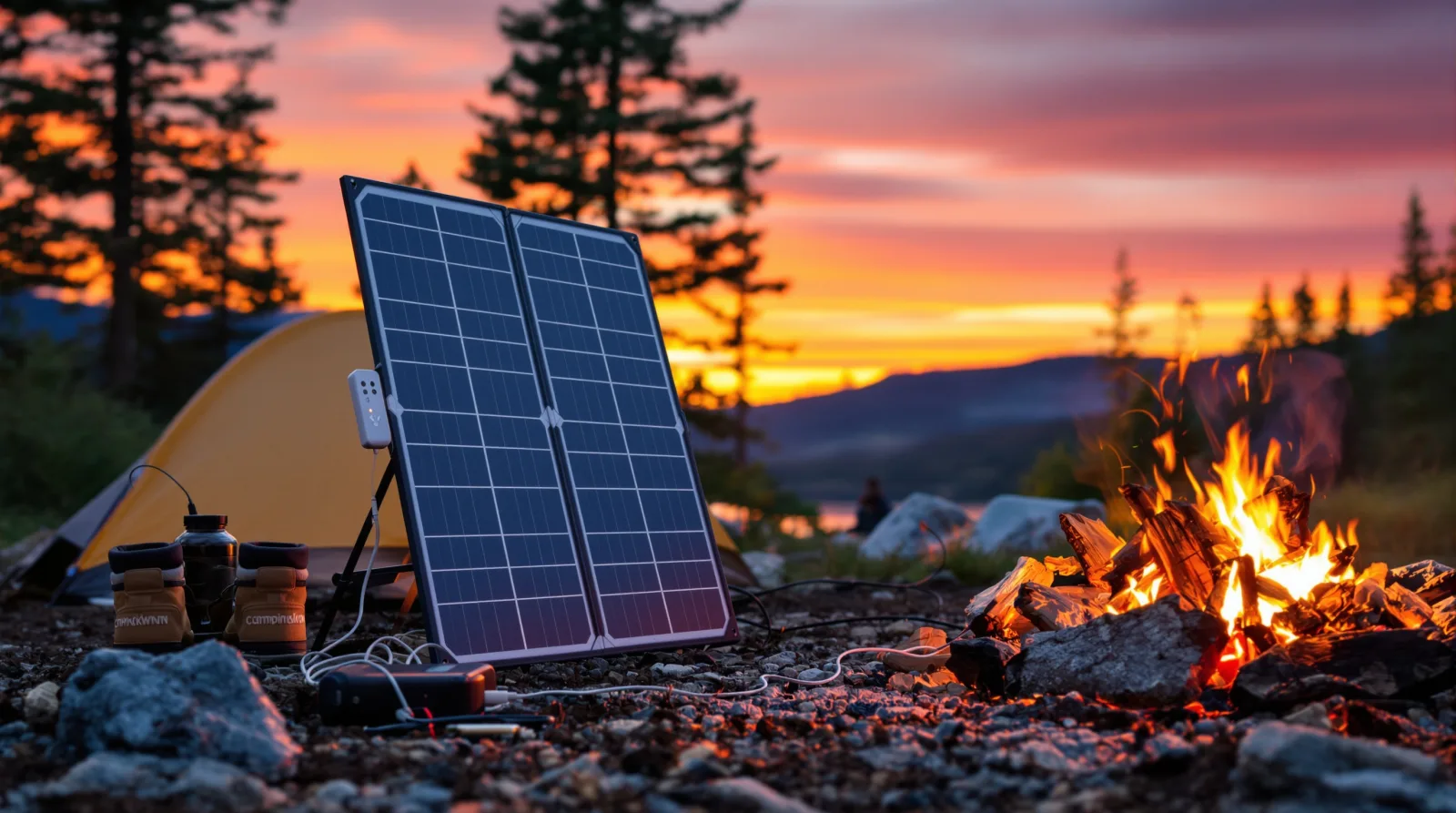
A solar panel is the quiet piece of camp gear that decides whether your phone, headlamp, and power station make it through a long weekend or die on the second night. Get the wattage and connectors right and you barely think about power again. Get them wrong and you spend the trip chasing sun with a dead battery and a panel that will not talk to your gear.
The hard part is that "portable solar panel" covers two different jobs. One is topping up a phone or small battery straight from a USB port. The other is feeding a power station like a Jackery, Goal Zero, or EcoFlow through a DC plug so you can run a fridge or recharge a big battery bank. A panel built for one is often useless at the other, and the spec sheets rarely make that clear.
We set six folding panels out in real conditions, including flat-gray overcast mornings, and sorted them by the work they do. Below you will find a 100W power-station workhorse, a pocketable USB charger for phones, a high-output panel for big batteries, a budget folder, an ultralight backpacking pick, and a rugged panel built to take a beating. Match the panel to your battery and your trip, and the rest falls into place.
Jackery SolarSaga 100W
A 100W folding panel that connects to nearly every common power station, with two onboard USB ports for charging phones when no battery is hooked up. It folds flat, props up on its own kickstand, and hits real-world output that lands close to its rating in good sun.
Check price on AmazonQuick Comparison
| Rank | Product | Best for | Price |
|---|---|---|---|
| #1 | Jackery SolarSaga 100W | Overall | Check price |
| #2 | BigBlue 28W Solar Charger | USB panel for charging phones | Check price |
| #3 | EcoFlow 110W Portable Solar Panel | Power stations and high output | Check price |
| #4 | ROCKPALS 60W Foldable Solar Panel | Budget | Check price |
| #5 | BioLite SolarPanel 5+ | Lightweight for backpacking | Check price |
| #6 | Goal Zero Nomad 28 Plus | Rugged build | Check price |
The Reviews
This is the panel we hand to most people because it does both jobs without fuss. The main 8mm DC plug feeds a Jackery Explorer power station directly, and an included adapter set lets it work with a lot of other brands too. The panel also carries its own USB-A and USB-C ports, so on a day you leave the power station in the car you can still charge a phone straight off the panel, a flexibility rare at this size.
Conversion efficiency sits around 23 percent, solid for monocrystalline cells, and in clear midday sun we saw output stay close to the 100W label rather than collapsing the way cheaper panels do. It folds to about the size of a laptop bag, weighs roughly 9 pounds, and stands on its own kickstands so you can angle it at the sun. For a couple running a mid-size battery over a weekend, this is the easy call.
Pros
- Feeds power stations and charges phones via onboard USB
- Real-world output stays near the 100W rating in good sun
- Folds flat with built-in kickstands for angling
- Adapter set widens compatibility past Jackery
Cons
- Heavier than a USB-only phone panel
- Single panel only, no daisy-chain cable included
If all you need is to keep a phone, headlamp, and GPS topped up, you do not want a 9-pound power-station panel. This BigBlue folds to the size of a tablet, weighs about 1.3 pounds, and clips to the outside of a pack with the included carabiners so it charges while you walk. It has no internal battery, so you point it at a power bank during the day and charge your phone off that bank at night.
The built-in ammeter is the feature you end up loving. It shows live current in amps, so you angle the panel until the number peaks instead of guessing. With dual USB-A and a USB-C port it pushes up to about 5V/4A in strong sun. It will not fill a power station, but for trail charging of small devices it is the most practical panel here.
Pros
- Tablet-sized and about 1.3 pounds, clips to a pack
- Onboard ammeter helps you aim for peak output
- Dual USB-A plus USB-C ports for small devices
- No battery to add weight or wear out
Cons
- Pure USB, will not feed a power station
- Direct charging stutters when clouds pass
When the goal is to recharge a large battery bank fast, more watts and a clean DC connection matter more than onboard USB ports. This EcoFlow puts out 110W through an XT60 plug, the standard input on EcoFlow River and Delta units, and it carries an IP68 rating so a sudden shower will not end the trip. The zippered case folds open into a kickstand that sets the tilt angle for you.
It has no USB ports, and that is the point: this fills batteries, it does not charge a phone in your hand. Two can be daisy-chained in parallel with the right cable to roughly double the input current. For anyone built around a power station, the extra wattage and weatherproofing are worth the bulk.
Pros
- 110W output recharges big batteries faster
- IP68 rating shrugs off rain and dust
- Case folds into an angle-setting kickstand
- Can be paired in parallel for more current
Cons
- No USB ports, panel-only output
- Bulkier and heavier than a 100W folder
You do not have to spend big to get a panel that feeds a small power station and charges a phone at once. This ROCKPALS folder puts out 60W through a DC barrel plug, with included tips that fit Jackery Explorer 160 and 240 units, plus ROCKPALS and Flashfish stations. It also carries a QC3.0 USB-A port and an 18W USB-C port, so you can charge a phone while the DC line tops a battery.
ETFE-coated cells hold up to scuffs better than the cheaper PET laminate you see at this price, and the panel can be wired in parallel with a second one if you outgrow 60W later. It is not the fastest here and the case is plain, but for a first setup or a truck backup, it covers the basics for a lot less money.
Pros
- DC and USB output in one budget panel
- Tip kit fits Jackery, ROCKPALS, and Flashfish
- ETFE coating resists scuffs better than PET
- Parallel-capable if you add a second panel later
Cons
- 60W tops batteries slower than a 100W panel
- Plain case and no onboard charge readout
For a hiker counting grams, this is the most thoughtful little panel we tried. It is a 5W panel with a 3,200 mAh battery built into the back, so sun that lands while you are moving gets stored instead of wasted, and you draw it off the USB port at camp. At about 14 ounces it is light enough to clip to a pack lid and forget, and corner latches lash it down without extra straps.
The clever part is the analog sundial on the front. A small post casts a shadow, and when the shadow disappears the panel faces the sun dead-on, which takes the guesswork out of placement. The 360-degree kickstand props it against a rock, tent, or log. It is slow and the onboard battery is small, but for keeping a phone alive on a multi-day trek where weight is everything, it earns its spot.
Pros
- About 14 ounces with a built-in 3,200 mAh battery
- Stores sun while you hike, draw it at camp
- Sundial and 360-degree kickstand nail the angle
- Corner latches lash it to a pack
Cons
- 5W is slow and the battery is small
- Phone-scale charging only, no power station use
Some panels feel built for a tidy backyard; this one is built for a hard trip. The Nomad 28 Plus uses a tough stitched fabric body that folds down small and takes knocks, drops, and grit without flinching, which is why overlanders and long-haul hikers swear by it. A USB-A port handles phones and small gear, and an 8mm port chains into Goal Zero Yeti stations or other Nomad panels.
The smart-charging logic is what sets it apart in patchy weather: if a cloud cuts the sun and your phone stops charging, the panel remembers where it left off and resumes on its own instead of needing a replug, and you can daisy-chain several Nomads to raise total wattage. At 28W it is not a fast power-station filler, but for durability in rough country it is the one we would trust to survive the trip.
Pros
- Tough stitched body takes real abuse
- Auto-resumes charging after clouds pass
- Chains to Goal Zero Yeti units and other Nomads
- Folds compact for a rugged 28W panel
Cons
- 28W is modest for filling a large battery
- Costs more than generic panels of the same wattage

What to Look For
First Decide: Charging Devices or Filling a Power Station?
This single question sorts the whole category.
If you only need to keep a phone, headlamp, and GPS alive, you want a light USB panel like the BigBlue or BioLite. If you run a power station to drive a fridge, lights, or a CPAP, you want a panel with a DC output that plugs into that battery, like the Jackery or EcoFlow.
Some panels, including the Jackery 100W and the ROCKPALS, do both by carrying a DC plug and USB ports together. Buying a panel-only unit when you wanted a phone charger is the mistake that leaves people stranded.
How Many Watts You Actually Need
Watts set how fast you collect power, and the right number depends on your battery and draw.
For phones and small USB gear, 20W to 30W keeps up with daily use. For topping a power station over a relaxed weekend, 60W to 100W is where most campers land.
If you run a 12V fridge or want a full recharge in one sunny afternoon, step up to 110W or more, or chain two panels. Remember the rating is a best-case number measured in lab sun.
In the real world, plan on roughly 60 to 80 percent of the label on a clear day and far less under cloud, so size up rather than buying exactly to your math.
Make Sure the Connector Matches Your Battery
A panel is only useful if its plug fits your power station, and the connector world is a mess.
Jackery and many clones use an 8mm barrel plug, EcoFlow uses XT60, Goal Zero uses its own 8mm and High Power Port standards, and Anker and Bluetti each have their own.
Many panels ship with an adapter kit that covers the common ones, so check the box includes the tip your battery needs. Voltage matters too: a power station expects an input inside a set window, and a panel outside it will charge slowly or not at all.
When in doubt, buy the panel and battery from the same brand.
USB-C PD and What the Ports Really Deliver
Plenty of panels advertise USB-C, but the useful spec is USB-C Power Delivery, which negotiates higher voltages to charge modern phones, tablets, and some laptops at full speed.
A plain 5V USB-C port only trickles power and frustrates anyone with a recent device. If you plan to charge straight off the panel rather than through a battery, look for a stated PD wattage, such as 18W or higher, rather than the bare USB-C logo.
Solar power is also jumpy as clouds pass, and some devices throttle or stop charging when the input wavers, one more reason to charge a power bank first and let it feed your phone a steady stream.
Folded Size, Weight, and How It Stands Up
A panel that is a pain to pack or prop up is a panel you leave at home.
Check the folded dimensions and weight against how you travel: a backpacker needs something under a pound or two that clips to a pack, while a car camper can carry a 9-pound 100W folder without noticing.
How the panel angles at the sun matters just as much. Built-in kickstands or a case that doubles as a stand let you tilt it toward the light, a real jump in output over a panel lying flat on the ground.
Grommets or corner latches help you hang it from a tent or lash it to a pack so it charges while you move.
Weatherproofing and Real-World Durability
Solar panels live outside in the exact conditions that wreck electronics, so build quality counts.
An IP rating tells you how a panel handles water and dust: IP65 shrugs off rain and spray, while IP67 or IP68 survives heavier soakings. The cell coating matters too, since ETFE laminate resists scuffs and yellowing far better than the cheaper PET film on bargain panels.
For rough country, a stitched fabric body like the Goal Zero Nomad takes abuse that would crack a rigid panel. Match the toughness to the trip, and never assume a panel is waterproof unless the listing says so.