CampingKnow is reader-supported. When you buy through links on our site, we may earn an affiliate commission at no extra cost to you. Learn more.
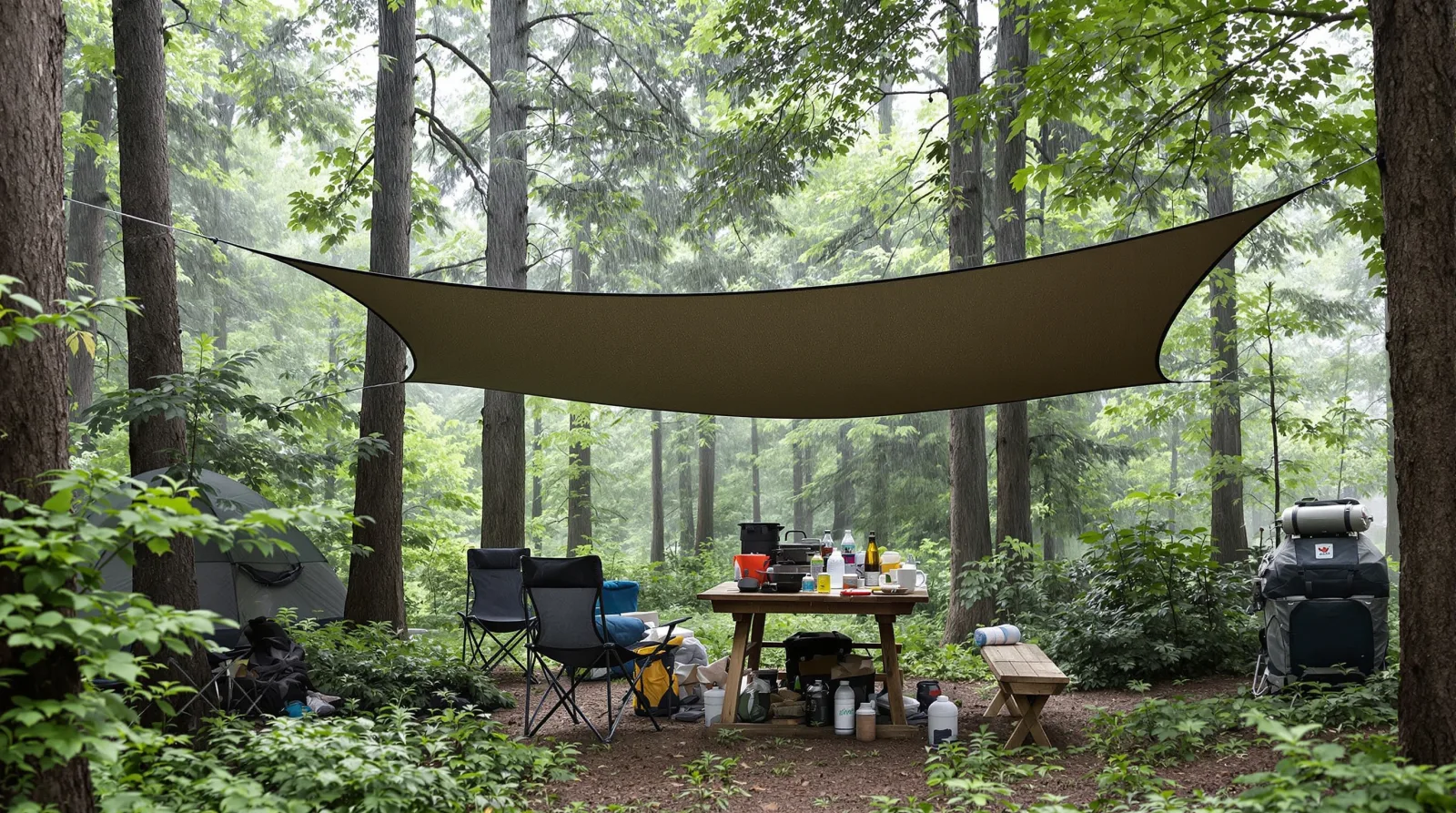
A tent keeps you dry until you want to sit outside in the rain and watch it come down. That is the moment a good tarp earns its keep. String one between two trees and you have a dry kitchen, a porch, a hammock roof, or a full shelter for a fraction of a tent's weight.
A cheap tarp wets through at the seams, flaps loose in a gust, and leaves you wondering why you bothered. The right tarp depends on the job. A backpacker counting grams wants thin silnylon that packs to the size of a soda can. A bushcrafter who camps in storms wants heavy coated nylon with a tall hydrostatic head and a dozen tie-out points.
A family at a drive-up site wants a big square of polyester for shade. We rigged each tarp below in real weather, from drizzle to a wind that tested every guyline. You will see Kelty, ENO, Aqua Quest, and OneTigris here because they keep showing up when the sky opens.
What follows covers a versatile all-rounder, a hammock rain fly, a heavy-duty storm shelter, a featherweight ripstop tarp, a budget fly, and a rectangle big enough for a group. Pick by how you camp and how much you carry.
Kelty Noah's Tarp 12
A 12 by 12 foot square of 68D taped-seam polyester with reinforced corner guyouts, sized to shelter a small group or stretch low over a hammock. It pitches a dozen ways, packs into its own sack, and handles sun and rain without fuss, the tarp most campers reach for first.
Check price on AmazonQuick Comparison
| Rank | Product | Best for | Price |
|---|---|---|---|
| #1 | Kelty Noah's Tarp 12 | Overall | Check price |
| #2 | ENO ProFly Rain Tarp | Hammocks | Check price |
| #3 | Aqua Quest Defender Tarp | Heavy-duty waterproof | Check price |
| #4 | OneTigris Ultralight Ripstop Tarp | Ultralight backpacking | Check price |
| #5 | REDCAMP Hammock Rain Fly | Budget | Check price |
| #6 | OneTigris Proteus Camping Tarp | Large group shelter | Check price |
The Reviews
This is the tarp we hand to anyone who asks for one that just works. It is a 12 by 12 foot square of 68D polyester with taped seams, so rain runs off instead of seeping through the stitching. Reinforced guyout points sit at every corner and edge, and adjustable guylines pull the sheet drum tight between two trees or to the ground in wind.
The square shape is the strength here. Pitch it as a flat roof, an A-frame over a hammock, a lean-to, or a low storm pitch, then roll it into its carry bag. Rig it off trees or trekking poles, and step up or down with Kelty's 9 and 16 foot sizes.
Pros
- 68D polyester with taped seams sheds rain well
- Square shape pitches a dozen different ways
- Reinforced corner and edge guyouts hold in wind
- Packs into its own roll-top sack
Cons
- Poles sold separately
- Heavier than a silnylon backpacking tarp
If you sleep in a hammock, you want a tarp cut for the job, and the ProFly is exactly that. It is a six-sided silnylon fly of about 10 feet 6 inches by 6 feet 4 inches, shaped so the ridgeline runs over the hammock while the angled sides shed water and wind away. Six guy points pull it into a taut pitch that holds its shape when a squall rolls through.
At around 22 ounces it hangs easily and packs small. The diagonal cut covers a standard hang well, though in sideways rain you may want the bigger ProFly XL for more overhang. For three-season hammock camping it is a clean, no-drama choice.
Pros
- Hexagonal cut shaped for hammock coverage
- Light silnylon at about 22 ounces
- Six guy points pitch tight and streamlined
- Packs down small in a shared load
Cons
- Tight coverage in sideways rain, XL pitches longer
- Stakes sold separately
When the forecast is grim and you camp anyway, this tarp keeps you dry. The Defender uses 70D nylon with a thick dual coating and a 20,000 mm hydrostatic head, well above what a passing shower needs and at home in days of hard, wind-driven rain. The seams are heat taped and the tie-outs are bar-tacked so they do not tear out when you crank the guylines tight.
This 10 by 7 foot size carries 21 tie-out points, which makes it a bushcrafter's favorite. Rig it as a closed-end storm shelter, a diamond plow point, a lean-to, or a tight A-frame, with an anchor wherever you need one. It packs bulkier than silnylon, so it suits car camping, canoe trips, and base camps, and Aqua Quest backs it for life.
Pros
- 20,000 mm hydrostatic head for sustained heavy rain
- 70D nylon with heat-taped seams and bar-tacked tie-outs
- 21 anchor points for dozens of storm pitches
- Lifetime warranty
Cons
- Heavier and bulkier than backpacking tarps
- Camo finish hides dropped gear underneath it
For hikers who want shelter without the weight penalty, this 10 by 10 foot tarp is the answer. It is cut from 40D silicone-coated ripstop nylon, light and strong while shedding water, and packs down to roughly the size of a water bottle. The square layout drops a low A-frame in wind or opens a flat porch on a calm night.
The reinforced tie-outs let you pitch it taut with trekking poles and a ridgeline, no trees required. It is a minimalist shelter, trading walls for a couple of pounds saved and less bulk. Pair it with a bivy or a groundsheet for a fast-and-light three-season setup.
Pros
- 40D silicone ripstop is light and tough
- Packs to about the size of a water bottle
- Square cut pitches many ways with trekking poles
- Reinforced tie-outs hold a taut ridgeline
Cons
- No included stakes or guyline
- Thin fabric wants careful handling on rough ground
You do not need to spend a lot to stay dry, and this REDCAMP fly proves it. It is a 10 by 10 foot sheet of 210T polyester ripstop with a PU 2000 mm coating, plenty for normal rain and a long way from flimsy. At around 1.8 pounds it is light enough for short backpacking trips and cheap enough that you will not baby it.
The kit is the real value. It ships with six aluminum stakes, six guy ropes, and a stuff sack, ready to rig the day it arrives. The tie-outs let you pitch it as a hammock roof, a ground tarp, a sun shade, or a simple ridge tent. The coating sits below the storm-grade tarps here, so save it for ordinary weather, but for a first tarp or a spare the price is hard to argue with.
Pros
- Low price with stakes and ropes included
- 210T ripstop with 2000 mm PU coating
- Light at about 1.8 pounds
- Doubles as a groundsheet or sun shade
Cons
- 2000 mm coating is built for ordinary rain, not storms
- Hardware is basic and may want upgrading later
When you need to cover a crowd, size wins, and this Proteus tarp brings it. The sheet measures about 20 feet by 9 feet, big enough to roof a group kitchen, a row of chairs, or a couple of hammocks side by side. It has 21 reinforced tie-out points and integrated doors that close off the ends against blowing rain, turning an open shade into a sheltered room.
Despite the footprint it weighs around 3.5 pounds, within reach for canoe trips and car camping where one tarp shelters everyone. The long rectangle pitches well with a ridgeline and a pair of poles, and the extra anchors tension the broad span so it does not sag or pool. For group trips it keeps the whole party dry.
Pros
- About 20 by 9 feet covers a whole group
- Integrated doors close off the ends in wind
- 21 tie-outs tension the broad span flat
- Reasonable 3.5 pound weight for the size
Cons
- Too big and heavy for solo backpacking
- Needs a long ridgeline and poles to pitch well

What to Look For
Match the Tarp to How You Camp
Everything starts here.
A solo backpacker wants a light square like the OneTigris ripstop that pitches off trekking poles and disappears in a pack. A hammock camper wants a shaped fly such as the ENO ProFly.
A storm camper wants the heavy coated nylon and many tie-outs of the Aqua Quest Defender, and a group wants a big rectangle like the Proteus.
Buying a heavy group tarp for a thru-hike, or a tiny hammock fly for a family picnic, is the common regret. Decide your trips and your load first, then shop.
Material: Silnylon, Coated Poly, or Canvas
The fabric sets weight, price, and durability all at once. Silnylon and silicone-coated ripstop are the lightest and pack smallest, which backpackers favor, though thin versions want gentle handling. PU-coated polyester is the value middle ground, a touch heavier but cheaper, and it holds its waterproofing well. Canvas is near indestructible and great near a fire since sparks will not melt it, but it is too heavy to carry far and needs drying to avoid mildew. Pick the fabric that fits the trip, not the most expensive roll.
Waterproof Rating and Taped Seams
Two numbers tell you how dry you will stay.
The first is the hydrostatic head, in millimeters: how much water pressure the coating holds back before it leaks. Around 1,500 to 2,000 mm handles ordinary rain, while a storm tarp like the Defender runs to 20,000 mm for days of wind-driven downpour.
The second is the seams. A tarp can have a high rating and still leak if the needle holes are not sealed, so look for heat-taped seams.
A budget fly keeps a weekend dry; a long soaking earns the higher number and taped stitching.
Size, Shape, and Tie-Out Points
Shape decides how the tarp pitches.
A square or rectangle is the most flexible, working as a flat roof, an A-frame, a lean-to, or a closed storm pitch. A hexagonal cut like the ProFly is shaped for hammocks, trimming weight where you do not need coverage.
Size follows your group: a 10 by 10 foot square shelters one or two, while a 20 foot rectangle covers a crowd. The tie-out count matters as much as the dimensions.
More bar-tacked anchor points mean more ways to rig it and a tighter pitch, which is why bushcraft tarps carry a dozen.
Weight, Packed Size, and Ridgeline Setup
If the tarp rides on your back, weight and bulk decide the trip.
Silnylon flies pack to the size of a water bottle and weigh a pound or less, while a heavy storm tarp can run several pounds. For car camping none of that matters.
However you pitch it, plan the ridgeline first. A length of cord run between two trees, with the tarp clipped along it, gives a spine to tension the sides against, and the same sheet doubles as a groundsheet under your tent.
Many tarps ship without stakes or guyline, so budget for aluminum stakes and a hank of cord before your first night out.