CampingKnow is reader-supported. When you buy through links on our site, we may earn an affiliate commission at no extra cost to you. Learn more.
A cold morning at camp asks for one thing before anything else gets done, and that is a hot cup of coffee. The trouble is that your kitchen counter setup does not travel well, so the question becomes how you brew something worth drinking with a camp stove, a packable brewer, and a little patience. Get it right and that first cup by the fire beats almost anything from home.
There is no single brewer that suits every trip. A pair of backpackers counting grams wants a tiny cone that folds flat. A family of five at a drive-up site wants a percolator that fills five mugs in one go. Someone serious about espresso will carry a hand-pumped maker that pulls a real shot in the woods.
We brewed batch after batch on the makers below, from quick solo cups to full pots, and sorted them by who they suit. Below you will find a do-everything press, a rugged french press, a stovetop percolator built for crowds, a pocket espresso maker, an ultralight folding dripper, and a budget pour-over cone. Pick by your group size, your heat source, and how much you care about fuss, and the choice gets simple.
AeroPress Original Coffee Press
One light, near-unbreakable piece that brews a clean, low-bitterness cup in under two minutes and rinses out in seconds. It works like a press, a pour-over, and an espresso-style maker at once, the most flexible way to get good coffee at camp.
Check price on AmazonQuick Comparison
| Rank | Product | Best for | Price |
|---|---|---|---|
| #1 | AeroPress Original Coffee Press | Overall | Check price |
| #2 | GSI Outdoors JavaPress 30 oz | French press | Check price |
| #3 | Stanley Adventure 6-Cup Percolator | Groups | Check price |
| #4 | WACACO Nanopresso Portable Espresso Maker | Espresso lovers | Check price |
| #5 | Snow Peak Collapsible Pour-Over Coffee Drip | Ultralight pour-over | Check price |
| #6 | GSI Outdoors Collapsible Pour-Over Java Drip | Budget pour-over | Check price |
The Reviews
This is the brewer we hand to anyone who wants one tool that covers most camp coffee. You drop a paper micro-filter in the cap, add grounds and hot water, stir, then push the plunger through the chamber. The result is a clean, full cup with almost none of the grit or bitterness a french press leaves behind, all in under two minutes.
It is made of thick Tritan plastic that shrugs off drops and a crammed pack, so there is no glass to crack on the trail. Cleanup wins people over: pop the cap off, push the puck of spent grounds into a bag, and a quick rinse leaves it ready. It brews one to three cups at a time, so a large group means brewing in rounds. For a couple or a solo camper, it is hard to beat.
Pros
- Brews a clean cup with very little bitterness or grit
- Tritan body survives drops and a crowded pack
- Grounds eject as a dry puck for easy disposal
- Rinses clean in seconds with no scrubbing
Cons
- Only one to three cups per brew
- Needs paper micro-filters you have to restock
If you love the heavy, full body of press-pot coffee and refuse to give it up outdoors, this is the one to pack. The 30-ounce carafe is BPA-free plastic that will not shatter like glass, and a ballistic nylon cozy wraps it to hold heat and protect it in the bin. You add coarse grounds, pour in hot water, wait four minutes, then press the plunger down and serve.
The standout is the plunger, a silicone-ringed screen that seals against the wall so far fewer grounds sneak into your cup than on a cheap press. An insulated lid keeps grit and bugs out and holds the brew warm. It is bulkier than a folding cone and you do dig the wet grounds out at cleanup, the price of french press anywhere. For car camping and base-camp mornings, it makes a genuinely good pot.
Pros
- Shatterproof carafe instead of fragile glass
- Silicone-ringed plunger keeps most grounds out of the cup
- Insulated cozy and lid hold heat well
- Makes a full 30 oz, enough to share
Cons
- Bulky compared with a folding brewer
- Wet grounds take effort to clear out
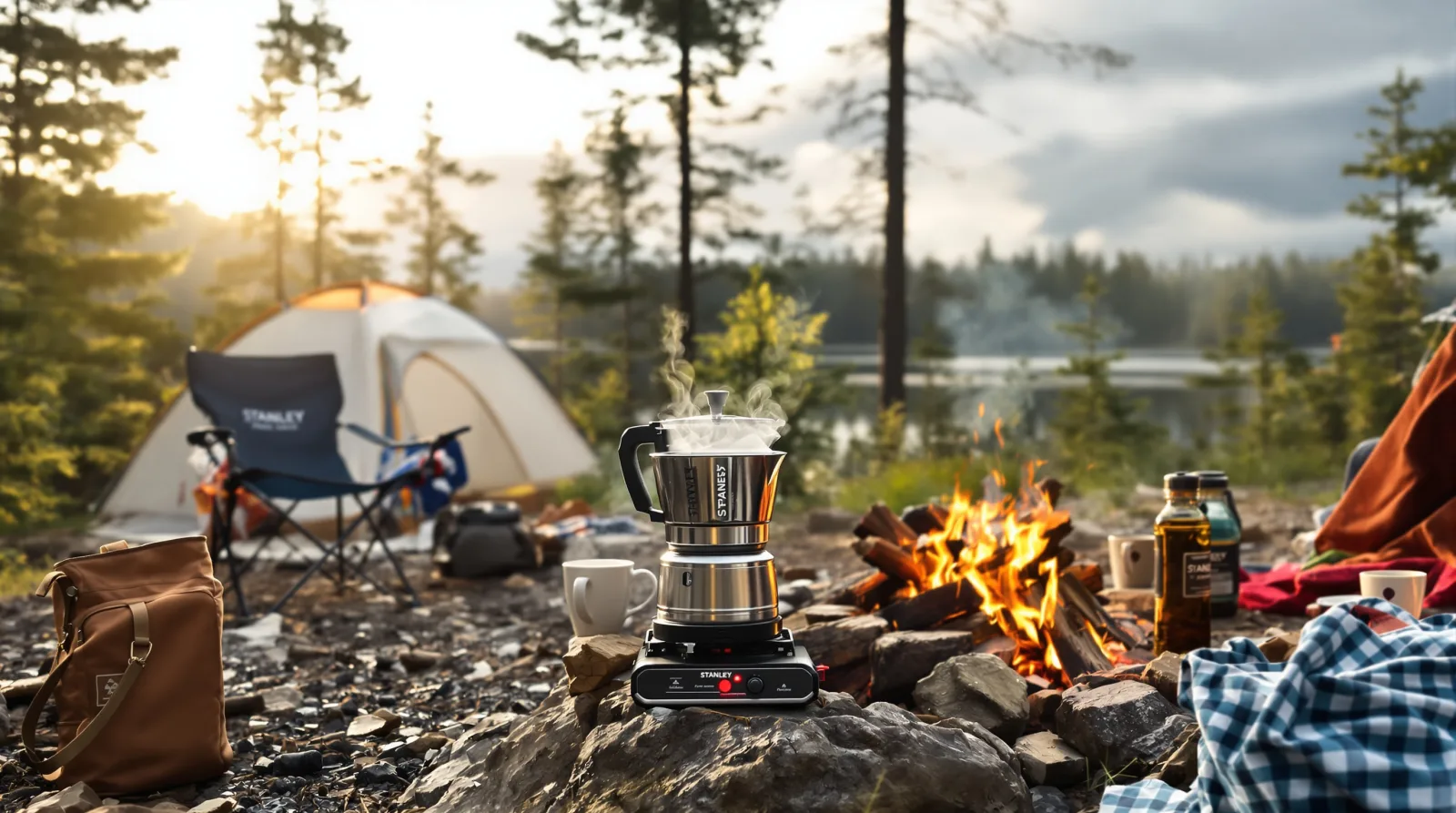
When you are feeding a tent full of people, brewing one or two cups at a time is a slow misery, and this is the fix. The 1.1-quart stainless pot percolates six cups in a single run, set on a camp stove, a grate over coals, or the edge of a fire. You fill the basket with coarse grounds, fill the pot with water, and let it cycle until the brew in the glass knob runs dark.
It is built from 18/8 stainless steel that will not rust, with no coating to scratch and a removable silicone grip for lifting it off the heat. There is a learning curve, since percolators over-extract and turn bitter if you let them run too long, so you watch the color and pull it in time. No paper filters and nothing to break. For a family or a group of friends, it is the most practical brewer here.
Pros
- Brews six cups in one go for groups
- Rugged 18/8 stainless with no coating to wear
- Works on a stove, a grate, or over a fire
- No paper filters or parts to replace
Cons
- Easy to over-brew into bitterness if left too long
- Heavy and bulky, strictly car camping
For the camper who cannot start the day without a real shot, this hand-pumped maker pulls espresso with crema in the backcountry, no electricity or battery needed. You load the basket with fine grounds, add hot water to the tank, and pump the built-in piston, which builds up to 18 bars of pressure, enough to extract a proper shot with crema on top. It weighs about 0.74 lb and packs to roughly six inches, so it tucks into a corner of the pack.
Cleanup means popping the parts apart and rinsing, which takes seconds. The trade is that it makes one short shot at a time and wants a fine, even grind, so it is a treat for one rather than a way to caffeinate a crowd. If espresso is the hill you brew on, nothing else here comes close.
Pros
- Pulls a real espresso shot with crema, no power needed
- Hand pump reaches up to 18 bars of pressure
- Light and pocketable at about 0.74 lb
- Snaps apart for a fast rinse
Cons
- One short shot per brew
- Needs a fine, even grind to perform
Gram counters and minimalists will love how little this asks of a pack. It is a stainless steel pour-over frame that folds nearly flat, weighs about 4 ounces, and sits on almost any mug. You drop in a paper cone filter, add grounds, and pour hot water in slow circles for a clean, bright cup that lets good beans taste like themselves.
There is no plastic to age and no glass to break, so it should outlast most of your gear. It brews straight into whatever cup you already carry, adding almost no bulk and no extra dishes. The catch is that it makes one cup at a time and you do need paper filters and a steady hand with the kettle. For solo and lightweight trips where every ounce is weighed, it is the brewer to beat.
Pros
- Folds nearly flat and weighs about 4 oz
- Stainless build with nothing to crack or wear out
- Brews straight into your own mug, no extra dishes
- Clean, bright cup that shows off the beans
Cons
- One cup per brew
- Needs paper cone filters and a slow, steady pour
If you want pour-over coffee without spending much, this collapsible silicone cone does the job for a small outlay. It expands into a standard dripper, takes a number 4 paper filter, and clips onto most cups, then squashes to a disc about an inch tall when you are done. At well under a pound, it disappears into a pack pocket.
The silicone walls flex without cracking, which is the whole point for camping. You bring your own filters and pour the water yourself, the same patience any pour-over asks. It is not as tough or refined as the stainless Snow Peak, but for a first camp brewer or a cheap backup to leave in the car, it punches above what you pay.
Pros
- Cheap way into pour-over coffee at camp
- Collapses to a one-inch disc for packing
- Flexible silicone will not crack like hard plastic
- Clips onto most cups and mugs
Cons
- Less durable and refined than a stainless cone
- Needs number 4 paper filters you supply

What to Look For
Pick Your Brewing Method First
The method shapes the cup more than the brand does, so start here.
A french press gives a heavy, full-bodied brew but leaves sediment and wet grounds to clear out. A pour-over like the Snow Peak or GSI cone makes the cleanest, brightest cup and packs tiny, though it brews one mug at a time.
A percolator brews a lot at once with no filters, but can turn bitter if it runs long. The AeroPress sits in the middle, clean and fast.
And instant coffee is the lightest option of all when you want zero fuss.
Decide which cup you want in the morning, then buy the brewer that makes it.
Match the Size to Your Group
How many people you brew for narrows the field fast.
A solo hiker or a couple is well served by a single-cup cone or an AeroPress, brewing a round at a time. A bigger group is another problem, since making coffee one cup at a time while five people wait gets old quickly.
That is where a six-cup percolator like the Stanley earns its keep, or a 30-ounce french press that presses enough to share. Buying a single-cup brewer for a family, or a big percolator for one person, are the two mistakes that sour a morning.
Think About Your Heat Source
Almost every method here needs hot water, so how you make heat matters.
A canister or liquid-fuel stove boils water cleanly and works with any brewer on this list. If you cook over a fire or coals, a stainless percolator that sits right in the flames makes the most sense, since soot and high heat would punish a plastic body.
None of these makers need electricity, which is the whole point for camping, though the percolator wants a stable flame rather than a cup of already-hot water. Sort out how you boil before you choose how you brew.
Packability and Durability
The best brewer is one you will actually carry, which comes down to size and toughness.
Folding cones like the Snow Peak and the GSI Java Drip flatten to almost nothing and shrug off a crowded pack, a real gift on a long hike or in a small car.
The AeroPress and Nanopresso are compact and near-unbreakable, while a glass french press is the one thing you do not want rattling around loose. Stainless steel and Tritan plastic take abuse without complaint, so favor those over glass for any trip where gear gets knocked about.
Cleanup and Grounds in the Field
Brewing is the easy part; dealing with the mess is what people forget.
An AeroPress shines here, ejecting spent grounds as a dry puck you drop into a trash bag. A french press is the messiest, leaving wet grounds you have to scoop and scatter.
Pour-over cones lift the paper filter out with the grounds inside, tidy if you pack out the filter. Wherever you camp, scatter or pack out grounds well away from water, and wash with a little biodegradable soap at least 200 feet from any lake or stream.
Grind, Filters, and What You Have to Resupply
Each method wants a certain grind and supplies, so plan for both.
A french press and a percolator need a coarse grind and no paper, so nothing runs out on a long trip. Pour-over and the AeroPress use paper filters you pack and restock, and the AeroPress and Nanopresso prefer a finer, even grind to taste their best.
If you do not own a grinder, buy your beans ground for your method before you leave, or carry a small hand grinder.